
As we wind down December and head into the New Year, I can’t help but think of the many accomplishments we can celebrate for 2014. My first thoughts are of our children, adults and staff throughout the Erie, Pittsburgh, and Philadelphia campuses. They have accomplished so much! Be it learning to walk, to talk, to use an iPad or to secure a job, each person established a goal and worked hard to achieve it. Our staff was with them along the way to aid in their success.
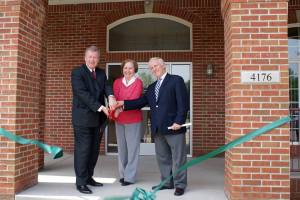 There were a few notable program additions to Barber National Institute this past year. To further assure a seamless system of care for children, we initiated a Children’s Acute Partial Hospitalization program. Additionally, due to the success of our Blended Case Management services for children we began offering a similar service for adults.
As always, the Arts continued to play an essential role in our programs through the year; we were pleased to be invited to participate in John F. Kennedy Center for the Performing Arts’ 2014 conference – VSA Intersections: Arts and Special Education. Our presentation was a look at the positive impact digital art has had for children with special needs.
 This initial foray eventually led to a webinar through VSA, the international organization on arts and disability, titled “Video Self-Modeling in the Classroom with Students with Autism Spectrum Disorders.” We went global and received such great feedback that viewers were asking when Part 2 would be! (If you’re interested in watching the webinar, click here.)
Also in 2014, two of our students won nation-wide art contests. Jonah Derlink was selected as one of the 36 students 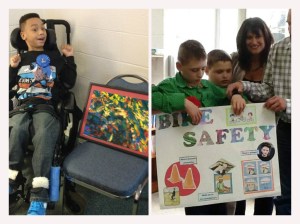 throughout the U.S and Canada to receive the 2nd place award for his National Flagship Safety poster. Todd Harvey was selected as a winner of the statewide art contest for artists with disabilities, Art: The Universal Language. The competition, first of its kind, was a partnership between The Arc of Pennsylvania, the Commonwealth, and the Pennsylvania Council on the Arts.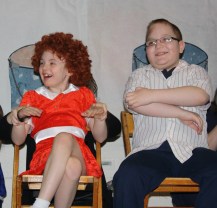
We even had time to do a musical revue in conjunction with the Erie Playhouse, performing a collaboration of several pieces from past autism-friendly shows!
Because we believe that intense physical exercise has many, many benefits for our children, we partnered with two new groups, Achilles International and Variety, the Children’s Charity of Pittsburgh. By integrating Achilles into our phys-ed program, our students are able to complete a virtual marathon through the streets of Erie.  One of Variety’s most popular programs, My Bike, generously donated highly specialized adaptive bikes for over 60 of our children. And this is only the first wave!
2014 has been a banner year…we know 2015 will bring us new successes and, of course, new challenges!

 These stories are so encouraging that I think it is important to share with my community as well, and to take a moment to remember that we are making progress in many ways, every day.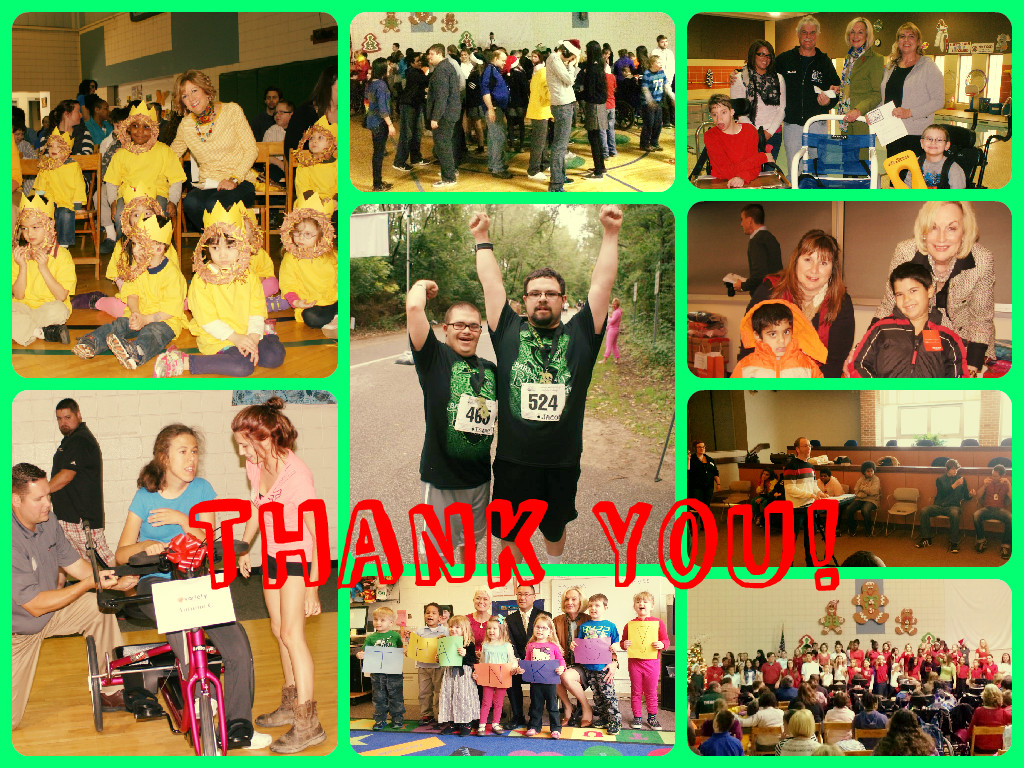
 I felt this is what happens to many families who have children with disabilities and it made me sad. But after watching the movie several times, I saw a different parallel to the lives of people with disabilities-there are ups and downs in our lives and sometimes we just want to run away; we should try to accept and help people who are different from us, even if those differences can be a little scary; there are battles that we must fight; and true love is what helps us rise above it all and live!
  Let it go, let it go

 This morning, students from 21 classrooms ranging from preschool through high-school age participated in an event that has been a holiday tradition for more than two decades. Many of the faculty and students work for weeks to practice routines, and prepare costumes, scenery and props for their performance.
 I had the privilege of attending the funeral service for Paul W. Layden, Sr., M.D. this past Saturday. Dr. Layden was a volunteer at the Barber National Institute for 51 years. When Dr. Layden began, physicians were truly not interested in providing services to children and adults with intellectual challenges. Not Dr. Layden. He gave all the time he could, both personally and professionally.
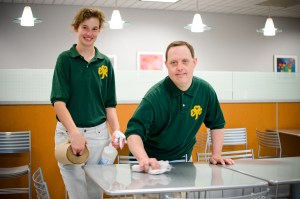 The Barber National Institute was founded on the belief that the right to work is a fundamental human right. Unfortunately, too often persons with disabilities are not considered for employment because of negative perceptions or the incorrect assumption that accommodating persons with disabilities will be cost prohibitive. On IDPD, we drew attention to the available technologies and measures that can create work environments that are open, inclusive, and accessible.
 We at
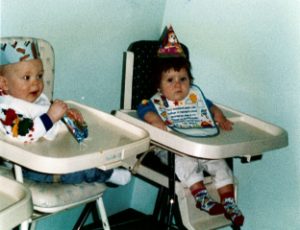
We at 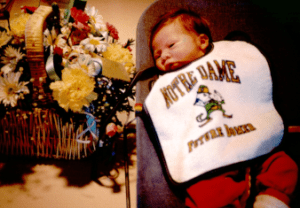 Is it possible? Ryan is turning 21 today! This is one of those special days where I love to take a moment to reflect on my journey with Ryan. I enjoy looking at his pictures that remind me of some of our “momentous” occasions, and I thought I’d share a few with you as well.
 Hearts.
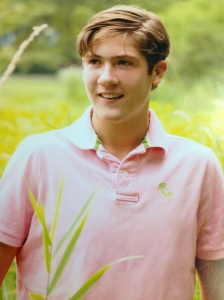 As I look back on the past 21 years of this journey, with its peaks and valleys, I’m very proud of who Ryan is, how he has grown and matured, and his numerous successes along the way. Today, his days are busy, divided between work at Bello’s Market and BNI. Before and after work, you’ll find him on the track or swimming at LECOM, or doing any of his favorite sports, including golf, tennis, skiing, and bowling.


 All About Autism