New Campaigns Are Developing Across the Country to Create an Inclusive and Diverse Workforce

Lori Sousa, 48, and Peter, Maxmean, 35, at their wedding reception in East Providence, R.I., in August. Ãngel Franco/The New York Times

Lori Sousa, 48, and Peter, Maxmean, 35, at their wedding reception in East Providence, R.I., in August. Ãngel Franco/The New York Times

The article A Couple Gaining Independence and Finding a Bond on the front page news of the Sunday NY Times caught my attention. It’s a love story about two people with intellectual and developmental disabilities (IDD) who met at a sheltered workshop in Rhode Island, found their “soul mate,” and are now newlyweds. Their story came to light when this workshop came under federal investigation and was found to have willful violations of the sub-minimum wage law including the failure to record and pay employees for all of the hours that they worked. The state of Rhode Island agreed to a landmark consent decree which requires integrated opportunities for the 2,000 persons working in sheltered workshops across the state.

This decree put the other 49 states on notice that change is coming and employment in the community and not sheltered workshops should be the first consideration for persons with IDD. President Obama signed into law this past August the Workforce Innovation and Opportunity Act, which significantly limits placements at sheltered workshops and other work environments where people with disabilities earn less than minimum wage. Under the new law, individuals with disabilities age 24 and younger will no longer be allowed to work for less than the federal minimum of $7.25 per hour unless they first receive pre-employment transition services at school and try vocational rehabilitation services. Many senators and representatives have issued statements supporting this regulation,

An employee with BNI's TWS.

An employee with BNI’s TWS.

noting that young people with IDD deserve to be treated with dignity and afforded all of life’s opportunities.

As the nation, we are seeing more movements to promote inclusivity and diversity in the workforce. Best Buddies International just launched their campaign I’m In To Hire, which promotes the business benefits of hiring individuals with IDD and motivate employers to create a more inclusive workplace.

A groundbreaking report “Employing People with Intellectual and Developmental Disabilities,” by the 2014 Institute for Corporate Productivity (i4cp) reveals the business benefits of hiring this skilled, untapped group of employable candidates – like the fact that more than 3/4 of business who hired individuals with IDD rated them as “good” to “very good” on most performance factors, such as dependability and work quality.

TWS Employees from BNI

TWS Employees from BNI

The Barber National Institute consistently works with the community and business leaders in PA to promote employment for individuals with IDD. Locally most students graduating from high school move into our employment programs, Transitional Work Services (TWS) or Supported Employment (SE). TWS offers training and work opportunities to individuals who wish to transition from school or unemployment into an integrated, competitive work force. A variety of work experiences and specialized training in landscaping, food service, janitorial work, and machine operation are provided. These and other opportunities give participants the experience needed to gain employment.  The goal of SE is to prepare individuals for future employment success with a range of services to help ensure a good match for both the adult seeking employment and the prospective employer. The goal for each supported employee is that he or she will successfully and independently maintain employment in the community.

It is exciting to see the nation embrace inclusion of IDD in the workplace. What can you do to see this dream come true? I would love to hear your thoughts.

Posted in Uncategorized | Tagged , , , , , , , , , , | Leave a comment

Poverty and Disability Go Hand in Hand

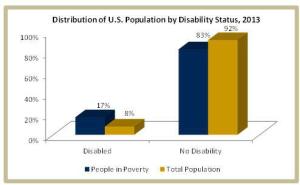
Statistics provided by UC Davis Center for Poverty Research

Statistics provided by UC Davis Center for Poverty Research

It is very troublesome to read that poverty rates are back on the rise across the Erie region after two consecutive years of decline. 29.2% of the city’s residents (28,114 people) and 45.5% (9,649) of its children under 18 are living below federal poverty guidelines. Two years ago the rate was 25.7% of adults and 36.5% of children were living in poverty in the city of Erie. Unfortunately, poverty and disability go hand in hand. The poverty rate for working people with disabilities is 2.5 times higher than for people without disabilities. They struggle to secure employment, locate affordable housing and find needed medical care.

poverty - childWe also know that the many conditions of poverty pose challenges to educational success. Impoverished children are less likely to attend preschool, often experience inadequate nutrition, have limited access to medical resources and may live in dangerous home situations. I’ve seen many of our students move frequently, have inadequate housing and, very sadly, experience homelessness.

I agree with Mary Bula, of Erie Together, in her statement, “poverty is a tremendous challenge in our community and it will take a community response to address it.” I’m proud to say that Erie has begun this task. I would only add that the intersection of disability and poverty must also be addressed if we are to break this connection.

Posted in Uncategorized | Tagged , , , , , , | Leave a comment

Lack of Eye Contact In Infants Could Be An Indicator of a Future Autism Diagnosis

Did you know …4842-344x228-Eye_contact

  • A child can be born with a genetic liability, but how autism is expressed can be changed between birth and 2 years due to brain development
  • It is anticipated that over the next few years the diagnosis of autism will occur at infancy
  • Visual fixation time (how much time a child spends looking) is different for children with autism, typical children and developmentally delayed children
  • Social interaction is the platform for brain development
Dr. Ami Klin

Dr. Ami Klin

I had the opportunity to view an excellent webinar by Dr. Ami Klin, Director of the Marcus Autism Center (NIH Center of Excellence), Emory University.  The Marcus Center is looking at social / visual engagement, social / vocal engagement and then developmental treatment. It was fascinating to learn that babies attend to eyes up to 2 – 3 months of age. All babies start with eye fixation at least 50% of the time as eyes are the reflexive behavior, genetically determined, subcortically controlled. Between 2 – 4 months this changes to interactional, reward driven, experienced dependent and cortically controlled. As the babies grew older, Dr. Klin found that children who are later diagnosed with autism decreased attention to the eyes.  You may be asking yourself, ‘what is the importance of looking at eyes?’ It is not just for eye contact, but for the child to get the sense of value at looking at another. It is an issue of engaging the child.

He studied a set of babies at two months and eye contactfound that all of them looked at the eyes. Then in the next 24 months typical children continued looking at the eyes, but children later diagnosed with autism begin decreasing significantly in this amount of time. A 16 month old child with autism often does not look at the eyes, but looks towards the mouth. In the 2nd year of life babies with autism became focused on objects. Interestingly, some of the high risk babies for autism have course correction at 9 months. The question is why?

EarlyIntervention4Dr. Klin is working with Dr. Amy Wetherby of Florida State University the author of the Autism Navigator™. The Autism Navigator™ for Early Intervention Providers is a web-based instructional system that addresses the need to increase the capacity of early intervention (EI) service providers to appropriately serve young children with ASD. Designed to support a mentoring model for delivering instructional content, it focuses on using effective consulting and coaching strategies to support intervention in everyday routines, activities and places in collaboration with families.

Dr. Klin’s motto, “Autism is an issue of diversity not disability” is his ultimate goal. His dream is not to cure autism, but to promote diversity and do away with its burdens. I concur!

Posted in Uncategorized | Tagged , , , , , , , , , | Leave a comment

5 Things You Can Do To Help The Caregiver In Your Life

caregiverA tragedy! The mother of a 13 year old with severe autism attempted to kill herself and her daughter. We are quick to think “how could a mother ever do that?” However, I recall the saying “don’t judge until you walk a mile in her shoes.” I haven’t, so I don’t judge her.

Instead I suggest that we as a community and a nation need to assure that there are programs, resources and support so that tragedies such as this don’t occur. How do we guarantee that this happens? What are the steps we should take?

  • Increase awareness of the challenges parents of children with special needs may experience.
  • Offer informal supports (babysit, include the child in your family activity, plan a fun excursion with the child) to give the parent a break
  • Contact your legislators on behalf of children and adults with special needs and their families to secure support and funding
  • Be willing to be a member of a support team to assist the parent at IEP meetings.
  • Help the parent find local resources, programs and supportstressed-asian-woman-400x300

If you are a parent struggling with challenges of your child with special needs, don’t be afraid to reach out for help. Autism Speaks encourages caregivers to call the 24 hour hotline 1-800-273-TALK and has compiled a tool kit of resources that is available online.

It’s just as important to recognize that as a caregiver you must first take care of yourself. For some caregiver tips read my previous blog post.

Parents with children with scaregiver quotepecial needs experience frustration, exhaustion and helplessness at some point but we must remember that we must always have hope. As a Catholic, I believe that God will only give us the challenges that we can handle.

Posted in Uncategorized | Tagged , , , , , , | Leave a comment

Founder’s Day – A Celebration of Dr. Gertrude Barber

Ryan with Dr. Gertrude Barber

Ryan with Dr. Gertrude Barber

Today is a special day at the Barber National Institute. We are celebrating Founder’s Day to commemorate the legacy of our founder, Dr. Gertrude Barber and our enduring mission.

If we take a look back in time to the year 1952 services for persons with disabilities were nonexistent. As an Erie School District psychologist it was Dr. Barber’s responsibility to tell parents that their son / daughter could not attend school because of their disability. The parents had two options: send their child to a faraway institution or keep them at home. She and the parents wanted so much more. Thus began the Barber Center.

Her dream was to enable all children to learn and grow up in their own community where they would find acceptance and opportunity. Her vision has touched thousands of children and adults over the last 62

Students enjoying the Petting Zoo for Founder's Day

Students enjoying the Petting Zoo for Founder’s Day

years and has brought hope into the lives of their families. This vision has opened doors and minds by promoting acceptance, understanding and tolerance. I truly believe that Erie, PA serves as an example to the state and nation of an inclusive community. Our commitment remains strong and steadfast to this mission.

Posted in Uncategorized | Tagged , , , , , , | Leave a comment

Can Exercise Help Children with ADHD?

Ryan and MBC Running

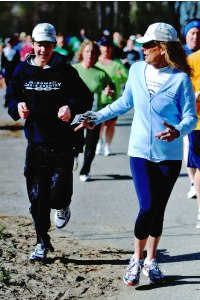
Ryan and I running in a Mother’s Day race a couple of years ago.

It’s 6 am. It’s so dark outside that one would think it’s the middle of the night. But Ryan and I are getting up to make our daily trek to the gym. I often think, why? Ryan and I both go to the gym after work and the two mornings he doesn’t work he goes to the gym. Do we really need all this physical activity?

Yes! “Exercise helps children with Attention Deficit Disorder (ADHD) according to a study,” in Tuesday’s Wall Street Journal. This recent study found that children with symptoms of ADHD became more attentive and less moody when they participated in regular half hour sessions of aerobic activity before school.  Physical activity can improve academic achievement including grades and standardized test scores. Unfortunately, physical education classes in many schools have been replaced by sedentary classroom based activities. This needs to change.

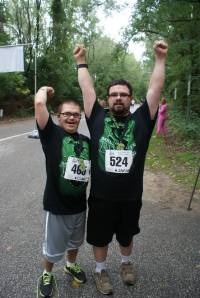
Ryan running in last week's Beast on the Bay Adaptive Course.

Ryan running in last week’s Beast on the Bay Adaptive Course.

We are initiating three new fitness programs in our school this year. Our adaptive bicycling program is now the responsibility of our PT/ OT department. Therapists are assuring that each student has an outcome based program tailored to the students’ strengths and needs. They are monitoring and tracking the students’ progress using the “Day to Data” app on the iPad.

Our fitness program has been modified to focus on fitness as a life skill. We will be addressing three primary areas of wellness: cardiovascular exercise, strengthen and balance. The students engagement in their fitness program will be measured by charting participation and using a modified Perceived Exertion Scale to rate how hard they work.

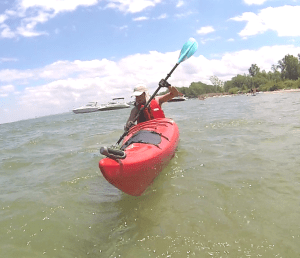
Ryan kayaking over the summer months in Erie.

Ryan kayaking over the summer months in Erie.

We are also introducing Achilles International Run to Learn program, a series of educational and physical activities which will encourage and motivate students to participate in regular physical activities. Based on a 26.2 mile marathon, students will complete weekly laps that are counted and converted into miles and charted as a 26.2 mile route on a map of Erie, PA. Achilles Kids: Run to Learn is currently in 150 schools in the United States with approximately 3,500 students participating.

On a personal note, I, too, have seen many positive behavioral changes when Ryan engages in intense physical activities. He is very focused, stays on target during conversations, and engages in significantly less repetitive behaviors. So, you can be sure that Ryan and I will continue our six am treks to the gym in good weather and bad!

Posted in Uncategorized | Tagged , , , , , , , | Leave a comment

Remembering 9/11

In recognition of today being Patriot Day we remember the hundreds and hundreds of lives lost on this saddest day in my life. As we observed a moment of silence at 8:46 a.m. today I am reminded of the 911Memorial video narrated by Robert De Niro.  May we never forget.

Posted in Uncategorized | Tagged , , , , , | Leave a comment

Beast on the Bay – Inclusion, Fun and Triumph

Ryan at 2014 Beast on the Bay Adaptive Course

Ryan running the 2014 Beast on the Bay Adaptive Course

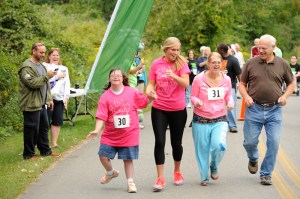
Do you remember Rocky Balboa climbing the stairs of the Philadelphia Museum of Art to the sound of Rocky’s Theme? That is how I felt on Saturday as I observed the 100 men and women participating in the Beast on the Bay Adapted Course. There were people in wheelchairs, some assisted by their seeing-eye dogs, and others who were walking at slow, medium and fast paces. There was no right or wrong way to “Beat the Beast” – each of the participants was winning in their own, very special way. Cheered on by the many observers, there were smiles on their faces as they came to the finish line. Every contestant (whether you were on the full or adapted course) then received a “Beast” medallion as their award for “Beating the Beast.”

1662113_632368593542342_6681385593876884065_n

Finishers of the 2014 Beast on the Bay Adaptive Course

You may ask, why have an adapted course?

Barber National Institute celebrates the talents of all people in an inclusive community. Too often persons with disabilities are unable to participate in athletic challenges due to their limitations. So, as we developed the concept of the Beast on the Bay, first and foremost in our minds was the need for an adapted course. If you are involved with an athletic contest, we would be happy to share with you some of our experiences should you wish to offer an adapted course as well.

In conclusion, I send many thanks to the hundreds of volunteers and the over one thousand participants who made the “Beast” a success. Mark your calendars now for third annual Beast on the Bay September 5th. Ryan “beat the beast.” Next year, you, too can “Beat the Beast“!

Posted in Uncategorized | Tagged , , , , , | 3 Comments

Caregivers Need Their ‘Me’ Time Too

iStock_000010562074XSmallSummer vacation.  No homework, less demanding schedules, time for vacations and outdoor activities.  Yes, as the children go back to school all of this is coming to an end.   I remember how I was always sad to see summer vacation end because it meant a return to homework, busy days and early mornings rushing to get ready for school.  This continues for another nine months until we can again take a deep breath, relax and enjoy the summer vacation again.

Most parents work full time or part time outside of the home, have a household to run and are full time caregivers, as well.  At best, it is a juggling act that we all face and handle successfully at most times.  I think parents of children with special needs experience stressors that can have an emotional and physical cost if allowed to continue unchecked.   The essential question is “how do you reduce the effects of this stress?”

I recently came across a caregiver’s workbook for groups of caregivers of Massage39adolescents and young adults with ASD.  In fact, the recommendations they share would be helpful to any caregiver.  Some of the recommendations include:

  • Time for yourself
  • Support networks
  • Time management
  • Relaxation techniques

I’d encourage you to review the material, take the time to complete a few exercises and put the recommendations into practice.  If you are saying to yourself “I know I’m stressed but I’m not nearing ‘burnout’,” then you might also want to take a caregiver stress test. Recognizing the signs of caregiver burnout out early will help you avoid far more serious problems down the road.  It is okay to admit that you are stressed.  Everyone is, but the key is to recognize the signs and ask for help.Each of us will identify our own personal way of dealing with stress.

body-weight-exercises-for-menRyan and I exercise before work and I exercise by myself after.  I began my afternoon routine around Christmas time and found that even though I might be exhausted from a day of work, I felt much better after I exercised.  What do you do to relieve your stress?  I’d encourage you to share your tips and experiences so that I might share with others.

Posted in Uncategorized | Tagged , , , , , , , , , , , , | Leave a comment

4 Days Until Beast on the Bay – Are You Ready To Beat the Beast?

Barber-Beast-on-the-Bay-Trial-Run_127-smallThere’s still time to register for both the Beast on the Bay and Adaptive Beast on the Bay!
Why is this obstacle course different from other obstacle courses? Anyone can have an obstacle course, but what is important is that we have a course specially designed for people with disabilities. Plus, the Barber Beast on the Bay is a fundraisingBOTB-Adapted-Course_small-1jpg event to help support the Barber National Institute and its work with children and adults with disabilities.
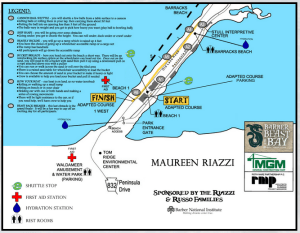

Why have an adaptive course? We believe that all Adaptive Course Map 2014persons should be included, and therefore designed a specialized adapted course for persons with limited mobility, agility and athletic ability. At the Barber National Institute, we strive to “make dreams come true” at all of our events as we welcome children and adults with disabilities, as well as their typical peers.

New this year is that a portion of the adaptive course will run alongside the Beast on the Bay so athletes from both courses can cheer each other on. Over 1,040 athletes have registered for the Beast a9069_403546973091173_419905081_nnd 80 have registered for the Maureen Riazzi adaptive course.

The Beast on the Bay is 10 miles of trails, mud, water and hard-pack surfaces featuring 26 “meaner, badder” obstacles integrated into the course.

The Maureen Riazzi adaptive course is a 1.2 mile loop that begins and 0025_BOTB-Regular-Course-Meghan_smallends in the area of Beach 1 at Presque Isle State Park. This course will accommodate ambulatory participants as well as those in a wheelchair or power chair. Six obstacles will be spaced throughout the course and incorporate a variety of challenges that were developed by a team of physical therapists and educators from the Barber National Institute, fitness trainers and representatives from the disabilities community.

Not only does the Barber Beast on the Bay event raise awareness for a great cause, but it also brings the community together for a fun experience that showcases Erie’s finest assets. I encourage you to register for the event or join the spectators cheering the athletes along the courses, and to join in the post-event party at Waldameer Picnic Groves. So, if you aren’t doing anything this Saturday morning, come out to Presque Isle to watch the race and join us in the festivities.

Posted in Uncategorized | Tagged , , , , , , , , , | 2 Comments