Today’s blog is brought to you by friend and colleague Dr. Sarah Howorth.
Dr. Howorth is an Assistant Professor of Special Education at Mercyhurst University, and a 2015 graduate of the Joint Doctoral Program in Special Education and Digital Leadership at the State University of New York at Buffalo. Her doctoral research focused on the use of technology for instructional purposes in special education, reading comprehension, and students with Autism Spectrum Disorder, and was funded by a grant from the Office of Special Education Programs (OSEP) of the Federal Department of Education.
Recently, Dr. Howorth was awarded the Herb Prehm Student Presentation Award by the Division of Autism and Developmental Disorders (DADD) at the 2015 National Council For Exceptional Children Conference in San Diego. Dr. Howorth has presented nationally on reading instruction for students with disabilities, digital technology integration for instruction, behavior management, and virtual rehearsal for teachers using TeachLivE.
A former special education teacher, with certification in both New York and Pennsylvania, she has taught in Michigan, Pennsylvania, and the Shanghai American School in China. In 2001, Dr. Howorth served as a behavior specialist at the Gertrude A. Barber Center. She is a new faculty member at Mercyhurst University here in Erie, Pennsylvania and has recently returned to live here with her family.
~ Maureen
Reading Comprehension Instruction for Students with Autism without Accompanying Intellectual Disability
As indicated in Dr. Barber-Carey’s last blog post, reading comprehension instruction can be a struggle for teachers of students with Autism. Although many of these individuals learn to read quite well, they often struggle with making inferences and understanding the main idea of both narrative and expository text. This can have negatives implications on their academic success in both middle school and high school. 
Block et al. (2009) indicate that focus on academic reading for understanding is emphasized after grade three, rather than learning to read. In order to comprehend what they are reading, learners need to process the information embedded within the text, integrate it with their own prior knowledge, and monitor their own understanding of what is being read in order to make inferences about what is not explicitly stated in the text (National Institute of Child Health and Human Development, 2000). Cognitive processing styles of students with ASD must also be taken into consideration when designing instructional interventions.
Skilled readers must use information from their own background, the text clues, and the context in which they are reading (e.g. leisure, academic, instructions) in order to make meaning. Students with ASD have many areas of cognition impacted by their neurological differences, including metacognition, abstract thought, and interpretation of language (Boutot & Myles, 2011) Only three studies have investigated literal and inferential reading comprehension and students with high functioning autism spectrum disorder (Kamps et al., 1989; Kamps et al., 1994; O’Conner, & Klein, 2004).
 However, in the Thinking before, While, and After reading (TWA) strategy used by Mason (2004; 2013), accessing prior knowledge is taught first, then the student is guided to think and verbalize what they want to learn from what they are reading. Students with ASD require support such as this to make connections between abstract ideas (Wahlberg & Magliano, 2004). The final step of the TWA strategy (Mason, 2004; Mason, 2013) involves summarizing what has been learned, and retelling of the information in the students’ own words.
Again, making global connections such as this is a skill that requires explicit instruction, especially for students with ASD (O’Conner & Klein, 2004). I have conducted two studies that investigated the functional relationship between learning how to use the TWA strategy and the reading comprehension of middle school students with high functioning autism spectrum disorder. One of them is currently under review for publication in an international special education journal.
The results of both studies indicate that students with autism need to be explicitly taught self-regulated reading strategies such as TWA, and also benefit from the task analysis style list of steps involved with this strategy. When paired with highlighting of text to provide a visual guide for summary retells, reading comprehension greatly increased for all of my participants. The strategy can be taught using either paper-based or digital (i.e. PDF) texts.


*Images copywright Sarah Howorth, 2015
References
Block, C. C., Parris, S. R., Reed, K. L., Whiteley, C. S., & Cleveland, M. D. (2009). Instructional approaches that significantly increase reading comprehension. Journal of Educational Psychology, 101(2), 262-281. doi:10.1037/a0014319
Boutot, E. A., & Myles, B. S. (2011). Autism Spectrum Disorders: Foundations, Characteristics, and Effective Strategies. Pearson: NY.
Howorth, S. (2014). Effects of TWA strategy on expository reading comprehension of students with high functioning autism spectrum disorder. Manuscript submitted f or publication.
Kamps, D. M., Dugan, E. P., & Leonard, B. R. (1994). Enhanced small group instruction using choral responding and student interaction for children with autism and developmental disabilities. American Journal On Mental Retardation, 9960-73.
Kamps, D., Locke, P., Delquadri, J., & Vance Hall R. (1989). Increasing academic skills of students with autism using fifth grade peers as tutors. Education & Treatment of Children, 12(1), 38-51.
Mason, L. R. (2004). Explicit self-regulated strategy development versus reciprocal questioning: Effects on expository reading comprehension among struggling readers. Journal of Educational Psychology, 96(2), 283-296. doi:10.1037/0022-0663.96.2.283
Mason, L. H. (2013). Teaching students who struggle with learning to think before, while, and after reading: Effects of self-regulated strategy development instruction. Reading & Writing Quarterly: Overcoming Learning Difficulties, 29(2), 124–144. doi:http://dx.doi.org.gate.lib.buffalo.edu/10.1080/10573569.2013.758561
Mason, L. H., Hogan, H. P., Walter, A. A., Meadan-Kaplansky, H., Hedin, L., & Taft, R. (2013). Self-regulating informational text reading comprehension: Perceptions of low-achieving students. Exceptionality, 21(2), 69–86. doi: 10.1080/09362835.2012.747180
National Institute of Child Health and Human Development. (2000). Report of the National Reading Panel. Teaching children to read: An evidence-based assessment of the scientific research literature on reading and its implications for reading instruction (NIH Publication No. 00-4769). Washington, DC: U.S. Government Printing Office. Retrieved from https://www.nichd.nih.gov/publications/pubs/nrp/Documents/report.pdf
O’Connor, I., & Klein, P. (2004). Exploration of strategies for facilitating the reading comprehension of high-functioning students with autism spectrum disorders. Journal of Autism and Developmental Disorders, 34(2), 115–127. doi:10.1023/B:JADD.0000022603.44077.6b
Wahlberg, T., & Magliano, J. P. (2004). The ability of high function individuals with autism to comprehend written discourse. Discourse Processes, 38(1), 119–144. Retrieved from http://www.erlbaum.com/Journals/journals/DP/dp.htm



 Unfortunately, he did not. Difficulties with comprehension were a problem for Ryan throughout his school career. That’s why I was excited to read about a program that capitalizes on the strengths of students with autism. Not only does it improve comprehension, but it establishes new connections between the areas of the brain that are involved in understanding language.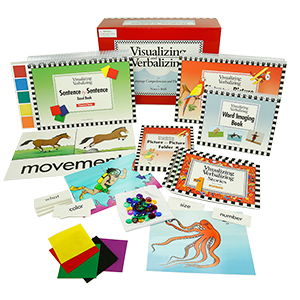





 Another option is a tracking device, a small unit that you can place in your child’s pocket or backpack. It works with your computer or mobile phone to allow you to monitor your child’s location. Others involve a handheld unit for the parent which tracks the location of the child’s wristband.
 , I’ve come to understand that this is a common struggle for many children and adults with autism. Ryan’s life is certainly Rule-Driven; he wants to desperately follow the rules, but when unanticipated situations occur he becomes anxious, as does not know how to respond. This is especially true in situations that require an emotional response. Empathy is one of those responses that I have worked very diligently to teach Ryan. Some would suggest a lack of interest or concern for others is a characteristic of children with autism. I would suggest that this is an issue with generalization and not the lack of empathy. In other words, Ryan and some with autism struggle to apply lessons of kindness and empathy to all situations, in all locations. Simply put, Ryan needs rules for each and every situation.


 All About Autism