
 Although it may not always seem to be the case, scientists and researchers are constantly uncovering more information related to autism, offering insights into the origins, possible causes and even at times potential cures. I come across dozens of articles on a weekly basis, some of which seem more important than others. After the positive response I received when I posted Top Research Stories of2014, I thought I would start to share some of the current research articles that I read on a monthly basis. Below are three stories that caught my eye. Very encouraging!
Researchers Reverse Neuron Disruptions That Occur When Gene is Absent
Scientists at the University of Buffalo published a paper on May 28th that focuses on the important risk factor that the loss of a gene, known as Shank3, presents. Previous studies show that nearly 80% of people with Shank3 deletion or mutation had autism, although how this occurs is still unknown. In the paper, researchers trace how this risk factor disrupts communication between neurons, leading to social deficits in mice. However, they have also uncovered how to reverse these neuronal disruptions to restore normal behavior in mice.
Read the full article here.
Discovery of Lymph Network Connecting Brain and Immune System Could Advance Understanding of Autism
A newly discovered system of lymph vessels in the membranes that line the brain could dramatically change the scientific understanding of the connection between the brain and the immune system, particularly in understanding inflammation’s role in neurological conditions such as autism.
Read the full article here.
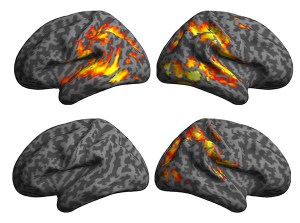
Controls (top row) compared to toddlers with autism who have poor language skills (bottom row).
Brain Scans May Be Able to Predict Language Ability in At-Risk Children
A brain imaging study published in April suggests that neural pathways may underlie language development in children with autism. The study shows that children with autism have abnormally low levels of brain activity in response to speech starting at about age 1. The study also hints at the possibility of using brain scans to forecast language ability in children who are at risk for the disorder, although the scans are far from ready for use in clinics.
Read the full article here.
Tune in next month for an update on autism research!

 Pennsylvania Governor Wolf has proposed a $120 million dollar state funding increase for high quality pre-K programs. His rationale is that this will boost high school graduation rates, and ultimately reduce the number of people incarcerated in PA. That same $120 million investment now could end up






 Up at 5:30 a.m. and drove over to LECOM by 6 a.m. However, we had one important addition to our morning routine — we voted! As soon as Ryan turned 18, he registered to vote and has been voting in each and every election since then. We’ve discussed the importance of voting, and why you should never, ever miss. Prior to the election, we review the ballot and discuss the various responsibilities of each of the positions being voted on. He is always especially interested in the judgeships because he knows that only lawyers can be judges, and his Uncle Thomas was a judge. Of course, there is also his fascination with Law & Order!
 retty.


 All About Autism