Summer Safety!

Now that summer is finally upon us, I wanted to share a few tips that might make your days more carefree as you spend more time outdoors (at last!) playing

New to the neighborhood?

Summer can be a good time to reach out and get to know your neighbors. Plan a brief visit to your neighbor’s house, to introduce yourself and your child (a photo may also work). Take a few moments and describe some of the positive, as well as challenging, behaviors of your child. I always emphasized the issue of wandering and stressed that if a neighbor saw Ryan out by himself to engage him in conversation and walk him home. You can provide your neighbor with a simple handout that has your name, address, phone number, and emergency contact information.

Teach your child about water safety

Living in Erie, water safety is a critical issue. However, in any community, children with autism are often attracted to water sources such as pools, ponds, and lakes. Since most children with ASD are rule-driven, setting specific rules around how your child is to handle being around water can be relatively easy. Just make sure you practice those rules in real life situations. When Ryan started his swimming lessons at 2, he refused to put his head under water. Today, he swims laps in the LECOM pool an hour at a time.

Consider a Medical ID Bracelet or a personal tracking device

Depending upon your child’s age and verbal skills, you may want to purchase an ID Bracelet for your child. Include your name and telephone number and state that your child has autism. If your child will not wear a bracelet or necklace, a temporary tattoo with your contact information is another option.

braceletsAnother option is a tracking device, a small unit that you can place in your child’s pocket or backpack. It works with your computer or mobile phone to allow you to monitor your child’s location. Others involve a handheld unit for the parent which tracks the location of the child’s wristband.

Wandering prevention

Some children with ASD act impulsively and may run away or wander. Using deadbolt locks, keeping doors and windows locked and installing an alarm on doors are some ways to help prevent wandering while indoors. For children who respond well to visual cues, consider placing STOP or DO NOT ENTER signs around as these can be powerful reminders. We have lots of doors in our house, so I installed alarms on all of them so that I would know when Ryan exited if I were in another room.

Of course these are just some ideas to help keep your child safe during the summer. If you have any other great advice, please share below!

Posted in Uncategorized | Leave a comment

“Can You Be Cured?”

One of the questions that I’m almost always asked when I talk about autism is: “Is there a cure?” Because it’s important to note that autism is a spectrum disorder and that there are children who are very mildly impacted by autism, as well as those who are moderate to severely impacted, I’m very cautious in my response. I have talked with many parents who have told me their child was “cured” after intensive ABA training. Certainly, I would not dispute their claims; however, I personally believe that there is not a cure for autism, in the conventional sense of the word “cure.” preschooler-messy-art-day

A recent research study looked at 570 children living in New York between the years 2003-2013. All the children had been diagnosed with ASD around 2 ½ years of age. However, 7% (38 children) showed no signs of autism by the time they were 6 years old. While all of these children were functioning within normal, cognitive range, 68% of the 38 also had learning disabilities. Nearly half had ADHD, and 25% had disabilities such as anxiety, OCD, or selective mutism. Only 3 of the 38 had no other diagnoses.

Yes, some of the characteristics of autism may decrease or even disappear, or a child learns to compensate for certain behaviors. But this does not necessarily mean that the child will not have learning or behavior challenges. As Dr. Shulman, study author, suggests: “Understanding the full range of possible positive outcomes in autism is important information for parents, clinicians, and the educational system.”

Posted in Uncategorized | Tagged , | 5 Comments

Teaching Empathy

I had the opportunity yesterday to watch a video by Temple Grandin. She began by discussing her process of learning, which involved being taught each individual skill, from emotional response to academic instruction. I have often made the same comment about how Ryan learns. This has been a challenge, especially when it comes to emotional learning and the issues Ryan experiences with generalization.

Over the yearsIMG_3683, I’ve come to understand that this is a common struggle for many children and adults with autism. Ryan’s life is certainly Rule-Driven; he wants to desperately follow the rules, but when unanticipated situations occur he becomes anxious, as does not know how to respond. This is especially true in situations that require an emotional response. Empathy is one of those responses that I have worked very diligently to teach Ryan. Some would suggest a lack of interest or concern for others is a characteristic of children with autism. I would suggest that this is an issue with generalization and not the lack of empathy. In other words, Ryan and some with autism struggle to apply lessons of kindness and empathy to all situations, in all locations. Simply put, Ryan needs rules for each and every situation.

So, how did I teach empathy? Of course, it’s not an exact science but here are some tips that I followed:

  • I helped Ryan understand that when he was unhappy, worried, sad, or frustrated he needed to voice those emotions to us so that we could help him find a solution. The thinking here was that by recognizing his own emotions, he may be better able to recognize emotions in others.
  • Throughout the day, I would point out situations that call for empathy. In doing this, he was able to model my behavior and practice the skill himself. This was really helpful because we know that to truly learn a skill it takes practice, practice, practice!
  • Role-playing was especially useful. As an event occurred, we would talk about how a person in a given situation (say, for example, the victim of an earthquake) might feel and act.
  • We frequently practiced recognizing and making facial expressions that imitated certain emotions, such a drawing a sad face or making a happy face in the mirror. This is still an activity Ryan practices at times. He likes to say to me, “Show me your angry face when you tell me that you can’t go out to lunch because of your behavior.”

Learning empathy is never-ending lesson, but I am really pleased how far Ryan has come. Are there any techniques you have used that you’ve found successful? Please share below!

Posted in Uncategorized | Tagged , , , , , , | 1 Comment

Autism Research Updates

researchAlthough it may not always seem to be the case, scientists and researchers are constantly uncovering more information related to autism, offering insights into the origins, possible causes and even at times potential cures. I come across dozens of articles on a weekly basis, some of which seem more important than others. After the positive response I received when I posted Top Research Stories of2014, I thought I would start to share some of the current research articles that I read on a monthly basis. Below are three stories that caught my eye. Very encouraging!

Researchers Reverse Neuron Disruptions That Occur When Gene is Absent

Scientists at the University of Buffalo published a paper on May 28th that focuses on the important risk factor that the loss of a gene, known as Shank3, presents. Previous studies show that nearly 80% of people with Shank3 deletion or mutation had autism, although how this occurs is still unknown. In the paper, researchers trace how this risk factor disrupts communication between neurons, leading to social deficits in mice. However, they have also uncovered how to reverse these neuronal disruptions to restore normal behavior in mice.

Read the full article here.

Discovery of Lymph Network Connecting Brain and Immune System Could Advance Understanding of Autism

A newly discovered system of lymph vessels in the membranes that line the brain could dramatically change the scientific understanding of the connection between the brain and the immune system, particularly in understanding inflammation’s role in neurological conditions such as autism.

Read the full article here.

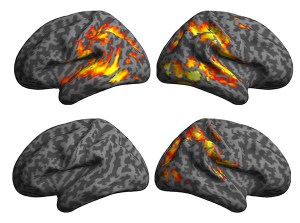
Controls (top row)  compared to toddlers with autism who have poor language skills (bottom row).

Controls (top row) compared to toddlers with autism who have poor language skills (bottom row).

Brain Scans May Be Able to Predict Language Ability in At-Risk Children

A brain imaging study published in April suggests that neural pathways may underlie language development in children with autism. The study shows that children with autism have abnormally low levels of brain activity in response to speech starting at about age 1. The study also hints at the possibility of using brain scans to forecast language ability in children who are at risk for the disorder, although the scans are far from ready for use in clinics.

Read the full article here.

Tune in next month for an update on autism research!

Posted in Uncategorized | Tagged , , , , , | Leave a comment

Graduation!

Last night was a very special night in the Elizabeth Lee Black School. Nearly 60 students graduated from our Early Childhood program, Pre-K counts, Preschool, or approved private school. Many of these children I have known since they began their journey here, around the age of 3. It was wonderful to look at them and see their extraordinary accomplishments. Children who did not talk when they started school are now having conversations; children who did not walk are now running across the playground. Their confidence and self-esteem have blossomed with every day, as they learned these new skills. And of course, they have made so many friends and we have gained many supporters for the Barber National Institute.

2015 ELBS Seniors

2015 ELBS Seniors

We deeply believe that we have a responsibility to each of our students to provide them and their family with every opportunity to grow and develop to their fullest potential. That is what I will see tonight – 56 children and their families whose “dreams have come true.”

Endings are bittersweet for me and I am certainly sad to see these children leave our halls. However, I know that they will achieve new heights as they move on in their educational and vocational careers. To all graduates everywhere, congratulations to you and your families!!

Posted in Uncategorized | Tagged , , , , , | Leave a comment

Will you Stand Up?

quote

In 1996, over 300,000 people gathered in front of the Lincoln Memorial in Washington DC to stand together for a movement – to Stand for Children. Every year on June 1st, the nation rallies together to acknowledge that we need to stand together to ensure that every child has a healthy start and equal chance to succeed in life.

The recent op-ed piece by John Wetzel, the Acting Secretary of Corrections, is a great and important perspective when considering the early years of some of the nation’s most underprivileged children. Early childhood education programs have a great impact on the child’s development; but perhaps even greater is the opportunity for potential that they instill in each child. As Wetzel says:

As I see it, every time we talk about corrections reform, it really must begin with the realization that improving the chances for children, especially those in our most disadvantaged communities, is not just a great investment financially, but our responsibility and the true answer to improving criminal justice in America.

prekPennsylvania Governor Wolf has proposed a $120 million dollar state funding increase for high quality pre-K programs. His rationale is that this will boost high school graduation rates, and ultimately reduce the number of people incarcerated in PA. That same $120 million investment now could end up saving over $350 million in imprisonment costs later.

PNC Grow Up Great, too, has stood up for children by embracing the necessity of early childhood education. With a $350 million commitment since 2004, PNC believes that a focus on the early years will help benefit society and the economy, with “better achievement in school, more graduates of high school and college, higher salaries, less crime and drug abuse, fewer people on welfare.”

Although June 1st has come and gone, all of us can Stand Up for Children 365 days of the year through our advocacy, through our votes, and through our volunteer service to those less fortunate.

As Fredrick Douglass said, “It is easier to build strong children than to repair broken men.”

Read the full article here.

Posted in Uncategorized | Tagged , , , , , | 1 Comment

Get Moving!

May is National Physical Fitness and Sports Month and a great time to renew your commitment to a healthy, active lifestyle. According to the U.S. Department of Health & Human Services (HHS) Physical Activity Guidelines for Americans Midcourse Report: Strategies to Increase Physical Activities Among Youth, youth need 60 minutes or more of physical activity each day where they live, learn, and play. In addition to physical health benefits, regular activity provides cognitive health benefits as well. Research shows that when children are physically active, they achieve higher grades, record better attendance, and their behavior improves. Put simply, active kids do better.

I am always looking for information on expanding physical activities for our students. This past summer, I came across the Achilles Run to Learn Program. Developed in 1995 by Achilles International, the program consists of a series of physical and educational activities that integrate educational challenges and games with running, walking, rolling, or other forms of movement to encourage and motivate children to participate in regular physical activity.

It is based on a real 26.2 marathon, but done virtually. In a year-long gym activity, children do a number of laps each week. The laps are counted and converted into miles, and then charted as a 26.2 mile route on a map of their town. While the children are tackling the long-term accomplishment of completing the marathon, they are also realizing short-term achievements based on meeting weekly goals. The program goes far beyond the physical accomplishment of achieving their distance goals, however. It incorporates educational and physical activities as well.

A group of our students receiving their Achilles shirts, medals and sneakers.

A group of our students receiving their Achilles shirts, medals and sneakers.

I reached out to Achilles International to find out how we could become one of the 200+ schools in the U.S. participating. Their staff was very helpful and we were soon completing our application. Fast-forward nine months, and we have 123 students who have completed their first full marathon! Each student receives an Achilles t-shirt, medal, AND brand new running shoes! Best of all, this is all at no cost to our school.

Another opportunity happening at the BNI (Erie and Warren, PA) this summer is the Learn to Ride Bike Camp. For 4 consecutive Saturdays, students will work towards a checklist of independent bike riding skills, including: Stop with control using brake, turning right and left with wide turns, riding with only one hand, how to do a figure 8, hand signals, quick stops, how to pump tires and how to clean/oil the chain. Designed for children who have not been successful in learning to ride a 2-wheeler, this program is funded by the Dr. Gertrude Barber Foundation. For further information on how to enroll, call 878-5638.

It’s been a fun, active, and fit school year for the ELBS students and I look forward to what’s in store for next year!

Posted in Uncategorized | Tagged , , , , , , | Leave a comment

Early Intervention – It Works!

When I read that the 2015 theme for Better Hearing and Speech Month was “Early Intervention Counts,” I thought back to Ryan as a toddler and some of the challenges he experienced. I knew that Ryan was experiencing delays in his expressive language, but felt that his receptive skills were on par. So, I reached out one of our Early Intervention speech therapists, Kathy Voght, MA SLP. Kathy suggested that I maintain a list of his expressive language and as he acquired new words, simply add to it. She also recommended that he enroll in one of her toddler language groups. So Ryan was 15 months and off to school! DOC052615-05262015084458_002

Yes, Early Intervention was exactly what he needed. The structured play groups, led by the therapists, provided him multiple opportunities to engage in conversations with his peers. Kathy also provided me with lots of suggestions as to how I could stimulate his speech at home. Between the two, we were well on our way to success.

Over the years, I have always encouraged families who have identified delays to reach out to Early Intervention providers and to get their child involved as early as possible. To this end, the Barber National Institute offers Bright Beginning, a program for children ages birth to three who are experiencing developmental delays. We also offer preschool early intervention programs, for children three to five years of age.DOC052615-05262015084458_001

Today, Ryan engages me in conversation all the time, and although I certainly have moments throughout my day where I wish for a little “quiet time,” I wouldn’t trade my conversations with him for anything!

Posted in Uncategorized | Tagged , , , , | 1 Comment

Better Hearing and Speech Month!

I love any chance I get to highlight our wonderful staff. As this month is Better Hearing and Speech Month, I wanted to again share the thoughts of our Speech Language Pathologists, with a few updates.

~ Maureen


5/20/14

Since May is Better Hearing and Speech Month, I thought it would be fun to pose some questions to our Speech Language Pathologists (SLP) and share their responses with you.

Our talented SLP team includes Amy Moczulski, Danielle Herbe, Danielle Kirsch, Emily Landkrohn, Pam Goetz, Jill Brugger (not pictured) and Stephanie Rose Briggs.

Amy Moczulski

Amy Moczulski

What is the most rewarding about being a SLP?

  • Seeing a child make gains because of the services you are providing
  • Seeing the excitement on a student’s face when they are successful in communicating something that they weren’t able to before
  • The moment when I see the light in the child’s eyes because they just realized they can communicate
  • Interacting with the families of my students and hearing parents talk about the gains and successes that their child has achieved.
Emily Landkrohn

Emily Landkrohn

What are some of the challenges?

  • Juggling time with therapy sessions, paperwork, meetings, makeup sessions and billing.
  • Discovering what the best access method is for each individual to allow him or her to be the most successful in accessing and using various augmentative and alternative communication devices.
  • Staying current with everything new and promising in the field without losing sight of solid, tried and true therapy techniques and materials.

    Danielle Kirsch

    Danielle Kirsch

  • There is never enough time in the work day to devote to my students and their many needs.
  • Each student is unique and the way that they communicate reflects that. It’s awesome to have a wide range of augmentative/alternative communication (AAC) systems, everything from the Picture Exchange Communication System (PECS) to high-tech dynamic display devices!

What would you say to encourage others to work in this field?

  • Communication is one of the most powerful tools that we have to use in life to convey our thoughts, opinions and beliefs and to relate to the world and people around us.
    Danielle Herbe

    Danielle Herbe

    Having a career that helps people of all ages improve their communication makes a positive difference in the world and the lives of others.

  • One of the best aspects of being a SLP is how rewarding it can be in making a positive difference in the lives of both children and adults. There are many different settings and needs so it’s exciting to have many options.
  • This is a profession in which you can truly feel that you have made a difference in many children’s lives.

    Stephanie Rose Briggs

    Stephanie Rose Briggs

  • There are many reasons. SLPs have many options in choosing a population and a setting. Regardless of which career path you choose the end result is the same. You are providing therapy to individuals to improve their communication skills and to reach their fullest potential.
  • Therapy requires expertise and knowledge across a broad range of needs: cognitive, physical functionality, emotional, behavioral and medical. Just as important, however, a therapist should embody a genuine enjoyment of every student and the belief that each has the potential to be successful.

Our students demonstrate a variety of significant communication and swallowing disorders, so Speech-Language Pathologists are critical members of our team. We are so fortunate to have these ladies working with our BNI family. It takes a special person who both thrives on challenges of working with a diverse population and who also enjoys working closely with families.

Thank you for your dedication and hard work!

Posted in Uncategorized | Tagged , , , , , | Leave a comment

Voting in the Disability Community

Ryan and I began our day as usual.

VoteUp at 5:30 a.m. and drove over to LECOM by 6 a.m. However, we had one important addition to our morning routine — we voted! As soon as Ryan turned 18, he registered to vote and has been voting in each and every election since then. We’ve discussed the importance of voting, and why you should never, ever miss. Prior to the election, we review the ballot and discuss the various responsibilities of each of the positions being voted on. He is always especially interested in the judgeships because he knows that only lawyers can be judges, and his Uncle Thomas was a judge. Of course, there is also his fascination with Law & Order!

The latest US Census estimates that one in five Americans live with a disability or chronic condition. That’s over 56 million! Despite this very large percentage of our population, little is known about their voting habits. However, in May of 2013, a group called the Youth Transitions Collaborative conducted a survey to look at the voting patterns, habits and political views of people with disabilities. The results were published July 2013 and titled, “Power in Numbers: A Profile of American Voters with Disabilities.”

The findings, which were relatively unknown, revealed very interesting and potent information about this community. Nearly 70% are registered — this is close to the national average of 72%. And over 80% say that a candidate’s record on supporting programs and services for people with disabilities is “somewhat or very important,” so much so that they would consider voting against a candidate who was in favor of cuts to these programs/services.

The potential strength of the disability community at the polls is significant, and growing. The study also showed that younger individuals with a disability (ages 18-30) were more likely to act on issues affecting them and even more apt to vote.

With funding always in jeopardy, it is important to continue to make our elected officials aware of the serious issues facing persons with disabilities. Advocacy is an essential part of this process; we must keep our issues front and center.

Every vote matters! Let your voice be heard!

Posted in Uncategorized | Tagged , , , , , , , | 2 Comments