Theater at ELBS!

Since the time of the Greeks, theater has been used to help people cope with their emotions. It is a powerful tool not only for self-expression, but also to better understand the feelings of others.

Save the DateThis Thursday, ELBS students will be performing in their annual collaboration with the Erie Playhouse. This year’s show is Dolly Parton’s I Am a Rainbow. Based off of her book, the play is a fun way for children to understand and talk about their own feelings. After all, we each have rainbow of feelings inside… from being tickled pink, green with envy or even feeling blue!

Our partnership with Erie Playhouse has proven to be a wonderful addition to our arts program in the school. Theater therapy, as it may be referred to, provides numerous opportunities for the students to learn and grow.

Much like modeling, theater gives students a chance to practice skills in communication, movement, pretend play, and social interaction, as well as help them identify key social cues such as recognizing facial expressions – a deficit we see often in children with autism.

In my reading, I came across a study in which 8 children with autism were paired with a typical peer to evaluate the effects of theater therapy. The group, Social Emotional NeuroScience Endocrinology (SENSE) Theatre, a community-based intervention program, hypothesized that children with autism would demonstrate improvement in social perception (memory of faces, the expression of emotions, and theory of mind) skills and adaptive functioning.

The results showed promise in using a theatrical approach and setting, along with established behavioral science methods, to facilitate the development of core areas of challenge in youth with autism.

We have enjoyed our collaboration with the Erie Playhouse over the years and hope that it will continue to grow and flourish! And if you have a chance to stop by ELBS on Thursday at 10:00, come watch I Am A Rainbow!

Posted in Uncategorized | Tagged , , , , , , , , , | 1 Comment

Digital Learning Day 2015!

Did you know that March 13th is Digital Learning Day? This day is a nationwide celebration that encourages the use of technological devices to improve children’s learning experience in schools in the hopes that one day all students will have access to high-quality digital learning opportunities no matter where they live.

Started in 2012, Digital Learning Day has provided a great opportunity for teachers to showcase their innovative technology programs that improve student outcomes. More than just a chance to celebrate technology, it’s a chance to celebrate learning.

Digital Learning Day was also started as a chance for schools to connect and share all of the creative ways they use technology in the classroom as well as in the community.

DLD_TreasureMapAt ELBS, we are celebrating throughout the day with several fun and unique activities centered around technology. The first is a scavenger hunt through the school. Classrooms must use their iPads to access the treasure map that leads them to various stickers. Once they find the sticker, the students must take a picture using their iPad. If they successfully find all the stickers, they win an app of their choice!
We are also hosting a free 30-minute digital yoga class. Our preschool yoga experts will lead the room in a series of beginner-level animal poses, all projected from an iPad to the screen!

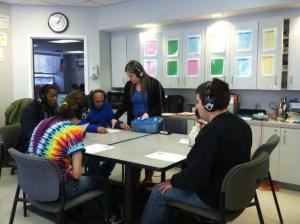
For adults in our Basic Education classrooms, we will have a Listening Station set up. Designed to help students monitor their own progress in reading, the listening station records the student reading a story, allows the student to listen to their own reading, and then offers them a chance to read the story aloud again. The instant results give the students a sense of accountability for improvement, as well as confidence in their ability to read out loud.ABE_Listening Station

To get started on your own #DLD, or even to track the activities of schools like ELBS, visit: http://www.digitallearningday.org/domain/25

Posted in Uncategorized | Tagged , | Leave a comment

Celebrating Music in Our Schools!

March marks the 30th anniversary of national Music In Our Schools Month! This is a great time to celebrate the wonderful ways that music enhances learning.MIOSM2015_Logo_color_lrg

Several years ago, we made the commitment to boost the music program in our school. We began by introducing monthly visits from the Erie Chamber Orchestra, led by GM Steve Weiser. Called “petting zoo day,” students have the opportunity to learn about an individual instrument first-hand, holding it, hearing its unique sound, and perhaps even trying to play it. This day is concluded by a mini concert, often played by Steve and another member of the orchestra.

Soon after, we began holding weekly visits from the Young People’s Chorus. Every Friday, students meet in the forum to participate in several sing-alongs, some that include hand/body movements along with them. The children sing a great blend of familiar and new songs, allowing them to feel excitement at the familiarity of a song they know, as well as enjoy hearing new songs each week.

Since then, we have seen first-hand the positive impact that music therapy has in our classrooms. Students request to listen to the music the musicians bring to the school each week, and often times want to listen to them repeatedly. As a result of attending these music sessions, students have improved their listening skills and their ability to remain on task for longer periods of time.

This April, thanks to the Erie Chamber Orchestra, we will have another wonderful opportunity. Renowned concert pianist, Martha Summa-Chadwick, will be coaching some of our therapists and teachers in one of her most advocated musical therapy concepts, known as biomedical music techniques.

Unlike standard music therapy based on social sciences, biomedical music techniques result from evidence-based research (developed at Colorado State University) that shows how music and rhythm can actually help redirect neural networks. Clients are actively engaged in goal-oriented sessions where the rhythmic drive of music is added to nonmusical therapeutic tasks, such as walking with a normal gait or maintaining the ability to focus attention. When music is introduced to such tasks in a population that is already “in tune” with music, the results can be remarkable.

Below is the link to a YouTube video of some of our children performing the classic, “Here Comes the Sun.” I hope you enjoy watching it as much as we enjoyed filming it!

https://www.youtube.com/watch?v=p-6XWurl6H0

Posted in Uncategorized | Tagged , , , , , , , , , , | Leave a comment

Proposed PA Budget Includes Increases for Education

AppleYesterday, Governor Tom Wolf proposed his plan for PA State spending for fiscal year 2015-16. I was pleased to see that he is including some significant new investments in education, both for early learning as well as K-12.
Some of the noteworthy proposals include:

  • Adding $494 million in Early Childhood Education funding, including:

$197 million to Pre-K Counts, a $100 million increase. Currently, only about 1 in 6 of PA’s 3- and 4-year-olds is enrolled in publicly funded, high-quality Pre-K. If the governor’s proposal is enacted, access would increase to about 1 in 4.

$238 million to Early Intervention, for services for children under 5 years old with developmental delays

  • Special Education would increase by $100 million, to about $1.147 billion total

This would be a nearly 10% increase, providing much-needed funds to programs that have only seen budget increases one time in the past 6 (fiscal) years.

  • $45.9 million to reduce waiting lists and expand services for individuals with physical and intellectual disabilities and autism

Included in this total is an additional $19.3 million to provide home and community-based care to 1,050 individuals with intellectual disabilities and autism, as well as $12.8 million to fully annualize the 2014-15 program expansion.

To read more about Governor Wolf’s budget proposal, visit the PA Office of the Budget site: http://www.budget.state.pa.us/portal/server.pt/community/current_and_proposed_commonwealth_budgets/4566

I certainly agree with Acting Education Secretary Rivera, who said: “The education of Pennsylvania’s children is paramount to our future success and to strengthen the middle class.” Governor Wolf’s proposed budget will propel Pennsylvania onward in its commitment to quality education for all children.

Posted in Uncategorized | Tagged , , , , , , , , , , , , , | Leave a comment

Spread the Word to End the Word

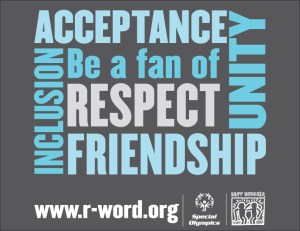
r-word graphicThis Wednesday is “Spread the Word to End the Word.” Started as a simple website by the Special Olympics in 2008, this grew to a nationwide campaign involving schools and universities across our county, all with the goal of ending the use of the R-word in everyday language.

Many people may not consider the R-word to be a slur, but to millions of individuals with intellectual and developmental disabilities, that is what it can feel like. Language can have a huge impact on attitudes and actions. By eliminating the R-word from regular speech, we can work on creating more accepting attitudes and communities for all people.

In 2010, President Obama signed “Rosa’s Law,” which was inspired by a Maryland woman with an intellectual disability. The bill garnered unanimous support in passing both the House of Representatives and the Senate. Rosa’s Law was commemorated in a White House ceremony with an 11-member delegation of Special Olympics athletes, leaders and self-advocates present to celebrate the milestone. Starting that year, federal agencies dropped the terms “mental retardation” and “mentally retarded” in federal health, education and labor laws and replaced them with “intellectual disability” and since then, almost every state has passed similar legislation.

By challenging others to talk, think and write with respect, we are making a noticeable and sustainable impact in ending the use of the R-word. TV networks have now banned the use of the word, and public figures are speaking out against those who might use the word.

I encourage you to sign the petition to not to use the R-word: http://www.r-word.org/r-word-take-action.aspx#.VPR5LfnF98F

… and tell your friends and family!

Posted in Uncategorized | Tagged , , , , , , | 1 Comment

Vitamin D & ASD: A Connection?

Vitamin D comes from exposure to sunlight as well as through several foods, and is important for calcium absorption and mood.

Vitamin D comes from exposure to sunlight as well as through several foods, and is important for calcium absorption and mood.

In the past few months, I have seen this question come up again: “What role do vitamins and other supplements play in ASD?” Most recently, the spotlight has been on Vitamin D.

The first article I read about was reviewing a small Swedish study which revealed that children with ASD had extremely low vitamin D levels at birth. Their siblings, who developed typically, had much higher levels of vitamin D. This brings about the question as to whether low blood levels of vitamin D predispose children to greater risk of autism, and if taking a prenatal vitamin D supplement could reduce this risk.

Included in the study were a number of Somali-immigrant families. Interestingly, doctors touched on the unusually high rates of autism in this population in recent years, and cited low vitamin D absorption capability as one possible factor.

A second article I reviewed looked at vitamin D’s influence from another angle. In a Chinese study, a toddler with ASD was treated with very high doses of vitamin D. The doctors noted that the toddler had borderline low blood levels of vitamin D when the study began, but after only two months he showed “dramatic improvements” in his symptoms and behaviors. Before getting too excited about these results, however, the doctors cautioned:

“It is important to note that this single case observation cannot be generalized to all patients with ASD. It is hoped that this case report will encourage researchers to conduct further long-term controlled clinical trials.”

Similar to how I felt when I reviewed the impact of Folic Acid with ASD, I am somewhat excited when considering the potential that natural preventative measures and treatments might have. However, it is important to remember that generalizations are hard to make when discussing autism. As they say, “If you’ve met one child with autism, then you’ve met one child with autism.” Still, I will continue to look for future studies to be released on not only vitamin D, but for other supplements as well.

Posted in Uncategorized | Tagged , , , , | 2 Comments

NED Awareness Week

This week is National Eating Disorders (NED) Awareness Week. As posted on NEDAwareness.org, “In the United States alone, 30 million people will be impacted by an eating disorder at some point in their lifetime. Eating disorders can include extreme emotions, attitudes, and behaviors surrounding weight and food issues. These conditions affect all kinds of people and don’t discriminate by race, age, sex, or size.”

I was surprised to read how many people are affected by this disorder. I also learned that eating disorders are associated with other physical, behavioral and psychiatric conditions. Sadly, 65% of people with an eating disorder state that bullying contributed to their condition. And we know that media, with its emphasis on the “perfect look,” is a contributing influence to negative body image.

Diet-for-weight-gainOf course, of these 30 million people, there will be some who have intellectual disabilities as well, although their challenges with food and eating will somewhat vary. When I think of eating disorders in this vein I think of feeding issues, which can be a common and serious problem for families of children with autism.


I consider myself fortunate that Ryan did not experience issues with feeding. When he was young, I decided that whatever food I was cooking for myself would be what I served him. I often laughed when people asked him what his favorite food was and he would reply, “Lobster and salmon!”

While some children with autism have serious sensory issues and food intolerances, we find in children and adults with intellectual disabilities that there are often difficulties with swallowing, which can result in choking.

Because of these challenges, Autism Speaks has developed a Feeding Tool kit for families who are experiencing feeding issues with their children.

This guide helps answer the most fundamental questions surrounding feeding issues, such as: Why is feeding so hard, What makes it so hard, and What can I do to help?

What tips have you found that help with feeding time? Share your experiences below!

For a copy of the feeding tool kit, click here.

Posted in Uncategorized | Tagged , , , , , , , , , | Leave a comment

World Thinking Day

wtd_patch_2015

This year’s badge for Girl Scout participation in World Thinking Day

Did you know that Sunday is World Thinking Day? Girl Scouts throughout the world created this day to participate in activities and projects that center around an annual theme. This year’s theme of “creating peace through partnerships” is inspired by the United Nations’ Goal to develop global partnerships for development.

This goal is about all countries, rich and poor, working with one another to create a global partnership that will benefit us all. In order for poorer countries to succeed, more prosperous countries must provide more effective aid, sustainable debt relief, and fair trade rules.

World Thinking Day not only gives the Girls a chance to celebrate international friendships, it is also a reminder that Girl Scouts of the USA is part of a global community—one of nearly 150 countries—with Girl Guides and Girl Scouts.

world-think

Girl Scouts of America represent global awareness through a multitude of fun and creative activities

We can take a page from the Girl Scouts’ book, both as an individual and as a community, to take time to think about how we all come together as global partners and support each other. In our BNI community, I’m thinking about how we can reach out to persons with disabilities in under-developed countries to help improve their lives.

We don’t necessarily need to reinvent the wheel in order to support this goal. There are several wonderful international programs that already exist. Two such ones that come to mind are Best Buddies and Special Olympics.

Best_BuddiesBest Buddies is a global volunteer movement that helps foster one-to-one friendships and integrated employment opportunities for people with intellectual and developmental disabilities. Volunteers annually contribute their time and services, a total that values $168 million USD!

LA2015_Primary_Lockups_4_color-01_webreadyThe Special Olympics, founded by Eunice Kennedy Shriver in 1968, provides year-round sports training and athletic competition in a variety of Olympic-type sports for children and adults with intellectual disabilities. Over 4.4 million athletes from 170 different countries have enjoyed participating in one of 32 sports competitions since its inception.

Our students are participants in the Best Buddies program and greatly enjoy it. Ryan’s been a Best Buddy for the last two years and has networked with typical peers from across the country as a result. It’s a very enriching and rewarding program, and best of all… it’s free!

What other ways or programs can you think of to achieve the World Thinking Day Goal?

Posted in Uncategorized | Tagged , , , , , , | Leave a comment

Presidents and Americans with Disabilities

In honor of President’s Day, I decided to reflect on some of the Presidents who played a significant role in improving the lives of children and adults with disabilities. Up until the 60s, most families were ashamed to admit that they had a child with a disability. President John F. Kennedy’s sister Rosemary, who had intellectual disabilities, served as an impetus for the President’s push to establish the President’s Panel on Mental Retardation in 1961.

The Presidents Panel on Mental Retardation, 1961

The President’s Panel on Mental Retardation, 1961

Comprised of 27 members, the panel reviewed the country’s current intellectual disabilities programs, eventually presenting the President with over 100 recommendations for the first comprehensive federal approach. Dr. Gertrude Barber, our founder, was a member of this panel.

A year later, President Kennedy signed the Maternal and Child Health and Mental Retardation Planning Amendment, which incorporated many of the panel’s recommendations and provided planning grants to enable states to update their intellectual disabilities programs. A second piece of legislation provided funding for construction of facilities related to treatment and care of people with intellectual disabilities. At the time of its signing, President Kennedy stated: “Mental retardation ranks with mental health as a major health, social, and economic problem in this country. It strikes our most precious asset, our children.”

300px-Gerald-ford

President Gerald Ford

The next major piece of legislation concerning people with intellectual disabilities was President Ford’s 1975 signing of the Education for All Handicapped Children Act, since renamed to the Individuals with Disabilities Education Act (IDEA). This special education legislation established a federal mandate of “free, appropriate public education” for children with disabilities. After the law passed, over one million children who had not been receiving any or very limited educational services were brought into public school systems.

Then on July 26, 1990, President George H.W. Bush signed The Americans with Disabilities Act, the world’s first comprehensive declaration of equality for people with disabilities. “Today’s legislation brings us closer to that day when no Americans will ever again be deprived of their basic guarantees of life, liberty, and the pursuit of happiness,” President Bush said.

President Bush signs the historic ADA.

President Bush signs the historic ADA

Most recently, Obama made history by signing the ABLE Act, which provides lifetime saving capabilities for people with disabilities.

It’s wonderful that the United States continues to be a leader in supporting the rights of children and adults with disabilities. In only 50 years we’ve gone from sending people with intellectual disabilities “away” to celebrating their unique and valuable contribution to our society. As Americans, we can all be proud of the monumental progress our country has made.

Posted in Uncategorized | Tagged , , , , , , , , , , | 2 Comments

Valentine’s Day!

There are several popular legends surrounding the story of Saint Valentine. One is that he was a Roman priest who was arrested, imprisoned, and eventually martyred after being caught marrying Christian couples. At the time, helping Christians was considered a crime.Val Day

Another says that Valentine, who was a priest, defied the order of the emperor Claudius and secretly married couples so that the husbands wouldn’t have to go to war.

Still another legend is that Valentine was imprisoned because of his refusal to sacrifice to pagan gods. While in prison, his prayers are said to have healed the jailer’s daughter, who was blind. On the day of his execution he left her a note signed, “Your Valentine.”

Today, whatever its origins, Valentine’s Day is known around the world as an opportunity to celebrate those we care about. At BNI, we celebrate with an annual Valentine’s Day dance for our high school students. The teenagers have a rare chance to get dressed up, and enjoy special punch and snacks. Villa Maria High School Honor Society students are invited to attend, and the students have a blast dancing the afternoon away! IMG_3046

Students also spend the week before selling Candy Grams to be delivered to “Your Valentine” the day before Valentine’s Day. The sender chooses whether he/she wants popcorn or candy and selects a Valentine card, which is assembled by the students and delivered to the recipient. Proceeds from the sale are then used by the students for their trips in the community.

At my house, I know we’ll be looking forward to the chocolate-covered strawberries!

Posted in Uncategorized | Tagged , , , , , , , , , , , | 1 Comment