World Refugee Day

wrdAs I listened to CNBC this morning and learned that today, June 20th, is World Refugee Day, I thought about the number of children we have in our school who are former refugees. One little girl in particular, Angela, is a remarkable story of courage and resilience. Her mother fled her native country because her daughter was unable to get the care and the education and support that she needed. She spent two years in a refugee camp prior to being relocated to Erie. Within two weeks, she was enrolled in our school, began receiving therapies, and soon had a wheelchair. Almost a full school year later, she uses a walker throughout our halls, speaks fluent English, and is preparing to move on to public school. As I look at Angela, I only wish that all refugee children with disabilities could have as a bright a future as she!

Sadly, over 60 million people around the world are now displaced from their homes, having been forced to flee from war, persecution and disaster. While exact statistics on how many of these individuals have disabilities are hard to find, we know that 1 in 66 children have autism so we can estimate the prevalence of children with autism in these refugee populations.WRD15
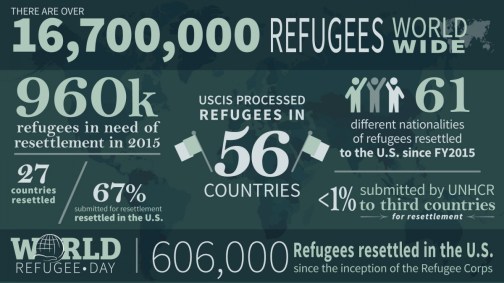
As the UN High Commissioner for Refugees described in stark terms in 2009, the reality for most displaced persons with disabilities is dire: “Too often invisible, too often overlooked, refugees with disabilities are among the most isolated, socially excluded and marginalized of all displaced populations.”

Fortunately, over the last several years the United Nations refugee agency (UNHCR), working with the Women’s Refugee Commission and other partners, has developed new policies and tools designed to improve protection and services for displaced persons with disabilities. These promising first steps give me hope that one day all children with disabilities may be given the opportunity to develop to their fullest potential!

ref

Posted in Uncategorized | Leave a comment

What is Kindness?

In the wake of the tragic events in Orlando over the past week, I have been seeing several positive posts, quotes, and sentiments about spreading love and kindness to one another. I couldn’t agree more! But it got me thinking – what, exactly, is kindness?

Kind [kahynd]

Adjective 1. considerate, or helpful; humane

peaceI wanted to read the definitions of these words so that I could be reminded of their meaning. I was initially put off by the idea that kindness was defined by the term “humane.” However, the more I thought about it, the more it seems spot on. Kindness is the most basic act of humane-ness that there is. To be humane implies that we don’t hurt one another, by words or by actions. That got me thinking about another word:

Tolerance [tol-er-uh ns]

Noun 1. a fair, objective, and permissive attitude toward those whose opinions, beliefs, practices, racial or ethnic origins, etc., differ from one’s own; freedom from bigotry.

Reading this definition, it seems to me that tolerance and kindness are synonymous. Our world is a wonderfully diverse place; it’s up to each of us to promote and demonstrate tolerance and kindness in our everyday lives. The world can be a kind place, and it starts with you!

give_peace_a_chance_fav_wall_paper_background-1979px

Posted in Uncategorized | Leave a comment

Transitioning to Summer Break

Last week, I shared some important safety reminders that all of us need to keep in mind during the summer. However, even before thinking about safety, you need to consider how the transition from school to summer will go. This can be a challenging time for some families – it was certainly a challenge for Ryan and I! What I learned over the years was that structure is essential and a day full of planned activities was best. To facilitate this, we would look at the calendar at the beginning of the summer and count the number of days for summer vacation. Then, we would add our activities to each day. This way, Ryan could look ahead and see what day he was going to be golfing, or going to the amusement park, or just beaching it on Lake Erie. Having a schedule helped to reduce his anxiety about what he would do the following day and reassured him that he would be having lots of fun throughout his summer vacation!summer

Some other tips I would recommend to help make the transition an easy one:

  • Include lots of physical activity. Students get weary by the end of the school year from sitting at a desk day in and day out. Help them to release all their bottled up energy by playing outside, jogging, or engaging in team sports. Plus, it’s good for their health!
  • Communicate by talking about the changes that will be occurring soon and even consider starting a countdown to the first day of summer. The more time you give your child to prepare, the easier the transition can be. Likewise, as August neared I reached out to the school to schedule a time for Ryan to visit, meet his new teachers and see his new classroom. Giving him time to prepare and reminding him that the change was coming ensured a smoother start to the new school year.
  • Although Ryan didn’t participate in any of the traditional summer camps, today there are so many more opportunities to consider. The best way to find out what’s available is get on the internet and google summer camp options in your area. (Read my blog here on all of the BNI’s summer opportunities!)

Do you have any additional tips that have worked well with your children? Please share below!

Posted in Uncategorized | 1 Comment

Graduation!

IMG_0601

Two of our preschool graduates

Thursday night was a momentous evening at the Barber National Institute! We celebrated the 2016 graduation with over 70 preschool, elementary, and high school students. Each of our students comes to the stage and receives their diploma. A representative from the local school district presents their official diploma to the high school graduates. We close the program with our school song, which was written by one of our teachers (Julie) and her husband Chris, members of the band Tennessee Back Porch when Dr. Gertrude Barber passed away. It has been sung at every graduation since! There were only a few dry eyes in our crowd of 400 family members and friends of our graduates!


Celebrate What’s Different

By Chris & Julie Moore

There’s a light on the shore of Lake Erie

Through the fog of ignorance it shines

Where a future awaits every child

Yours and mine, yours and mine

Building on the dream of Gertrude Barber

That for everyone there is a place

Knowing the light is always there to guide us

On our way, on our way

And we’ll celebrate what’s different

Knowing we’re all the same

The dream of school and family has come true

You will learn from me, and I will learn from you

And we’ll spread the light to others every day

And the Barber National Institute’s the way

Posted in Uncategorized | Leave a comment

Staying Safe During Summer

At the Elizabeth Lee Black School, the air is buzzing with excitement. That’s because summer break is here in only 6 more school days! Summer is a busy and happy time for all of us, but with all of the outdoor activity many parents have an added worry about wandering and the safety of their child. It’s no wonder, then, that June is National Safety Month.

I particularly like to bring awareness to this time of year, because there are so many great tips and resources available to families to help with safety and prevention. Below I’ve shared some of my most “tried and true” tips, but I welcome any new ones in the comments below!

Ryan Kayaking

Ryan kayaking over the summer months in Erie.

Water Safety & Swim Lessons

Living in Erie, water safety is a critical issue. Yet, it is an important issue wherever you reside. Children with autism are often attracted to water sources such as pools, ponds, and lakes. Since most children with ASD are rule-driven, setting specific rules as to how your child is to handle being around water is essential. It is even more important to practice those rules in real life situations. I really encourage parents to consider teaching your child to swim as well. Who knows, he or she may even find they love the activity! When Ryan started his swimming lessons at 2, he refused to put his head under water. Today, he swims laps in the LECOM pool an hour at a time.

Consider a Medical ID Bracelet or a personal tracking device

Depending upon your child’s age and verbal skills, you may want to purchase an ID Bracelet for your child. Include your name and telephone number and state that your child has autism. Once your child is over 16, they are also eligible to get an ID card from the DMV. If your child will not wear a bracelet or necklace, carrying an ID card or even a temporary tattoo with your contact information are other options if you know you’ll be out on the town for the day. Alternatively, tracking devices are available to place in your child’s pocket or backpack. It works with your computer or mobile phone to allow you to monitor your child’s location.

Wandering prevention

bracelets

One example of ID bracelets available.

Using deadbolt locks, keeping doors and windows locked and installing an alarm on doors are some ways to help prevent wandering while indoors. For children who respond well to visual cues, consider placing STOP or DO NOT ENTER signs around as these can be powerful reminders. We have lots of doors in our house, so I installed alarms on all of them so that I would know when Ryan exited if I were in another room.

For families who are just starting to form a safety and prevention plan, I highly recommend downloading the Big Red Safety Toolkit, provided by National Autism Association. It has GREAT resources and worksheets to help put a plan in place.

http://nationalautismassociation.org/docs/BigRedSafetyToolkit.pdf


Have a safe and happy summer to all!!

Posted in Uncategorized | Leave a comment

Re-Resolution Month!

Who could believe that it’s already June 2nd and we are halfway through our year?? Are you one of those people like me who begin thinking about “resolutions” at the beginning of any new year? Whether it’s making more time for yourself, exercising, or eating more nutritiously, resolutions tend to start strong in January… but by May or June are only a distant memory!resolutions.jpg

So what I’ve decided to do is make June my “Re-Resolution Month!” I am going to write my resolutions down (again!), and this time I’ll schedule an appointment with myself to review these goals weekly and chart my progress. If you know me, I am DATA-DRIVEN, so I hope that by charting my own progress, I will make myself accountable… to myself!

Spring of every school year is hectic and I was discouraged as I reflected on my progress, or lack thereof, towards my January 2016 resolutions. I’m a big believer that “Each day is a new day,” and I realized that there is no reason why my resolutions can’t fit this motto as well. In fact, it’s never too late to set a new goal or resolution for yourself – no matter what time of year it is.

Ryan and I have re-established our goal of eating nutritiously. We’ve listed the foods that we can eat, and the foods that we can’t eat, and have determined the number of times per week we can treat ourselves to the “not-so-healthy” foods. The list alone feels like progress for both of us!

I’ll keep you in the loop as to how we progress through the summer!


resolutions quote.jpg

Posted in Uncategorized | Leave a comment

Monthly Research Updates

Scientists and researchers are constantly uncovering more information related to autism, offering insights into the origins, possible causes and even at times potential cures. I come across dozens of articles on a weekly basis, some of which seem more important than others. I thought I would share on a monthly basis stories that caught my eye.

~ Maureen


researchOn the Brink of Breakthroughs in Diagnosing & Treating Autism

Science is taking a more personalized approach to treating the disorder and to understanding its diverse causes. New findings, to be presented at this year’s International Meeting for Autism Research, highlight these various factors, including environmental, prenatal, genetics, and other factors all may influence an individual’s likelihood of an ASD diagnosis later on.

Read the full article here.

http://blogs.scientificamerican.com/mind-guest-blog/on-the-brink-of-breakthroughs-in-diagnosing-and-treating-autism/

Through Play Children With Autism Can Hone Thinking Skills

                Many children with autism show unusual features in their play starting early in life. These include reduced creativity and imagination, such as recreating scenarios from a television show verbatim. The play of children with autism also tends to have a persistent sensorimotor or ritualistic quality. For example, a child might repetitively arrange toys to mimic some observed play activity. Likewise, in children with autism, the nature of pretend play appears to correspond with language ability and intelligence, even in minimally verbal children, and preschool play skills can predict the later language development in these children.

Read the full article here.

https://spectrumnews.org/opinion/viewpoint/through-play-children-with-autism-can-hone-thinking-skills/

Autism To Be Core Part of Teacher Training, Government Says (UK)

Teachers will be taught how to support children with autism for the first time following months of campaigning from charities, parents and MPs, it has emerged. Campaigners have said that with more than one in 100 children on the autism spectrum and over 70% of them going to mainstream schools every teacher will have autistic students in their classes at some point. Yet, autism training is not mandatory for teachers and some have no special educational needs training at all, leaving them unable to deal with complex issues that could damage a child’s education.

Read the full article here.

http://www.telegraph.co.uk/education/2016/05/25/autism-to-be-part-of-core-teacher-training-government-says/


Tune in next month for an update on autism research!

Posted in Uncategorized | Leave a comment

Adults with Autism

I spend a lot of time discussing the importance of early screening for autism, the effectiveness of early intervention, and on statistics surrounding children in general. However, I have frequently had adults approach me with the question, “Might I have autism?” Or: “I think my husband has Asperger’s.”

toleranceAs autism awareness continues to grow in our country, we see teens and adults asking themselves this question more frequently. They are looking for a reason why they act as they do. Could it be autism? We also see parents who, only after their child is diagnosed, begin connecting the dots and believe that they too have autism.

As there is no medical test that diagnoses autism, this determination is typically based upon clinical judgement. Specially trained physicians and psychologists administer those behavioral evaluations, interviews, and conduct personal observations in order to make this judgement.

Currently, there are few psychologists and physicians who are confident in diagnosing adults with autism. Most diagnostic checklists are geared towards children’s behaviors; although there are some under development, there are currently no formal assessments created for adults. And as adults often develop coping mechanisms to deflect some of the observable characteristics of autism, a diagnosis may prove even more difficult to secure.

We’ve come so far in the diagnosis of children, who’s to say where we will be over the next 3-5 years? If you want to learn more, here are some great resources:


www.cdc.ncbddd/autism/screening.html

www.autismspeaks.org/what-autism/diagnosis


Posted in Uncategorized | Leave a comment

Get Caught Reading

Are you an avid reader? If you are like me, one of your favorite activities on a quiet day is sitting down with a good book; or as I should say nowadays, sitting down with my iPad and iBooks store! So, it should be no surprise that I was thrilled to learn that May is “Get Caught Reading Month,” a nationwide campaign to remind people of all ages how much fun it is to read! Get Caught Reading began in 1999 to encourage people of all ages to read – and that reading can be fun!

Unfortunately, 44 million adults in the US can’t read well enough to read a simple story to a child. And literacy is directly tied to success later in life: children who have not developed some basic literacy skills by the time they enter school are 3 to 4 times more likely to drop out in later years.

I started reading to Ryan when he was only two days old. As he grew from an infant to a toddler, he too had his favorite books that we read so frequently the pages were scotch-taped together!

Here at the Elizabeth Lee Black School, we celebrated National Read-a-Thon day by having our early childhood students join together in the library to read The Doorbell Rang. One of our teachers read, while another signed the story. It was certainly a fun time for all! If you are interested in participating in Get Caught Reading month, here are just a few ideas:

  • Dedicate a half hour each day to reading and call it “Get Caught Reading Time.”
  • Set up a Get Caught Reading event in your community, and invite local radio and television personalities and other community figures to read aloud to children.
  • Set up a club where children and adults read the same book and compare their feelings on it

If you have other creative ways to get involved, I’d love to hear your ideas!

Posted in Uncategorized | Leave a comment

Not-So-Lazy Days of Summer at BNI!

Some people think of the lazy days of summer, but at the Barber National Institute, we’re actually busier than ever! Over the years, we have initiated a number of programs during the summer to ensure that educational opportunities don’t end on the second week of June for children with special needs.

esyHappy Hearts Childcare

Working moms and dads don’t have the summer off to play with their children. Happy Hearts offers childcare early morning through late afternoon for ages 3-5. Weekly fieldtrips, swimming, and lots of fun activities ensure kids have a great time!

Early Intervention

Ideally, children with developmental delays benefit from year-round education. At BNI, we offer a summer component with short breaks so that the children do have a “summer vacation” but not the traditional 3 months of summer. The children continue to receive education, speech therapy, physical therapy, or whatever service they need while in session.

Extended School Year (ESY)

For children 5-21 with disabilities, a summer program is offered during the month of July to assure that children do not lose skills that they have spent the whole school year building. Whatever services are requested on a child’s IEP are continued throughout ESY.

shamrock.pngCamps

BNI offers three distinct camps:

Camp Connections is a full-day camp for children with a diagnosis of autism who struggle with social skills among peers.

Camp Shamrock focuses on development of recreational skills for children with disabilities.

Expanding Social Opportunities (ESO) Camp is similar to Connections, but is offered to young adults 18 and over with intellectual disabilities.


quote


Posted in Uncategorized | Leave a comment