
Ryan and I have been talking about how we are going to participate in the #RAK17. We decided that every day, each of us will do a special act of kindness and at the end of the day share with each other what we did. In fact, this morning I witnessed a random act of kindness… for Ryan. He was running on the track at the gym, and his shoelaces had come loose. He asked a woman jogging by him if she would tie his shoes very tight for him. She stopped in the middle of her workout to do so. Moments like that are so touching!
As I thought about the topic of kindness, I began to consider how kindness is taught. The rampant problem of bullying in our schools underlies a deeper issue – are we teaching our children to be kind? 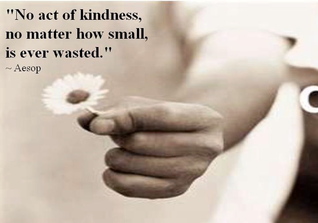
According to a recent study (link to study), about 80% of interviewed youth said their parents were more concerned with their achievement or happiness than whether they cared for others. The interviewees were also three times more likely to agree that “My parents are prouder if I get good grades in my classes than if I’m a caring community member in class and school.”
I think we can all agree that’s somewhat upsetting. So the question becomes, “What do we need to do differently?”
It’s never too early for children to hear from parents that caring for others is a top priority. A big part of that is holding children to high moral standards, such as honoring their commitments. I recall how as a youngster I signed up to play tennis, only to find that it wasn’t the right sport for me. However, my parents insisted that I continue for the season, as I had made a commitment to the team to play.
Learning to be caring is like learning anything else: it takes practice. Lots of it. This begins with the parents. Children need to hear their parents address each other as well as others in a respectful manner. This can be as simple as being polite to the waiter taking your order. Make sure your child understands that there is never an acceptable time to be rude to another person. Ryan and I have talked about the importance of being polite so often that he often goes “overboard” and says thank you repeatedly – to which I respond, once is enough!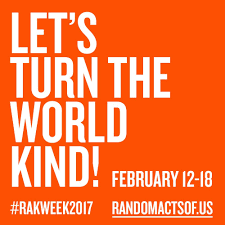
It’s easy to foster a caring attitude toward family and friends, but it can be more challenging to teach a child how to extend that to an unfamiliar person. Even though technology makes it appear that we are more connected than ever, the reality can be that there is a disconnect behind the computer screen. While the internet is a great platform to learn more about our globe and its challenges, it’s important to take this to the next level. I have always encouraged Ryan to learn more about and be open to different cultures and communities other than his own, but also to ask, “What can I do to help these people in need?” In light of our current political climate, this is more important than ever!
Parents are a child’s first teacher. We are mentors and role models. Even when you’re not aware, your child is observing you and seeing how you manage problematic or stressful situations. The way you respond is the way they will respond. Ask yourself: “Is this how I want my child to behave?” When I’m in a stressful situation, I find it helpful to take deep breaths. I have been teaching Ryan the same technique whenever he becomes anxious and overwhelmed.
This week is a wonderful reminder to all of us to be kinder to people and the world around us. Our world can always use some extra kindness!
 I recently read an article that discussed the benefits of optimism and the possible correlations between an optimistic outlook and physical health. Researchers measured physical health outcomes in a variety of different compromising health issues, including cancer, heart disease, infections, diabetes, kidney failure, and more. They found that better health was in fact tied to optimism – some studies even point to a longer life span in people who are generally optimistic!
 Of course, although we bring an abundance of love and care with us to this “job,” I think few would disagree that being a caregiver is also a challenging job. Each of us has experienced “burnout,” a time when the emotions associated with caregiving surface and cause a person to become overwhelmed, or worse.

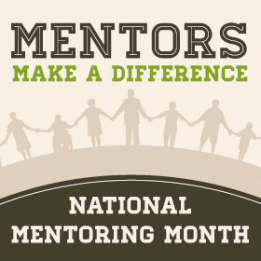 Are you a mentor? What does it mean to be a mentor? I would suggest that mentors come in all shapes and sizes; they can be a parent, a teacher, a coach or a volunteer who pours his/her time and expertise into helping young men and women develop to their fullest potential. Nobody succeeds on their own; every young person’s strength and resilience is fostered by those who have taught them they can do anything they put their mind to.
 s I grew older and began working at the Institute, there were many professionals and para professionals who graciously offered me guidance and helped me to grow. Now, many years later, I consider it a privilege to be able to mentor the many young students and professionals who come to our school ready to begin a career in special education. In this way, I’m continuing to carry on Dr. Barber’s vision for the Barber National Institute by echoing her beliefs today.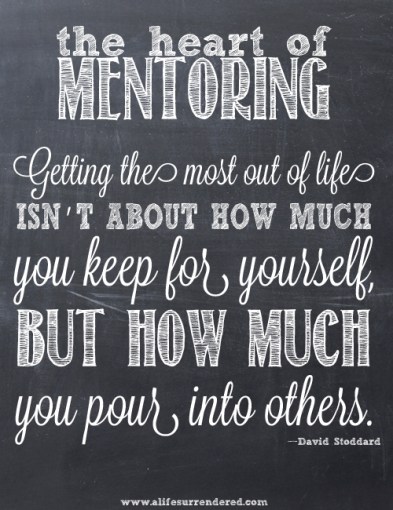
 “Come right back and be sure not to talk to strangers!”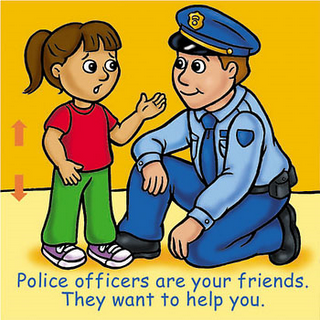
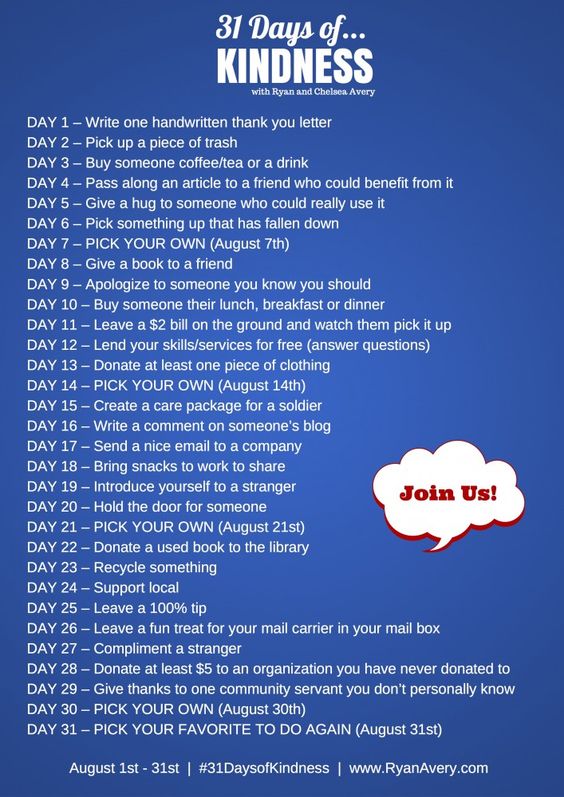 (Note: As you can see, this challenge was designed in August, but you can easily adapt it for any month! Source:
 Very often, the determination of the severity of autism is based upon the child’s verbal skills. Recent research suggests that nearly half of children with autism who speak few or no words have cognitive skills that far exceed their verbal abilities. The findings call into question the widespread assumption that children with autism who have severe difficulty with speech also have low intelligence.


 All About Autism