Making Kindness A Habit

Ryan and I have been looking forward to Random Act of Kindness Day on February 23. Each year we discuss how we shall celebrate.  Often, we decide that for the entire week, we will practice random acts of kindness and discuss them at the dinner table. Some of his thoughts for this week include: 

  • Fold my clothes
  • Put clothes in the laundry bin instead of leaving them on the floor 
  • Read to Happy Hearts children on Tuesday
  • Clean the children’s classrooms, locker rooms, gym, and cafeteria 
  • Hold open the door for others 
  • Say something kind to everyone I see 
  • Focus on work when I’m at work 
  • Be calm 

As I thought about the topic of kindness, I began to consider how kindness is taught. The rampant problem of bullying in schools underlies a deeper issue – are we teaching our children to be kind?  I saw with horror the pictures of the young girl who was attacked in school and then committed suicide.  How can that possibly happen? 

It is never too early for children to hear from their parents that kindness and caring for others must be a top priority. I think that Ryan and I were talking about this when he was three years old.   Learning to be caring is like learning anything else.  It takes practice. Lots of it.  This begins with us, the parents, as we are our child’s first teachers.  We do play an important role as mentor and role model. We may not be aware, but our child is observing us and seeing how we handle everyday situations.  The way we respond is, no doubt, the way that he/she will respond. 

Ryan and I often talk about the news, the war in Ukraine, the struggles of homeless people, what it means to have a job or to lose one’s job.  We talk about how we can help others whether they are in Erie or across the world.  I often say to him, “We have so much that it is our responsibility to help others.” 

I like to think that this week is a great reminder to all of us to be kinder to the people and the world around us.  Our world can certainly use an extra dose of kindness.  
Posted in Uncategorized | Leave a comment

Looking Further into Factors Contributing to ASD

Last week, I discussed the fact that Autism rates have tripled. It is not clear whether this is due to better detection and reporting or an increase in the number of Autism cases. 

There is no known single cause of autism spectrum disorder (ASD), but it is generally accepted that it is caused by abnormalities in the brain structure or function. Brain scans show differences in the shape and structure of the brain in children with ASD compared to neurotypical children. 

We do know that genetic factors may be the most significant cause for ASD.  Much of the risk of developing ASD, around 83% according to one analysis, comes from inherited genetic factors.  A child can inherit risk factors from one parent or both.  Early studies of twins had estimated heritability to be over 90% meaning that genetics explains over 90% of whether a child will develop ASD.  Researchers estimate that 2,000 to 3,000 genes contribute to ASD.  

Much has also been written about environmental factors or influences. These influences appear to increase the risk that a child will develop ASD. However, it is important to keep in mind that increased risk is not the same as cause.  

Other factors may include: 

  • A child’s sex. Boys are about four times more likely to develop ASD than girls are. 
  • Their disorders. Children with medical conditions such as fragile X, tuberous sclerosis, Rett syndrome have a higher-than-normal risk pf ASD or autism like symptoms.  
  • Extremely preterm babies. Babies born 26 weeks before gestation may have a greater risk of ASD.  
  • Parent ages. There may be a connection between children born to older parents, but more research is necessary to establish this link. 

One of the greatest controversies in ASD centers on whether a link exists between the disorder and childhood vaccines. NO reliable study has shown such a link. The original study that began this debate was retraced due to poor design and questionable research practices. 

I hope that my brief review has helped you better understand the causes and risk factors of ASD. 

Posted in Uncategorized | Leave a comment

Closing the Gap: Emerging Methods of Identification and Treatment of Autism Spectrum Disorder

Over the last 2 weeks, I discussed some of the key research for 2022.   However, there was an additional study recently published in the Journal of Pediatrics that I wanted to bring to your attention.  A team from Rutgers University looked at the trends in the identification of children who have been identified as having Autism Spectrum Disorder (ASD) by the age of 8.  There are 17 Center for Disease Control and Prevention (CDC) sites across the U.S. which estimate the rates of ASD based on the combination of medical diagnoses and records from schools and health care providers. New York and New Jersey saw, between the years of 2000 and 2016, a tripling of Autism rates. 

Nationally, the CDC in 2021 reported that the rise in ASD rates has been similar to New York and New Jersey.  One in 54 children have been diagnosed with ASD by the age of 8 in 2016 compared to 1:150 in 2000.  Why is that?   

I believe that there is a much greater understanding and awareness of ASD. I remember when Ryan was a young child, probably around the year 2000, and a staff at Wegmans asked me about him.  I explained that he had Autism and the person thought that I said that he was “artistic.”  I don’t think that would happen today.  

The Rutgers study did find that there was a sharp increase in the number of 8-year-olds diagnosed with ASD who did not have intellectual disabilities. There was a fivefold increase from 2000 to 2016 compared to a twofold increase.  I believe that in 2000, children with Intellectual Disabilities (ID) were the ones initially seen as having a challenge and the population of children without ID were overlooked.

Today, I believe that physicians have gotten much better in identifying the children with ASD without ID.  Next week, I will talk about what is and what is not a risk factor for ASD, including vaccines, genetics, and viral infections. 

Posted in Uncategorized | Leave a comment

2022 Autism Research Continued

This week, I am continuing our discussion of some of the 2022 research that provided me with new insights into the many facets of autism. The science of Autism is constantly evolving.  

Parental Genetics  

  • Integration of environmental factors and genetics is recommended to allow for a more comprehensive understanding of ASD and its impact on individuals over the course of their lives.  

Environmental Factors  

  • Studies indicate that females diagnosed with ASD have a greater chance for genetic mutations.  
  • Females with ASD are more likely to camouflage their symptoms in order to fit in with children whose development is typical. This makes it more difficult to provide early diagnosis and treatment options.  

Underserved Communities  

  • Racial and ethnic biases that exist both in research and patient care can hinder swift ASD diagnosis and intervention among often unrepresented populations.  
  • Parent training is being developed to be culturally adapted and delivered by physicians who have a strong background in the needs of specific cultural groups.  
  • More intense community engagement and a focus on inclusion is needed to serve a wide range of individuals with autism and their families.  

Disorders Associated with ASD  

  • Genetic markers often associated with ASD are also tied to developmental conditions such as ADHD, intellectual disability, and obesity.  
  • Individuals diagnosed with ASD have a greater likelihood of developing anxiety, GI issues, epilepsy.  
  • 18% of the general population is affected by anxiety. 40% of children with Autism and 50% of adults with Autism experience some sort of anxiety disorder.
Posted in Uncategorized | Leave a comment

2022: A Major Year for Advances in Autism Research

Over the next few weeks, I thought I would share some of the highlights in Autism Research in 2022.

Early Identification

  • CDC updated developmental milestones to track what 75 percent of children can do by certain ages instead of 50 percent, which was typical in the past. New research reinforced the need to focus on milestones and the importance of early intervention.
  • The Baby Siblings Research Consortium showed that maternal education levels and early gestures are important predictors in language skills, which are important predictor of the autism spectrum disorder (ASD) diagnosis.

Parent-Mediated Interventions in Training

  • A review of 30 studies showed promising results from parent mediated interventions, but more research is needed.
  • Parent mediated interventions can be used for teaching everything from core autism symptoms to self-care tasks (toothbrushing).

The Brain

  • The greatest differences in gene expression in the brain are in sensory areas like the visual cortex, which may explain why so many persons with ASD have sensory processing issues.
  • The visual area (the occipital cortex) was enlarged at young ages more so in children who have siblings who have a diagnosis of ASD, demonstrating that genetic inheritability plays a role in brain activity involved in sensory processing in families.
  • The amygdala (another brain region) may relate to anxiety with persons with autism. Certain areas of the amygdala are different in size and may explain variability in anxiety.
  • It seems that the ability to make gains or show potential for change over time is correlated with differences in brain structure. It is established that persons with ASD experience higher levels of anxiety, which appears to be linked to insistence on sameness.

Next week I will provide additional information about parental genetics, environmental factors, underserved communities, and the variety of disorders often associated with ASD.

Posted in Uncategorized | 1 Comment

Exercise: The Key to Combatting Depression in Children

I have been writing for several years about the benefits of exercise and how exercise, when developed as a life skill when a person is young, can provide lifelong benefits. We know the benefits of exercise as they relate to combatting disease, managing weight, stabilizing mood, boosting energy, and helping people get good quality sleep. The need for exercise is more important than ever now that people are striving to include their mental wellness as part of a healthy lifestyle.

The onset of COVID-19 and subsequent shutdowns pushed many into a state of social isolation. Children and adolescents were especially impacted, and we are seeing an increase in mental health problems among young people. According to a recent Wall Street Journal article, depression is the second-most prevalent mental illness among children and adolescents.

While past research has indicated that exercise can improve and even alleviate symptoms of depression in adults, there has been little research centered on whether exercise impacts the mental health of children and adolescents. A breakthrough study released by international researchers in JAMA Pediatrics this week supports the idea that moderate physical exercise does in fact help decrease depressive symptoms in children, especially those age 13 and older who participate in activities such as team sports and aerobics, including running and jumping, for an average of 50 minutes three times a week over the course of 12 weeks or less.

Exercise can be fun and engaging, and helping children discover the physical activities that they enjoy most can increase the chances that they will continue to keep moving. Although a challenge for some, team sports allow children the opportunity to socialize and develop strong bonds with their peers, which helps foster feelings of belonging.  

While additional research is still needed to further support the benefits of exercise in children and adolescents, this study shows that exercise, along with a well-balanced lifestyle and support from a network of family, friends, and caregivers, can help young people combat depression naturally and exhibit resilience during some of life’s most challenging times.

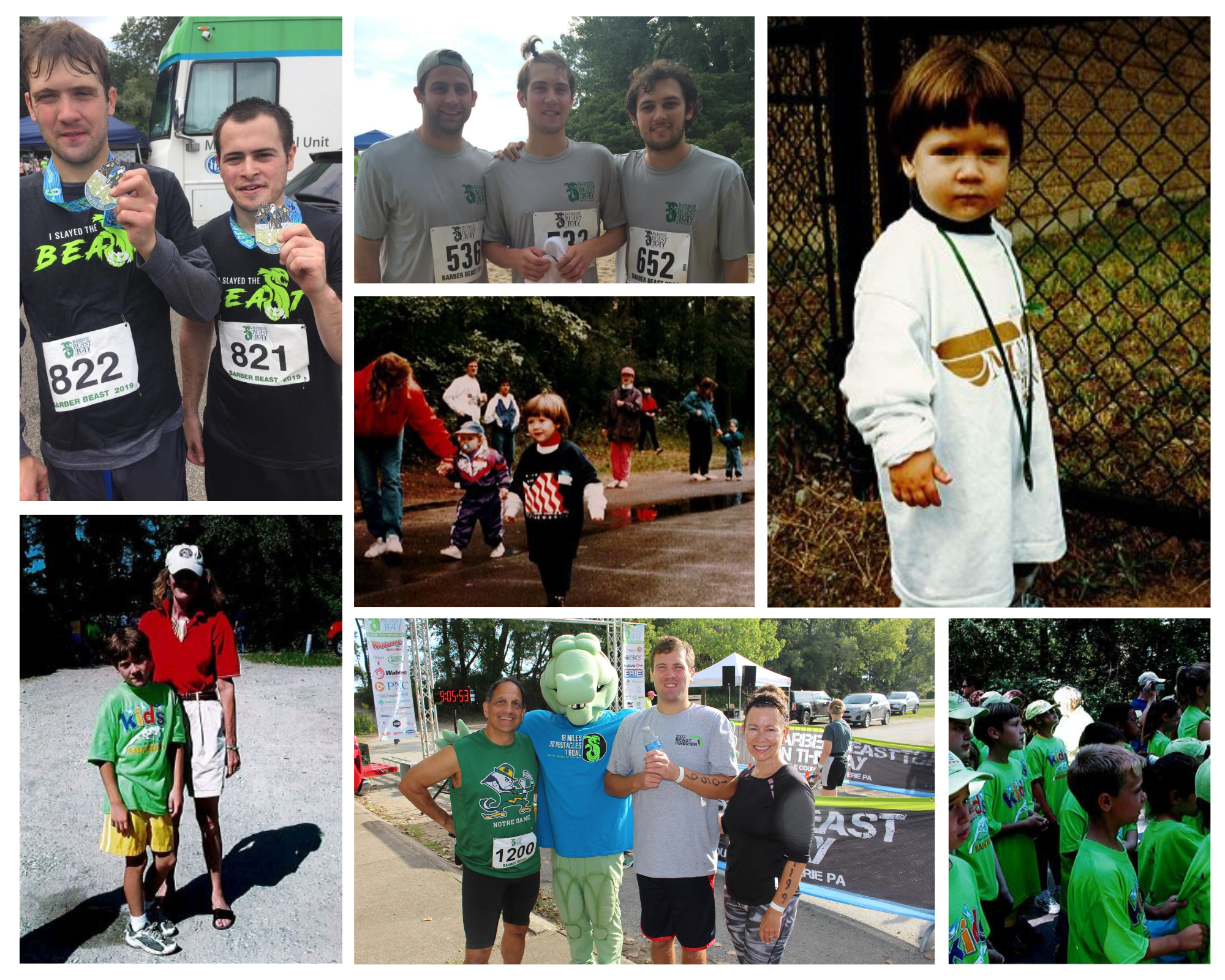
On a personal note, Ryan started running at a very young age. You can see him participating at the Charlie Barber Children’s Run at age 2. Yes, he really started running when he was 1. There was a children’s mini marathon at the Peninsula when he was 9 and that got him off to a good start. He participated in the McDowell Cross Country with assistance and support from the coach. When we joined LECOM, you could find him on the treadmill every day.         

Today, we are at Planet Fitness for a 60-minute workout on the treadmill. Exercise is a regular part of his life and I feel that because he had an early start, he views it as a “daily” activity. I have always believed that running helps decrease his repetitive behaviors and reduces some of his anxiety. I can’t imagine a day for him without exercise!

Posted in Uncategorized | Leave a comment

A Big Win for the Autism Community!

President Biden recently signed into law The Consolidated Appropriations Act, 2023, which contains some significant victories for the community of persons with Developmental Disabilities and Autism.  These include:

  • The first expansion in a decade of the Autism and Developmental Disabilities Monitoring Network, which works to understand the number and characteristics of people with Developmental Disabilities and Autism, racial and ethnic disparities, and access to services for those who live in various areas of the country.  They are also expanding monitoring of outcomes for young adults transitioning from school age to adult services.
  • Increased funding to provide more training opportunities for future health professionals to help improve access to high quality health care for persons with Autism and Developmental Disabilities.
  • Supports implementation -focused research that targets caregiver-mediated interventions, including caregiver skills training.
  • For the first time, supports ongoing work at the National Institute on Aging to understand how autism spectrum disorder (ASD) affects the aging process.
  • Increased funding for vocational rehabilitation programs, which assist persons with Autism and developmental disabilities to receive training and resources to obtain competitive, integrated employment

Thanks goes out to Autism Caucus co-chairs Reps. Chris Smith (R, NJ) and Mike Doyle (D, Pa) as well as Senators Amy Klobuchar (D, MN), Thom Tillis (R, NC), and Robert Menendez (D, NJ) who have championed these efforts for many years.

To learn more about this milestone and the positive changes it will bring, please visit https://www.autismspeaks.org/advocacy-news/milestone-wins-autism-community-federal-bill.

Posted in Uncategorized | Leave a comment

Christmas Traditions: A Look Back

As Christmas is now only a few days away, I began thinking of Christmas throughout the years.
Christmas was always an important day in the Barber household.

Mother loved decorating the house for Christmas, and she would take days to
complete her decorating.

And, yes, we had lots of Christmas birthdays. Joe’s birthday is Christmas, mine is the 27th
and JoAnne’s was the 3rd. Since we were close in age, we always had one large birthday party and for many years it was at Evan’s Skateland on West 8th
Street.

On Christmas day we would go to Church at St. Peter’s after opening our presents. Then it
was on to, as my father called it, the Barber ranch/family home. Santa (Uncle John) always made an appearance. We believed in Santa until we were quite old as we knew that it wasn’t possible for our parents to buy us birthday and Christmas presents!

Once we were teenagers, we began going to Midnight Mass and then on to our great friend,
Louise Behringer’s home for brunch. Looking back, I can’t even imagine brunch at
1:30 a.m.! But we did!

Many traditions are carried on as I celebrate with Ryan during the holidays.

Ryan has experienced every kind of Christmas imaginable. Regardless of the weather, we have been fortunate to spend this special day surrounded by family and good friends. Christmas Eve always
finds us at St Patrick’s with Aunt Jeanne.

When Ryan was just 3, I explained to him that, just as Jesus received 3 gifts from the Magi, he would as well. So, over the years he grew up knowing that there would be 3 gifts under the
tree Christmas morning.

What are some Christmas traditions for you and your family? Wishing you a very happy holiday season and a joyous near year!

Posted in Uncategorized | Leave a comment

It Takes a Village to Accomplish Great Things!

Henry Ford said, “Coming together is a beginning. Keeping together is progress. Working together is success.” This quote is especially impactful to me as I think about the wide range of stakeholders who have helped mobilize the mission of the Barber National Institute since its very beginning in the early 1950s. Even before Dr. Gertrude Barber established the first class for children with disabilities, she had support from a group of parents who saw the promise in what Dr. Barber was doing to help provide critical services for children with disabilities.

Today, our programs have expanded in ways that seemed impossible at one time. As I think about the success of our programs, I reflect on who is in my village. This year, we had so many key stakeholders come together to make the following possible:

“Christmas in the City” Barber Ball, which took place on Saturday, December 10 at the Bayfront Convention Center, marked 50 years of this annual gala that benefits programming at the Barber National Institute. Thanks to the efforts of our chair couple Tim NeCastro, President and Chief Executive Officer at Erie Insurance, and his wife Lisa NeCastro, and over 1,200 guests who attended, we were able to raise funds for our pool renovation project, which is expected to start in June 2023

Operation Warm delivers winter coats to young children in need in our communities at no cost to families. With the motto of “more than a coat”, the nonprofit organization believes that it is important to focus on meeting the needs of the whole child. A winter coat provides physical warmth and protection just as it proves confidence and hope for a brighter future. Our partners at PNC Financial Services have collaborated with Operation Warm to help the Elizabeth Lee Black School obtain coats for our students in need.  I would like to offer a special thanks to Jenny Weigold Geertson, Vice President and Director or Client and Community Relations for the Northwestern Pennsylvania Market of PNC, for her work in coordinating this year’s delivery of winter coats for our students.

The Kahkwa Club is working to enrich the lives of disadvantaged students at the Elizabeth Lee Black School this holiday season through a gifting program. Thanks to the generosity of Kahkwa Club members, students will receive gifts they request. I want to extent my gratitude to the Board of Governors at the Kahkwa Club along with Kal Darres, General Manager, and Hillary Kaczay, Director of Administration/Membership, for supporting and coordinating this gifting program.

Thanks to everyone who supports the diverse programming for both children and adults at the Barber National Institute. It really takes of village to accomplish great things!

Posted in Uncategorized | Leave a comment

Offering Baskets of Hope This Holiday Season

While the holiday season is a time of joy and celebration for many, some families struggle with food insecurity and the stress that comes along with it. The staff of the Elizabeth Lee Black School established a food pantry several year ago as a way of supporting families of students who could benefit most from having access to nutritious and non-perishable food items.

Through the graciousness of Barber National Institute staff who donate toward the food pantry each year, the Elizabeth Lee Black School is able to create several hand-crafted baskets containing a wide assortment of food items, including cereal and bread, soup, pasta and sauce, peanut butter and jelly, canned vegetables and fruits, juice, and snack bars.  

There is no shortage of generosity being expressed by staff who want to support students at the Elizabeth Lee Black School and their families. An outpouring of kindness from our remarkable staff is something that is noticeable throughout the year, but it is especially apparent during the holiday season.

Our staff really embody the values of the Barber National Institute, and I am so proud of everything our staff members are able to accomplish by using these values to navigate their efforts both in and outside the organization!

In addition to supporting students and their families by offering food baskets during the holidays, the Barber National institute, through the Employee Service Fund, provides financial support to 501(C)3 nonprofit organizations nominated by staff each year. Some of the charities receiving donations include the United Way of Erie County, ExpERIEnce Children’s Museum, Hope on Horseback Therapeutic Riding Center, Special Olympics of Pennsylvania, and Sisters of St. Joseph of Northwestern Pennsylvania.

Merry Christmas!

Posted in Uncategorized | Leave a comment