Mother’s Day

As I was planning my blog for Mother’s Day, I thought, “Why don’t I ask for Ryan’s input?” Last night, while he was having dessert, I asked the question, “Tell me about your mom.” The following are his (unedited) responses:

“You look pImageretty.

You let me do fun things.

You paid for me to go skiing.

You take me out to dinner.

You are nice because you help me and other people a lot.

You take me to movies.

You are kind and merciful because you help me with clothes, made my bed, help kids get bikes at Barber Center.

You taught me to be kind and merciful and the importance of helping God every day by helping others.

You help me out a lot.

You work out with me at LECOM and Build Your Bod and play tennis and golf and bowling.

You taught me how to fold clothes, do things, to cook, be safe.

You made me go to school and I learned there how to get a job.

You helped me learn how to interact with people.

You helped me to learn to do emails by myself and find the internet.

You helped me learn how to behave by helping me understand what I was allowed to do and not allowed.

You went to school a long time so you know a lot of things about school that you could then teach me.

You think that family is important, I get to enjoy them and you taught me they are important too.

You taught me how to work hard and try hard and put my best effort to everything I do.

Happy Mother’s Day, Mom. I love you! You are very important to me. I am very grateful to have you in my life.

Thank you for everything you have done for me. I would not want anyone else to be my mom.”

by Ryan Carey

Posted in Uncategorized | Tagged , , , , | 10 Comments

Teacher Appreciation Week

I’d like to invite you to talk a walk with me down memory lane and think about the teachers in your lives that truly made a difference. I immediately think of my 8th grade teacher at Villa Maria Grade School, Sister Eulalia. Sister was an older Josephite nun, who had taught my father English at Saint Ann’s School. When I first walked into her classroom, my knees were shaking, my hands were sweating, and I was in a state Imageof panic. Why? Sister Eulalia was, first and foremost, a strict grammarian. Under her tutelage, we diagrammed “Our Father,” “Hail Mary,” and every other prayer recommended by Sister. It was her belief that unless you could diagram, you could not write a clear, concise sentence that would effectively communicate your message. By the time I graduated from 8th grade, not only could I diagram every prayer, but I actually wrote a paragraph worthy of Sister’s approval. I love writing, even today, and I thank Sister Eulalia for enabling me to develop those skills.

ImageMy next thought of influential teachers brings up Ryan’s academic career. He was very fortunate to have many outstanding teachers throughout his career in the Millcreek School District. Two teachers who truly made a difference in Ryan’s education were Darcie Mosley and Regina Cocolin. As principal of Walnut Creek Middle School, Darcie welcomed Ryan into the WC family from his first day in 6th grade. Regardless of his challenges, she was Ryan’s greatest champion and cheerleader. I attribute his success in middle school to Darcie’s leadership. Regina Cocolin was Ryan’s speech teacher in high school. The enthusiasm and commitment to his success that was shown by Regina encouraged Ryan to achieve the very best.
Finally, my thoughts are drawn to the teachers and therapists on the ELBS faculty. These individuals make dreams come true for our students, each and every day. It is my honor, and pleasure, to work with them on a daily basis. I congratulate each of them as they continue to carry out the mission of Dr. Gertrude Barber.

Do you remember your most influential teacher(s)? I invite you to share those memories with everyone here!

Image

“A teacher is a compass that activates the magnets of curiosity, knowledge, and wisdom in the pupils.”
– Ever Garrison

Posted in Uncategorized | Tagged , , , , , , , , | 2 Comments

Mini Beast on the Bay & National Physical Fitness Month

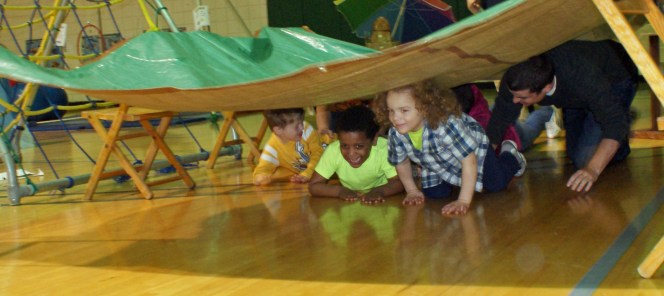
ImageThe Mini Beast on the Bay obstacle course is back for its second year and is even better! Last year, the ELBS faculty and students chose to initiate a Mini Beast as their way to participate in the Barber Beast on the Bay. It was such a great learning experience for our students that it has become an annual event. Through a team effort by teachers and therapists, our entire gymnasium is transformed into an adaptive obstacle course. These obstacles include a cannon ball relay race, a “beach encounter” where students walk, wheel, or crawl through the sand and other obstacles, a wet ‘n’ wild wave pool, and a mini tall ship where our students/crew can perform tasks such as raising the flag, steering the ship, and hoisting the anchor. These activities provide a multitude of opportunities for students to engage in social language with their peers and staff, request activities, practice turn taking, and function as a classroom team.

The Mini Beast on the Bay is a great event to close Autism Awareness Month and begin National ImagePhysical Fitness Month. The President’s Council on Fitness, Sports & Nutrition(PCFSN) has recognized that the importance of children and adults with disabilities participating in physical activity and has established theI Can Do It, You Can Do It!(ICDI) program. You too can promote these efforts by:

–      Incorporating exercise into your family’s busy lifestyle by making small changes, like taking a walk after dinner or going for a bike ride.

–      Encourage teachers and administrators to make physical activity a part of every student’s day.Image

–      Recruit youth leaders in the community to visit your school and talk to their peers about the importance of being active.

–      Welcome children with disabilities into organized team sports.

–      Visit this webpage for some basics of fitness , whether you are a senior citizen, millennial, teenager, or adolescent

I’d like to leave you with the following statement from Anthony Marc Robles, a PCFSN Council Member and champion for the involvement of children and adults with disabilities in physical fitness and activities:

“I am committed to empowering kids and adults with disabilities to experience freedom through sports and recreational activities. Sports are a gateway to meeting new friends, learning important life skills and improving your health. However, not all children and adults with disabilities have access and opportunities to enjoy being active like I did. And since individuals with disabilities have a greater need for regular physical activity and good nutrition to prevent obesity and other chronic conditions, it is even more important that schools and communities provide equal opportunities for all Americans to lead healthy, active lives.”


Posted in Uncategorized | Tagged , , , , , , , | Leave a comment

“Autism – What We Know” by Wendy Chung

For today’s blog, I originally planned to take a look back on the month of April and our activities.

However, I just watched a TED Talk titled “Autism – What We Know (And What We Don’t Know Yet)” by Wendy Chung, the Simons Foundation Autism Research Initiative (SFARI) Director of Clinical Research. Dr. Chung’s presentation is a concise, informative review of what we know about autism, what we don’t know, and what definitely has been proven false.

Image

Dr. Wendy Chung

Some of the information that I found fascinating included:

– Genes play a larger role in autism than they do in cancer, heart disease, or diabetes

–  25% of cases with autism are caused by a genetic mutation that was neither possessed nor transmitted by the parent but occurred in the egg, the sperm, or both

– There is not one gene for autism but 200 to 400 different ones that can cause autism. Understanding how the genes work together will be the key to treating autism.

Image

Full interaction network with ASD genes highlighted

– An eye-tracking tool measuring a baby’s eye movement as he/she watches a video of a person speaking is being used by researchers to analyze whether the baby has trouble making eye contact and thereby is more likely to develop autism

Image

Interaction between ASD genes.

As Dr. Chung so clearly states, “as much as we know, there is so much more that we don’t know”. I’d encourage you to take the 15 minutes and watch the video, tell your friends about the talk, and together we can increase autism awareness not just in April but throughout the entire year. If you know a person or family living with autism, encourage them to join the Interactive Autism Network (IAN). Much more research and information is needed and if we are to help people on the spectrum live their best lives.


Posted in Uncategorized | Tagged , , , , , , , | Leave a comment

iPads TRR_0588ehave created a buzz among families raising a child with autism. A child who is unable to speak can only express his needs and wants through behavior.  For example, a child could take a parent’s hand and walk him to the refrigerator or he/she could be a temper tantrum.  With the explosion of technology many parents are asking the question “can a technology device such as the iPad help my child learn language?”

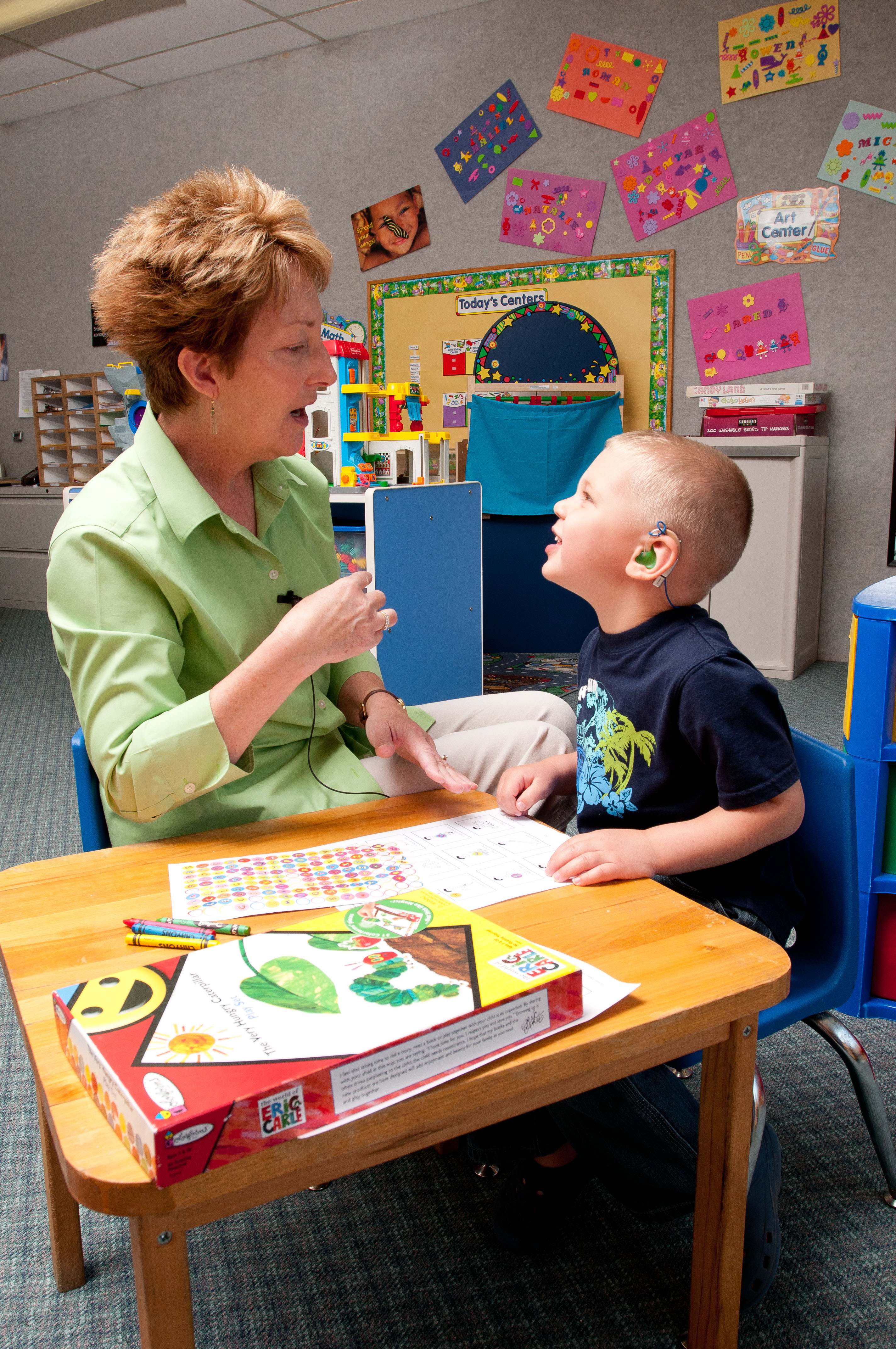
At the BNI we have seen significant improvements in language in our students when the iPad is used in conjunction with therapy. However, I am always looking to research to support educational practice. Therefore I was pleased to see that research teams at UCLA, Vanderbilt and Kennedy Krieger had tested a developmentally based behavioral intervention approach for teaching language using the combination of spoken language and speech generating devices (SGD) including iPads.  They found that in a group of 62 children over a nine month period using the SGD the researchers saw significantly greater improvement in spoken language in comparison to the same intervention without access to the SGD.  Over time many of the children decreased their use of SGD because spoken language was quicker and more efficient.

Here are some suggestions and tips to help you incorporate the iPad at home:TRR_0065

  • If possible have one iPad for communication and another for leisure skills/entertainment.  We’ve done this in the classroom because we have found that if the child is using it as a reinforce it is very difficult to get him to maintain attention to a task.  An inexpensive way is to have different colored covers for the iPad.
  • The application Proloquo2go.com was used in this study.  We did not find this app to be appropriate for many of our students so this led us to explore LAMP, ArtikPix and this list of articulation apps.  BNI’s speech therapist cautions that there are so many apps available to help children learn speech; however, many of them are not developed by speech-language pathologists. Parents should look for apps specifically designed by licensed and trained speech-language pathologists.  These apps should not be used in place of a SLP, but should instead be used as a way for parents to work on generalization/carry over of skills.
  • Be flexible.  Choose an activity that your child really enjoys and have an alternative in mind when he loses interest in the game and communicating.
  • Take advantage of this great opportunity for turn taking, a skill many children need to develop.
  • Verbalize or use your language to describe the pictures your child is seeing on the screen.  Take advantage of using prepositions to describe the location of the object.
  • Limit the iOS device to stay on one app by disabling the Home button – please email me for step by step instructions on how to do this.

TRR_0005As someone who is taking baby steps to become technology literate I encourage you to do the same. There is a world of opportunity out there for our children.  Just reach out and ask for help.  Please share with us any of your thoughts on iPads and communication.


Posted on by all about autism | Leave a comment

Landmark Agreement Helps Adults With Disabilities Enter the Competitive Workplace

Last week the Justice??????????????????????????????? Department announced a “landmark” agreement with the state of Rhode Island, which was found to have violated the Americans with Disabilities Act by segregating adults with disabilities in workshops and day facilities. Over the next ten years Rhode Island is required to:

  • Assist these adults in securing typical jobs in the community that pay at least minimum wage with the flexibility of remaining in the workshop if they so prefer.
  • Support non-work activities in the mainstream (i.e. libraries, recreational facilities).
  • Prepare high school students with developmental disabilities for competitive jobs in the community through internships and mentoring programs.

Public funding that had been utilized to support segregated environments is to be redirected toward services in integrated settings. It is anticipated that the settlement will provide a roadmap to compliance for all states.

This consent decree came as a result of an investigation of the Providence Training Through Placement program by the federal Labor Department. The investigation found abuse of a federal law that allows the payment of subminimum wages.  In addition, many workers had expressed interest in securing employment in a competitive workforce but had been ignored.

On a similar note, researchers at Vanderbilt ????????University and the University of Wisconsin/Madison examined 150 adults with autism. This study, published in the Journal of Autism and Developmental Disorders, found that more independent work environments may lead to reduction in autism symptoms and improvement in daily living skills.

For these reforms to be successful, businesses must support expanded training and employment of persons with disabilities. A positive outgrowth was the announcement that the U.S. Business Leadership Network, which includes Fortune 500 companies and Walgreens, will sponsor a summit meeting in June 2014 to engage the business world in these efforts.

Advocates for adults with disabilities will be closely monitoring these developments in the upcoming months. If you’re a business person and would be open to the possibility of hiring a person with disability there are a wide range of programs available to assist you.  For more information on how our Employment Specialists can assist adults with developmental disabilities in finding employment & meeting the needs of employers contact: myself, Steve Davis at SteveD@barberinstitute.org or Maggie Dimitriadis at MaggieD@barberinstitute.org.

Here are just a few testimonials:SONY DSC

  • “The Barber Institute has a wonderful job coaching program that helps individuals gain their independence and become successful Wal-Mart Associates.” Lori – Wal-Mart, Human Resources Office.
  • “[The individual placed is a] conscientious employee that appreciates his job. Richard – Girard Dinor, Owner.
  • “I wanted to take a second to let you know how valuable your services are to our organization. Our employee that you have coached and trained is second to none . . . I would also strongly encourage any of my peers and colleagues to take advantage of the supported employment services offered by the Barber National Institute. They definitely won’t be disappointed!” Janet – Forestview Nursing Home, Dining Supervisor
Posted in Uncategorized | Tagged , , , , , , , , | Leave a comment

Hoppy Easter!

IMG_3781This blog may seem a little familiar.  It was one of my first blogs posted on April 5, 2012 yet it is still relavent today so I wanted to share it again.

While holidays are filled with joyful memories, they can also bring added stress for parents. Changes in schedules, visits to unfamiliar sites and meeting new people can lead to challenging behaviors in some of our children. In thinking about the upcoming Easter weekend, I wanted to share a few tips that I have learned over the years:

– Avoid Easter Egg Hunts that involve hundreds of children. The noise, distractions, and unfamiliar faces can lead to anxiety in some children. What you hope to be a fun, positive experience, quickly can turn in the other direction.

– Make a reasonable schedule. One or two visits to relatives’ homes may be as much as your child can handle. Keep the visit time limited. If you are going for dinner, arrive right before and depart soon after. IMG_3714Don’t plan on spending 2 or 3 hours in unstructured time. Follow your usual schedule for most of the day and then go on your visit.

– Practice makes ease. Write social stories days in advance and practice the skills you want your child to demonstrate. This could be simply walking up to each person, shaking hands, and saying, “Happy Easter!”

– Use visual aids. Give your child a visual schedule of what the visit will look like. This could also be done with pictures.

i.e.: 4:30 p.m. – Leave home

5:15 p.m. – Arrive at grandma’s home

5:15-5:40 p.m. – Visit

5:40-6:00 p.m. – Eat Dinner

IMG_35326:00-6:30 p.m. – Take a break. If it’s a beautiful day go for a walk, some outdoor play, or watch your child’s favorite DVD.

6:30 p.m. – Eat Dessert

6:30 p.m. – Depart

– Comfort Zone: Take your child’s favorite toy, book, or iPad to the party. Identify a quiet room in the house that your child can use for a break. When you arrive, show your child the room and explain the room’s purpose.

– Work as a team. If you and a spouse or a friend are attending the event together, drive two cars. If you need to leave early with your child, then the rest of the family can stay until the end. You won’t feel guilty that the rest of the family is missing out.

– Use a tag-team approach. Ask a few family members who understand your child’s situation if they would give you a break and stay with your child so that you can visit with your family.

– Take your time. If you are responsible for Easter dinner, take a vacation day or two IMG_3547prior to the holiday so that you can prepare while your child is at school. If family members offer to bring a dish, take them up on it. If you are going to someone’s house, be sure to explain to them your child’s diet restrictions, as well as preferences.

– Keep your child engaged. Involve your child in some aspect of dinner preparation, such as coloring place cards, writing a holiday prayer, hanging up coats, etc. Make a job list for your child to complete and have him or her cross jobs off as they are finished.

– If the day goes well, congratulate yourself. Make a list of what you did that helped your child to be prepared and any ideas you can use for future holidays.

– Forgiveness brings peace.

If the day is challenging when you go to bed:

  • Forgive yourself for any negative feelings you have.
  • Forgive your child for his or her behavior.
  • Forgive your friends and family for not having the patience and understanding you have.

Holidays will always bring stress. But with good planning, you may actually begin to look forward to them.

Next week I will be discussing the landmark court case in Rhode Island.

Happy Easter!

Posted in Uncategorized | Tagged , , , , , , , , , , , , , | Leave a comment

There’s Nothin’ Better Than A Good Old Fashion’ Friend

The latest report released by the ????????CDC indicating one in 68 8-year- olds has Autism Spectrum Disorder (ASD) has everyone talking. This 30% increase since 2012 tells me that every elementary classroom probably has one child on the spectrum.  Looking back to Ryan’s preschool and elementary years in the mid-1990s this certainly was not the case.  Yes, there were children with ASD and significant cognitive challenges in public schools, but typically they were in special education classrooms.  Today, most children are included in regular education.

Even with a growing number of children with autism in our schools, I hear from many group fishparents who are concerned  that their child has few friends.  This is an issue that Ryan and I experienced throughout his educational career.  Children with ASD face many challenges including isolation from their peers.  Having friends to help them through difficult times can boost their self-esteem, enhance their social skills and protect against bullying.

As this is Autism Awareness Month I wanted to share my thoughts on how to be a friend to someone with autism.

As a parent I encourage you to:

  • Create a culture of acceptance within your family
  • Encourage your child to play with children who are different than he/she (culturally, differently abled)
  • Be proactive and initiate a playdate with a child with ASD.
  • Help a child with ASD by including him/her or simply hanging out one-on-one watching how you interact with people will help the child learn the rules for friendship and make it easier to develop friendships with others.

As we continue to celebrate Autism Awareness Month let’s establish a goal of creating and nurturing new friendships with people with ASD.

Posted in Uncategorized | Tagged , , , , , , , , , , , , , | Leave a comment

How Do Thirty Million Words Affect Your Child?

Dana Suskind MD - Thirty Million Words

Dana Suskind, MD (photo courtesy of Thirty Million Words Initiative website)

Did you know that by age 4 children living in poverty had heard 30 million fewer words than their counterparts in more advantaged families? This finding led Dana Suskind, M.D. to establish the “Thirty Million Words” Initiative to close the achievement gap and give children the best start in life.  In this home-based program parents learn to enhance their home language environment utilizing an interactive multimedia curriculum.  PNC announced at its recent Grow Up Great 10th anniversary celebration in Chicago, a $19 million initiative supporting early childhood language development.  This grant will include a five year longitudal study to determine the effectiveness of the Thirty Million Words initiative by following between 200 – 250 Chicago children from 15 months of age to kindergarten.

SONY DSC

Nick Scott, Jr.

In our own state of Pennsylvania the success of every child is one of top economic priorities. Therefore, Pennsylvania established the Early Learning Investment Commission to build a private/public partnership of business leaders to advocate for quality early childhood education investment.  We are fortunate to have local entrepreneur Nick Scott, Jr. lending his expertise to the commission.  This morning he joined us to celebrate National Week of the Young Child by reading Brown Bear, Brown Bear What Do You See, by Bill Martin Jr. and Eric Carle to our students.  It’s very encouraging to see that our business leaders are acknowledging that the future of our city, state and nation is based upon quality early childhood education.

Please share your ideas on how we can expand the network of business champions who understand the connection between early childhood learning experiences and a strong economy.

Posted in Uncategorized | Tagged , , , , , , , , , , | 2 Comments

Celebrating the Week of the Young Child

LTRR_8018ast week I had the honor of attending PNC Grow Up Great’s tenth anniversary in Chicago. This week marks the Week of the Young Child.  Both of these events focus public attention on the needs of our children under 5 and their families and recognize the essential role of early childhood programs.  In 2004, PNC recognized the importance of these early years and committed $100 million to prepare America’s youngest children to be ready for kindergarten.  In the last ten years that commitment grew to $350 million with 2 million children served and 39,000 employees participating.

The National Association for the Education of Young Children (NAEYC) began the “Week of the Young Child” I am the future paradeover 40 years ago in recognition that the early childhood years lay the foundation for children success in school and later in life. Today we know that for every dollar spent on high-quality early education, society stands to gain up to $16 in long-term savings.  Why? Because we know that children who participate in quality early childhood education are more likely to graduate from high school, avoid drugs and incarceration and go on to own their own homes, cars and savings accounts.

What can you do to support the “Week of the Young Child” and early childhood education?

  • Volunteer at the children’s section in the library.A father reading to his children
  • Read to a young child in your life.
  • Make your legislators aware of the importance of early childhood education for the success of our country.
  • Host a book club for parents and young children.
  • Tutor a child at a local school.
  • Check out Sesame Street’s new Muppet, Buzz Word, who is promoting “Words Are Here, There And Everywhere” a bilingual vocabulary program.
  • Stop by a PNC branch and pick up a “Words That Help Me Grow” vocabulary tree poster.
  • Explore the PNC Grow Up Great website which offers a new online lesson center featuring early education lesson plans.

On Thursday I will share with you information on Thirty Million Words, a multi-million dollar language development initiative supported in part by a $19 million grant from PNC.

Free the child’s potential, and you will transform him into the world.  ~ Maria Montessori, Italian Physician and Educator

Posted in Uncategorized | Tagged , , , , , , , , , , , , , , , , , | Leave a comment