Have a Hauntingly Booo-tiful Halloween!

Halloween is all about dressing up as scary, ghoulish, funny characters knocking on the doors of neighbors and friends, collecting treats and relishing in the fun. However, I always think about how we can create a safe and fun Halloween.

So if you and your child are going out Trick or Treating, think about …10.30.14 Halloween Graphic

Photo Oct 29, 9 28 59 AM

Ryan’s first Halloween.

Our Halloween week is already in full swing. Ryan can’t wait to go a haunted house this evening. It’s his favorite Halloween celebration. Tomorrow I’ll be attending our Halloween parade. There will be over 150 children dressed in elaborate costumes walking through the halls of Barber National Institute. Pictures will be posted on the Barber National Institute’s Facebook page.

I have also included two links for Halloween Social Stories.

I wish you a safe and happy Halloween.

Posted in Uncategorized | Tagged , , , , , , , , , | Leave a comment

Have You Thanked Your Physical Therapist Today?

October is National Physical Therapy month, so I thought I would take the opportunity to spotlight two physical therapists and a physical therapist assistant who work in our school. I did a Q&A with each therapist to discover what they enjoyed most about being a physical therapist, some of the challenges they faced and to learn about some of their favorite memories working at Barber National Institute.

Marsha Nevinsky working with a student at BNI.

Marsha Nevinsky working with a student at BNI.

Marsha Nevinsky, a therapist with us for the past 25 years, has focused on children with low incidence special needs. She works daily on seating, walking, and therapeutic positioning technology to bring movement opportunities to all of our students. She finds it most fulfilling to interact directly with the students, see their progress and join in all of their successes. Some of her greatest challenges include matching technology to the child’s skills, securing funding for the technology, generating documentation and waiting for delivery of equipment. Marsha loves working at our school because she is part of an amazing team. She and her coworkers’ dedication day in and day out to helping children reach for the stars is the real success story.

SONY DSC

Chris Gross working with a student at BNI.

Chris Gross has been a therapist with us since 2007. She finds that celebrating the successes, both small and large, of the students the most rewarding. Knowing that she helped contribute to their success is what keeps her going. Every day presents a new challenge. One of the greatest barriers is communication and finding a way to “connect” with some of the students so that therapy is something they look forward to rather than resent. She believes that our school is a great place to work and her coworkers are some of the best around. She is especially grateful for her mentor, Martha Nevinsky, the students, and learning experiences she has gained.

Vincent Massella, Physical Therapy Assistant at BNI

Vincent Massella, Physical Therapy Assistant at BNI

The newest member of our team, Vincent Massella, joined us three months ago as a physical therapist assistant. He enjoys working with the students on their functional movements and seeing the excitement on their faces when they have overcome a challenge. One of the most rewarding aspects of his job is seeing the quality of life improvements.

On behalf of the hundreds of children and their families who have benefited from your expertise, I extend my thanks. We are so fortunate to have you as part of the Barber National Institute family.

To learn more about physical therapy and its impact on people of all ages and abilities to reduce pain, improve mobility and stay active and fit throughout life, please visit the American Physical Therapy Association.

Posted in Uncategorized | Tagged , , , , , , , | Leave a comment

It’s Time to Grow Up Great

TRR_7872Today I am attending the PNC Grow Up Great Advisory Council in Pittsburgh. In 2004, PNC adopted a corporate-wide program focusing resources on early childhood education to make a tremendous impact. Since then, PNC Grow Up Great has distributed more than $73 million in grants and worked with partners like Sesame Workshop® to develop rich educational materials for children, families and educators. PNC employees have also volunteered more than 410,000 hours to make this vision come true. To date, the program has served approximately 2 million children throughout 19 states and the District of Columbia.

I am looking forward to hearing the PNC Grow Up Great updates as well as a lively discussion on trending issues in early childhood education. I will be sharing this information with you next week. Have a great weekend.

Posted in Uncategorized | Tagged , , , , | Leave a comment

Helping Children Communicate with Technology

Dynavox & teenOne of the guiding principles throughout our history has been the desire to share our knowledge with others for the improvement of quality of life for children and adults with disabilities. That’s why we are very excited to work with Tobii DynaVox. Tobii is well known for their alternative access method devices like the eye-gaze access to computerized communication devices. DynaVox offers a portfolio of communication and education solutions for individuals with significant speech, language and learning difficulties. They have also played a significant role in moving the augmentative and alternative communication (AAC) industry forward since the early 1990s.
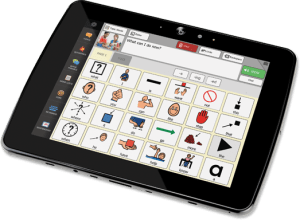
Our specific project involves the Compass Communication App and the T-10 and T-15 devices. The T-10 is the smallest device at approximately two pounds and the industry’s first dedicated speech generating tablet. The T-15 at four pounds has a larger screen for children who need bigger letters, pictures and symbols. Both can be mounted and the T-15 has multiple access methods: direct selections, scanning and mouse capabilities. Based on our input, the Compass App has been updated to include new software changes, new page set-ups, uploads by populatiDynavox T10on and compatibility with the Android tablet.

This is a win-win partnership because it enables us to secure the Compass App for each therapist as well as receive ongoing training throughout the school year and continuing education credits. In turn our therapists have shared their expertise and unique knowledge of students with significant challenges.

Who knows what the future will bring with the technological advances we are seeing occur????

Posted in Uncategorized | Tagged , , , , , , , , | Leave a comment

Broccoli, Cauliflower and Autism? Who knew?

Broccoli and autism? When I broccoli vs kidsaw the headline that the chemical sulforaphane found in broccoli, cauliflower and other cruciferous veggies may reduce the symptoms of ASD, I was somewhat incredulous. When I read the study, my initial reaction was “I need to go out and buy sulforaphane supplements.” However, I wanted to research this study first.
I discovered these interesting facts:  

  • Scientists at MassGeneral Hospital for Children and John Hopkins University School of Medicine gave 40 young men (13-27 years of age) with moderate to severe ASD the phytochemical sulforaphane or a placebo for 18 weeks
  • Sulforaphane, which showed negligible toxicity was selected because it upregulates genes that protect aerobic cells against oxidative stress, inflammation and DNA-damage. Studies have shown that the cells of individuals with ASD often have high levels of oxidative stress, the buildup of harmful, unintended byproducts from the cells’ use of oxygen, which can cause inflammation, damage DNA and lead to other chronic diseases.
  • Researchers found that many of those taking sulforaphane substantially improved in social interaction, verbal communication and decreased in aberrant behaviors.
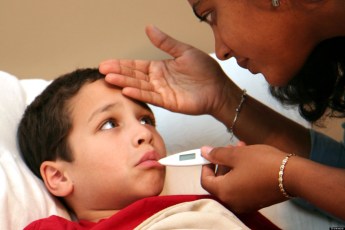
  • This study was inspired by a 2007 Kid with feverstudy that indicated when children with ASD had a fever their social interaction became enhanced. Dr. Andrew Zimmerman (part of the 2007 study and the current study’s author) said there were several chemicals that stimulated changes in children with autism’s behavior during fever.
  • Broccoli and other cruciferous vegetables, although rich in sulforaphane do not contain enough of the chemical to see similar behavioral results.
  • The authors cautioned against starting sulforaphane supplements. This trial was very small to assure safety and there was also a potential side effect: 2 of the 29 boys taking the supplement had seizures although they had a history of seizures in the past.
  • The brand used in the study was a patented, pharmaceutical grade product that is not available for purchase over the counter.
  • If parents decide to try a sulforaphane supplement, they are strongly encouraged to work closely with a physician to monitor possible reactions.

I was very interested to read about the 2007 study, as Ryan’s behavior always improved when he had a fever. More eye contact, more language and significant decreases in repetitive behaviors. Then when he was healthy again the same issues reoccurred. I often raised the question, “why is this?” Now I understand why.

The researchers note that they don’t want to imply that sulforaphane is a cure for autism. The study offers preliminary evidence that there may be an equal or better supplement that could treat autism by improving symptoms caused by underlying cellular problems.

I’m not running out to get the supplement, but I do plan to share this research with Ryan’s physician. What are your thoughts?

Posted in Uncategorized | Tagged , , , , , , , | 2 Comments

Expect, Employ, Empower! Recognizing National Disability Employment Awareness Month

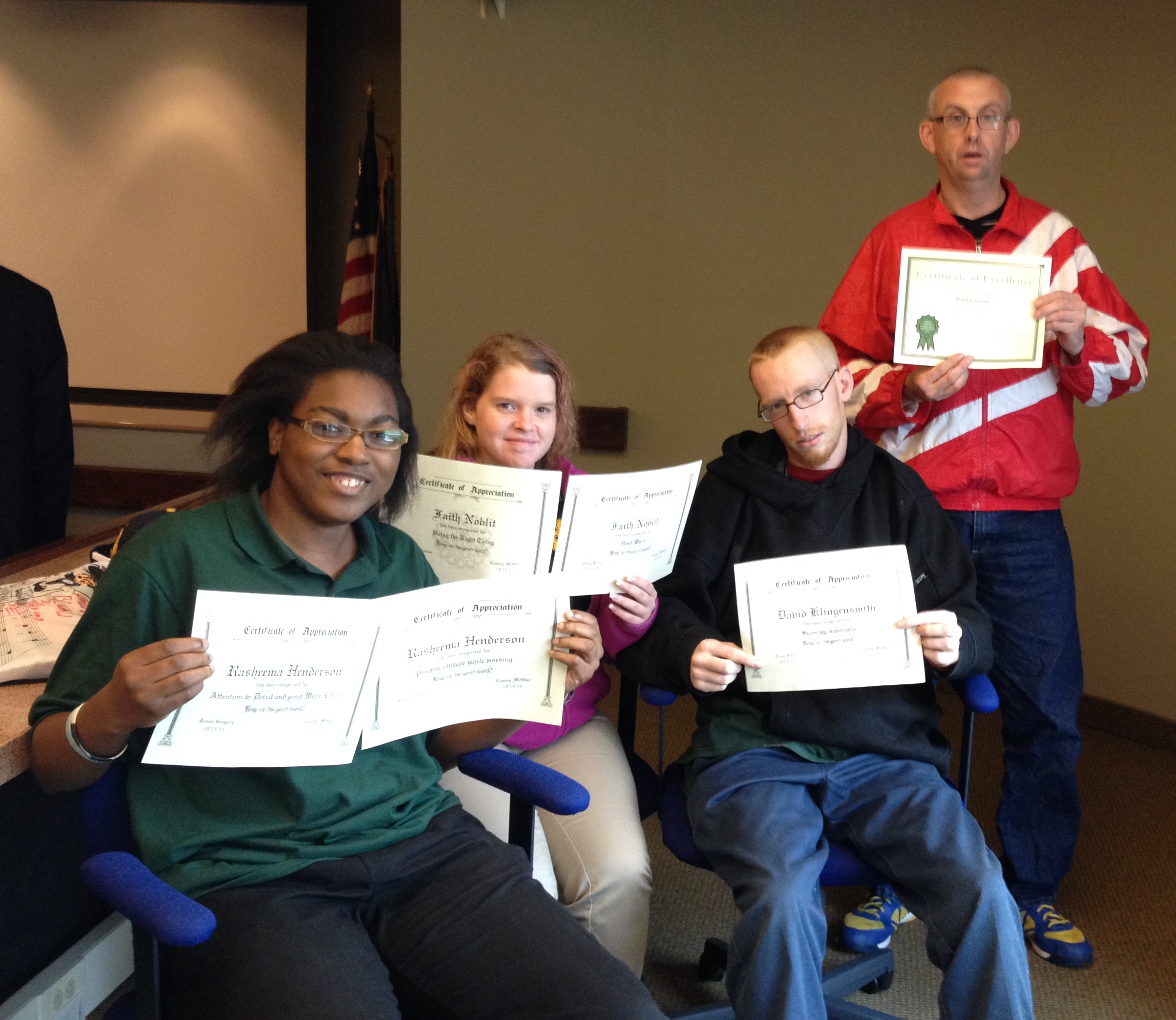
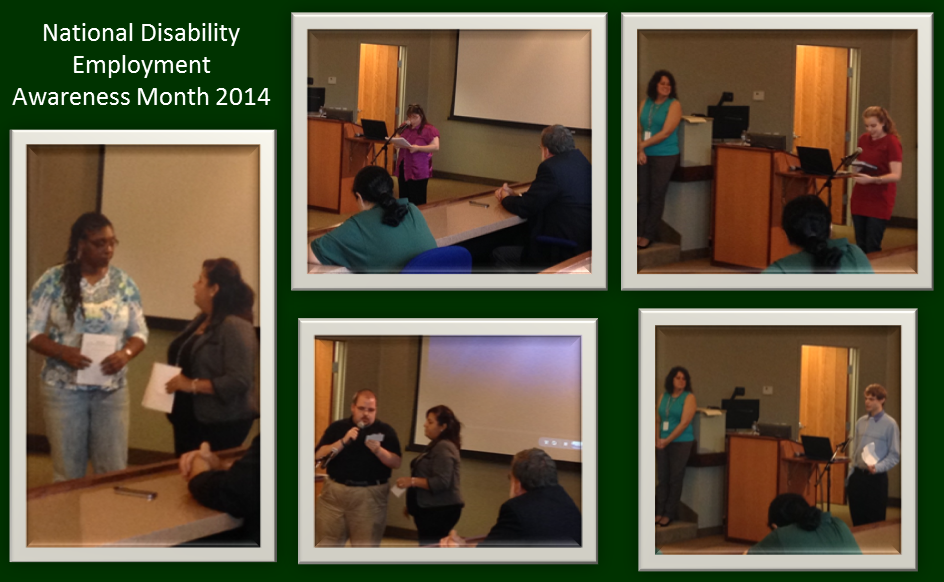
2014 Collage NDEAMEvery October we recognize National Disability Employment Awareness Month (NDEAM), a national campaign that raises awareness about disability employment issues and celebrates the many and varied contributions of America’s employees with disabilities. The Barber National Institute (BNI) celebrated NDEAM with an awards ceremony today.

The excitement at the award ceremony

2014 NDEAM Award Ceremony

2014 NDEAM Award Ceremony

was contagious. Many of the employees in the community came back to BNI and shared their dream job experiences and encouraged their peers not to give up even though it can be hard to find a job. Thunderous applause followed each speech. Some of the takeaways I heard were:

  • EXPECT that everyone can have their dream job someday.
  • EMPOWER yourself by working with Transitional Work Services and learning new skills
  • EMPLOY your positive attitude and perseverance at your job
TWS Employee Award Winners

TWS Employee Award Winners

The BNI is not new to supported employment. Our program, which began in 1986, has worked with over 500 employers and has placed 700 people in the community workforce. I am also happy to say that year to date 26 individuals have secured employment in our community through the efforts of our Supported Employment program.  Here is a very special video that BNI’s Supported Employment team produced.

Some of the Erie community employers include Erie Insurance Arena, Millcreek Mall, KFC, Bello’s Market, McQuillen Auto, Agility Marketing, Giant Eagle, Wal-Mart, Walgreens, Sisters of St. Joseph, Bob Evans, Pizza Hut, ODIS 12, Triangle Tech and Plastek to name just a few.

What can we do to increase employment opportunities?

Ryan receiving his award.

Ryan receiving his award.

  • Have a CAN DO attitude and set your goals high.
  • Ask parents and educators to begin the transition process early and establish high expectations.
  • Ask employers to consider hiring a person with a disability when he/she meet your job specifications.

I would love to hear your success stories about community employment in your area.

P.S. I’m very proud to say that Ryan received an award as well for being

employed at Bello’s for one year and perfect attendance. He loves what he does at Bello’s and truly looks forward to working there every day.

Posted in Uncategorized | Tagged , , , , , , | Leave a comment

Did You Know That October Is National Down Syndrome Awareness Month?

IMG_3868

BNI student dancing at our first preschool dance (2014)

As we celebrate National Down Syndrome Awareness Month I would like to share some facts about Down Syndrome with you.

  • Down syndrome occurs when an individual has a full or partial extra copy of chromosome 21. This additional genetic material alters the course of development and causes the characteristics associated with Down syndrome.
  • There are three types of Down syndrome: trisomy 21 (nondisjunction) accounts for 95% of cases, translocation accounts for about 4% and mosaicism accounts for about 1%.
  • The incidence of births of children with Down syndrome increases with the age of the mother. But due to higher fertility rates in younger women, 80% of children with Down syndrome are born to women under 35 years of age.
  • Down syndrome is the most commonly occurring genetic condition. One in every 691 babies in the United States is born with Down syndrome, or approximately 6,000 births per year. Today, there are more than 400,000 people with Down syndrome living in the United States.
  • Most people with Down syndrome have cognitive delays
    1900s Attire 3

    BNI student celebrating 100 Days and Counting by dressing in 1900s attire.

    that are mild to moderate. Children with Down syndrome fully participate in public and private educational programs. Educators and researchers are still discovering the full educational potential of people with Down syndrome.

  • Businesses are seeking adults with Down syndrome for a variety of positions. They are being employed in small- and medium-sized offices: by banks, corporations, nursing homes, hotels and restaurants. They work in the music and entertainment industry, in clerical positions, childcare, the sports field and in the computer industry to name a few.
  • People with Down syndrome have feelings just like everyone else in the population. They experience the full range of emotions. They respond to positive expressions of friendship and they are hurt and upset by inconsiderate behavior.

Researcher Benjamin L Handen, PhD, BCBA-D, Associate Professor of Psychiatry and Pediatrics at University of Pittsburgh School of Medicine is seeking adults with Down Syndrome to participate in a research study at The University of Pittsburgh Medical Center.

DS Research image

Posted in Uncategorized | Tagged , , , , , | Leave a comment

New Campaigns Are Developing Across the Country to Create an Inclusive and Diverse Workforce

Lori Sousa, 48, and Peter, Maxmean, 35, at their wedding reception in East Providence, R.I., in August. Ãngel Franco/The New York Times

Lori Sousa, 48, and Peter, Maxmean, 35, at their wedding reception in East Providence, R.I., in August. Ãngel Franco/The New York Times

The article A Couple Gaining Independence and Finding a Bond on the front page news of the Sunday NY Times caught my attention. It’s a love story about two people with intellectual and developmental disabilities (IDD) who met at a sheltered workshop in Rhode Island, found their “soul mate,” and are now newlyweds. Their story came to light when this workshop came under federal investigation and was found to have willful violations of the sub-minimum wage law including the failure to record and pay employees for all of the hours that they worked. The state of Rhode Island agreed to a landmark consent decree which requires integrated opportunities for the 2,000 persons working in sheltered workshops across the state.

This decree put the other 49 states on notice that change is coming and employment in the community and not sheltered workshops should be the first consideration for persons with IDD. President Obama signed into law this past August the Workforce Innovation and Opportunity Act, which significantly limits placements at sheltered workshops and other work environments where people with disabilities earn less than minimum wage. Under the new law, individuals with disabilities age 24 and younger will no longer be allowed to work for less than the federal minimum of $7.25 per hour unless they first receive pre-employment transition services at school and try vocational rehabilitation services. Many senators and representatives have issued statements supporting this regulation,

An employee with BNI's TWS.

An employee with BNI’s TWS.

noting that young people with IDD deserve to be treated with dignity and afforded all of life’s opportunities.

As the nation, we are seeing more movements to promote inclusivity and diversity in the workforce. Best Buddies International just launched their campaign I’m In To Hire, which promotes the business benefits of hiring individuals with IDD and motivate employers to create a more inclusive workplace.

A groundbreaking report “Employing People with Intellectual and Developmental Disabilities,” by the 2014 Institute for Corporate Productivity (i4cp) reveals the business benefits of hiring this skilled, untapped group of employable candidates – like the fact that more than 3/4 of business who hired individuals with IDD rated them as “good” to “very good” on most performance factors, such as dependability and work quality.

TWS Employees from BNI

TWS Employees from BNI

The Barber National Institute consistently works with the community and business leaders in PA to promote employment for individuals with IDD. Locally most students graduating from high school move into our employment programs, Transitional Work Services (TWS) or Supported Employment (SE). TWS offers training and work opportunities to individuals who wish to transition from school or unemployment into an integrated, competitive work force. A variety of work experiences and specialized training in landscaping, food service, janitorial work, and machine operation are provided. These and other opportunities give participants the experience needed to gain employment.  The goal of SE is to prepare individuals for future employment success with a range of services to help ensure a good match for both the adult seeking employment and the prospective employer. The goal for each supported employee is that he or she will successfully and independently maintain employment in the community.

It is exciting to see the nation embrace inclusion of IDD in the workplace. What can you do to see this dream come true? I would love to hear your thoughts.

Posted in Uncategorized | Tagged , , , , , , , , , , | Leave a comment

Poverty and Disability Go Hand in Hand

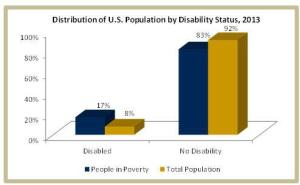
Statistics provided by UC Davis Center for Poverty Research

Statistics provided by UC Davis Center for Poverty Research

It is very troublesome to read that poverty rates are back on the rise across the Erie region after two consecutive years of decline. 29.2% of the city’s residents (28,114 people) and 45.5% (9,649) of its children under 18 are living below federal poverty guidelines. Two years ago the rate was 25.7% of adults and 36.5% of children were living in poverty in the city of Erie. Unfortunately, poverty and disability go hand in hand. The poverty rate for working people with disabilities is 2.5 times higher than for people without disabilities. They struggle to secure employment, locate affordable housing and find needed medical care.

poverty - childWe also know that the many conditions of poverty pose challenges to educational success. Impoverished children are less likely to attend preschool, often experience inadequate nutrition, have limited access to medical resources and may live in dangerous home situations. I’ve seen many of our students move frequently, have inadequate housing and, very sadly, experience homelessness.

I agree with Mary Bula, of Erie Together, in her statement, “poverty is a tremendous challenge in our community and it will take a community response to address it.” I’m proud to say that Erie has begun this task. I would only add that the intersection of disability and poverty must also be addressed if we are to break this connection.

Posted in Uncategorized | Tagged , , , , , , | Leave a comment

Lack of Eye Contact In Infants Could Be An Indicator of a Future Autism Diagnosis

Did you know …4842-344x228-Eye_contact

  • A child can be born with a genetic liability, but how autism is expressed can be changed between birth and 2 years due to brain development
  • It is anticipated that over the next few years the diagnosis of autism will occur at infancy
  • Visual fixation time (how much time a child spends looking) is different for children with autism, typical children and developmentally delayed children
  • Social interaction is the platform for brain development
Dr. Ami Klin

Dr. Ami Klin

I had the opportunity to view an excellent webinar by Dr. Ami Klin, Director of the Marcus Autism Center (NIH Center of Excellence), Emory University.  The Marcus Center is looking at social / visual engagement, social / vocal engagement and then developmental treatment. It was fascinating to learn that babies attend to eyes up to 2 – 3 months of age. All babies start with eye fixation at least 50% of the time as eyes are the reflexive behavior, genetically determined, subcortically controlled. Between 2 – 4 months this changes to interactional, reward driven, experienced dependent and cortically controlled. As the babies grew older, Dr. Klin found that children who are later diagnosed with autism decreased attention to the eyes.  You may be asking yourself, ‘what is the importance of looking at eyes?’ It is not just for eye contact, but for the child to get the sense of value at looking at another. It is an issue of engaging the child.

He studied a set of babies at two months and eye contactfound that all of them looked at the eyes. Then in the next 24 months typical children continued looking at the eyes, but children later diagnosed with autism begin decreasing significantly in this amount of time. A 16 month old child with autism often does not look at the eyes, but looks towards the mouth. In the 2nd year of life babies with autism became focused on objects. Interestingly, some of the high risk babies for autism have course correction at 9 months. The question is why?

EarlyIntervention4Dr. Klin is working with Dr. Amy Wetherby of Florida State University the author of the Autism Navigator™. The Autism Navigator™ for Early Intervention Providers is a web-based instructional system that addresses the need to increase the capacity of early intervention (EI) service providers to appropriately serve young children with ASD. Designed to support a mentoring model for delivering instructional content, it focuses on using effective consulting and coaching strategies to support intervention in everyday routines, activities and places in collaboration with families.

Dr. Klin’s motto, “Autism is an issue of diversity not disability” is his ultimate goal. His dream is not to cure autism, but to promote diversity and do away with its burdens. I concur!

Posted in Uncategorized | Tagged , , , , , , , , , | Leave a comment