Mental Health Awareness Month

As May is Mental Health Awareness Month, I thought I would share with you some information about our children’s partial hospitalization program.

The year was 1998 when we recognized that a number of our children have both intellectual disabilities as well as mental health disorders. Our goals were to reduce challenging behaviors through a combination of behavioral treatment, pharmalogical management, and changes in environmental structure.

SONY DSC

We planned to provide functionally-based intensive intervention in the areas of communication, self-help, and social and emotional skills, thereby facilitating age-appropriate interactions. We would also provide parents with information in training in the effective methodologies to minimize the impact of the disorder on the family. We applied and secured our initial license to offer a children’s acute partial hospitalization program, becoming one of the first school-based partial programs in Pennsylvania.

Our program serves students who are enrolled in our approved private school. Following referral and acceptance into the program, a psychiatrist observes the student and consults with staff on a weekly basis. A clinical psychologist and mental health specialists are also part of the classroom team. Every 15 days, the psychiatrist and team members meet with families to update them on the student’s progress as well as to discuss any concerns in the home. When the student has met the treatment goals, a discharge plan is developed with the family to assure the continuity of supports, both in the school and at home.

Photo May 29, 9 47 33 AMHas this program made a difference? Most definitely yes for both our children and our families. In most cases, in-patient treatment is avoided and the children are able to remain at home with their families. Although our numbers are small (only 20 children are served at any given time through MH Partial) the intensity of the services yields very positive results. We plan to continue this component of our approved private school program as long as the need exists.

Posted in Uncategorized | Tagged , , , | Leave a comment

National Teacher Day!

NTDThe first week of May is full of moments created to celebrate and appreciate the wonderful people in our lives – teachers, nurses, therapists, paraeducators, behavior specialists and many, many support personnel. This year, National Teacher Appreciation Day is Tuesday, May 5. However, at the Barber National Institute we are recognizing all our staff who work so diligently in our school during “Staff Appreciation Week.”
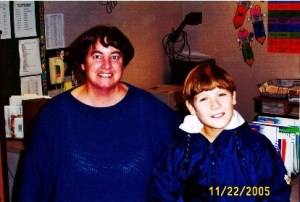
We agree with First Lady Michelle Obama, who aptly stated: “At a time when more and more jobs require a good education, teacher’s week couldn’t be more important.” A good teacher can change a student’s life, creating worlds of opportunity, shaping the future and inspiring dreams. I think back to a teacher who influenced me and remember Sister Eulalia from Villa Maria grade school. Sister Eulalia was an English scholar who instilled in us the knowledge and importance of good grammar. We spent hours diagramming prayers as a means of understanding subject/verb agreement, the error in dangling participles, and sentence fragments.

Ryan and his 6th grade teacher, Mrs. Newsham.

Ryan and his 6th grade teacher, Mrs. Newsham.

When we entered Sister’s classroom, our knees were shaking and our hands were trembling – we were so nervous that we would make a mistake! However, we survived and today I credit my writing skills to Sister Eulalia.

Of course, I also look back to the teachers who had such a positive impact on Ryan’s learning. The first that comes to mind is Mrs. T, a retired first grade teacher who tutored Ryan from first grade to fifth grade. Mrs. T’s guiding philosophy was that if a student isn’t learning, then we must change how we teach him – a sentiment that echoes throughout the Elizabeth Lee Black School.

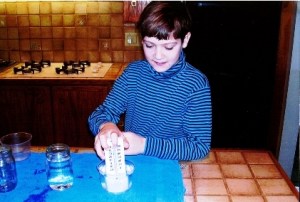
Ryan working hard on a science project.

Ryan working hard on a science project.

I encourage you to think back over your education. Who were the shining lights? Who inspired your dreams? It’s never too late to reach out to those people who made an impact in your life to tell them “Thank You!”

Posted in Uncategorized | Tagged , , , , , , , | Leave a comment

Pronouns and Autism

One of the challenges we faced when Ryan was about 3 years old was pronoun reversal. For example, if I handed him his toy and prompted him with, “Whose toy is this?” Rather than saying “my toy,” he would reply “your toy,” although he meant “my toy.” DOC043015-04302015100234_003Similarly, if I held up an item of my own and asked the same question, he would answer “mine,” meaning “yours.” Essentially, he mixed up his pronouns.
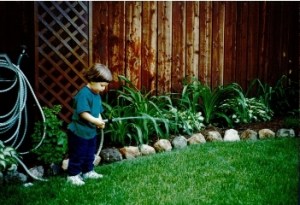
Also, when shown a picture of himself and asked, “Who is this?” Rather than use a pronoun he would speak in the 3rd person, saying, “It’s Ryan.” Little did I know at the time, that this is a classic struggle for some children with autism.

I credit Ryan’s work with Kathy Voght, BNI Speech Therapist, and Stein Lund, at Bancroft Neurohealth in New Jersey with helping him to break through this challenge. Ryan did hundreds of drills designed to reinforce the correct use of the pronoun. Eventually, he “got it.” DOC043015-04302015100234_001

A recent study by linguistics professor Richard Meier at UT Austin, along with colleagues from Boston University, took a closer look at this phenomenon. The study aimed to compare this pronoun reversal between children with autism, and children with autism who are also deaf, in the hopes that they could uncover any possible link between the pronoun confusion and hearing pronouns used aloud. What they found was that “deaf children with autism do not tend to reverse pronouns as hearing children with autism do… However, deaf children with autism did avoid pronouns, preferring to sign names.”

Prior research attributed these pronoun “hiccups” to echolalia – automatic repetition of noises or phrases. But Meier feels that spoken language is not at the root of the issue, rather that “people with autism may differ in their experiences of selfhood.”

Of course, this is a greatly understudied area and much more research is needed. This current study is certainly a good first step in the right direction!

DOC043015-04302015100234_002

Posted in Uncategorized | Tagged , , , , , , , , | 2 Comments

Have You Thanked Your OT Today?

April is Occupational Therapy Month, an opportunity for us to honor the therapists who work with our children in the school setting. Not only do therapists assist students with a variety of hands-on tasks, including handwriting, computer typing, using touch screen technology, they also assist our children in completing activities of daily living (ADL) skills such as zipping coats, fastening buttons, and brushing teeth. Their goal is to facilitate everyday living and functioning.

I took some time to interview our Occupational Therapists, Amanda Richardson, Julie Byham, and COTA/L Karen Kyler about the techniques that they use to help our children and adults reach their goals and become independent in daily activities. I wanted to share some of these techniques that they have found to be most successful.

OTs

  • Sensory Integration Therapy, which focuses on four major components: just-right challenge, adaptive responses, active engagement, and child directive. It works with the child at their pace, and only works when they are actively involved.
  • Backward Chaining is a technique whereby a person learns the last step, masters it, and then moves backwards in the sequencing of a task or activity and concludes with the first step. This helps minimize anxiety and increases confidence in the child.
  • Incorporating music during a therapy session can provide training in balance, bilateral integration, increase body awareness, and may help minimize tactile defensiveness. You may also see increased verbalizations and attempts to sing to music while swinging, bouncing on a therapy ball, or jumping on a trampoline.
  • Maintaining a structure with predictable routines are most effective during a therapy session. One curriculum that has provided great structure for our students is the Teaching Access Ability computer program, a step-by-step approach to introducing students to a touch screen, switch use, and mouse skills.

In summary, OTs look at the child or adult using a holistic, individualized approach, offering techniques for more effective task completion and designing appropriate adaptations when necessary. As one of the ladies commented, “OTs are certainly creative, quick on their feet, with no two days ever the same!”

Ryan has benefited from all of the techniques above, and certainly is a successful young man in part because of his involvement with occupational therapy. Please take a moment and share with me any OT techniques that have benefited your child.

Posted in Uncategorized | Tagged , , , , , , , , | Leave a comment

Summer Camps!

Most people think that when school ends on June 11th, we’re on vacation until the start of the next school year. Not true at the Barber National Institute! We have a number of programs that provide fun, recreational opportunities as well as encourage learning through the summer months.

BNI-elbs-1“Connections” Camp for children and teens with high-functioning autism is one of the favorites. We initiated Connections Camp nine years ago, to help children develop and practice social skills in the most effective ways. This is always a thoroughly enjoyable camp experience, fostering new friendships and a lot of fun. Ryan participated in this program for a number of years. I saw significant improvements in his social interactions with his peers. I would recommend the program to all parents.
The Barber National Institute’s Camp Shamrock is a summer day camp program for children with disabilities between ages 5 and 21. Campers enjoy weekly field trips, access to the BNI pool and gym, and a variety of fun arts & crafts activities.

Happy Hearts Early Childhood Education for preschool aged children also operates all summer, until the start of the new school year. Happy Hearts provides a state-of-the-art educational experience where all preschool children have the opportunity to learn and grow. This fully-inclusive program serves typical children and children with identified developmental delays. Full or part-time enrollment is available based on family preference.

We also offer an Extended School Year Program, for school-aged students 5-21 years old, to allow them to continue to learn through the summer and avoid losing the critical skills they develop during the school year. Each student’s learning experiences integrate a variety of activities throughout the school day, to address their academic, behavioral, and therapeutic needs.

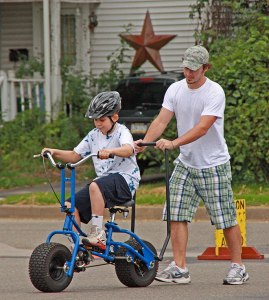
warren bike camp“Learn to Ride” Bike Camp is a four-week program to help children develop skills to ride their bikes independently. Camp will be offered in Erie and in Warren, PA free of charge in summer of 2015, funded by a grant from the Dr. Gertrude A. Barber Foundation. Bike Camp is open to any youngster in the community who is able to pedal but who has not been successful riding without training wheels.
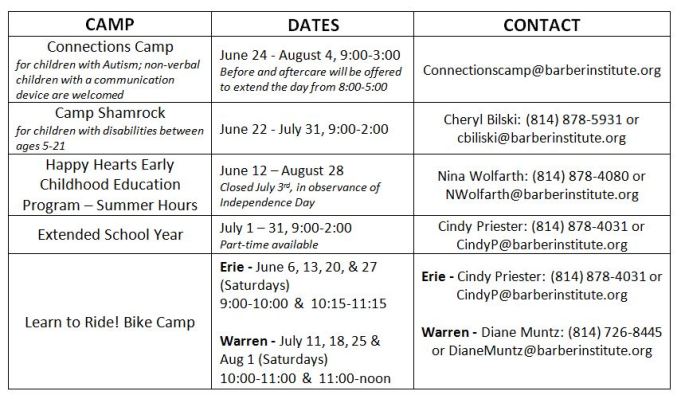

I’m sure you’ll agree with me that it’s never too early to start planning for the summer, even if it’s snowing in April!

Calendar

Posted in Uncategorized | Tagged , , , , , , , , , | Leave a comment

“Stuck” Emotions

Ryan and I often talk about being “stuck.” How we define “stuck” is dwelling on a topic of conversation ad nauseum. It may be that the skiing season is over, or that he has “used up” all of his sweet treats for the week, or he can’t wait for his sleepover at Bryant’s. When he was younger, this perseveration could lead to agitation (behavioral incident) unless you acknowledged the topic and entered into a lengthy discussion. Maureen & Ryan with Beast

Fortunately, today if he initiates a perseverative topic, he will often say to me, “I need to get unstuck.” Yes, we have come a very long way in a fairly short period of time. Because of our experiences with being “stuck,” I was really interested to read the blog post by Judy Endow on “Autism and Stuck Emotions.”

Judy does a wonderful job of describing how children and adults with autism have, at times, challenges with being stuck on not only a single thought, but also emotions, feelings and thinking in general. She stresses “that autistic neurological stuckness is not something I decide to be,” and that people not grasping this important concept can result in multiple misunderstandings and complications.

I have an entirely different perspective on Ryan getting “stuck” since I’ve read this article. For those parents, caregivers and educators facing similar challenges, I really encourage you to take a moment to read this blog post – this is a perspective that we don’t often hear from or read, and is very valuable.

Read Judy Endow’s article here: http://bit.ly/1HRpLcd 

Posted in Uncategorized | Tagged , , , , , , , , , | 1 Comment

It’s National Volunteer Week!

First BNI Volunteers

As we recognize National Volunteer Week, I think back 63 years ago, to 1952. A group of volunteers, including Gertrude Barber, members of the Erie community and several parents, established the first classroom for children with disabilities in Erie. It’s hard to believe today that a diagnosis of a disability would lead to banishment from public school programs, and a future of institutional placement or living at home with no schooling. These volunteers believed that children with disabilities had a right to an education, and they knew that by working together they could meet the challenges ahead and accomplish the goal of providing an education for children with disabilities.

National Volunteer Week is about inspiring, recognizing and encouraging persons on a local, national or global level to seek out ways to engage in their communities and make the world a better place. We honor those people who are taking the time to actively demonstrate their collective power to make a difference, and hope to motivate others to discover their own power. Through volunteering and community service, everyone can make an extraordinary impact and build a better future for the next generation.

At Barber National Institute, we are so thankful for the incredible volunteers who continue to donate their time to our mission. Volunteers are part of the backbone of our non-profit organization. Special thanks to the following people, who have all generously volunteered for years:

  • Terry RotundaMr and Mrs Claus Visit (1)
  • Judy & Jim Dible
  • Susan Currie
  • Marci Smith
  • Pat Vanzandt Christianson
  • Mary Beth Pinto & Jessie
  • Phyllis Aiello & Shilo
  • Laure Sieber & Charlie
  • Employees of Erie Insurance
  • Dr. Seuss Readers
  • Elizabeth Lee Black School Advisory Board
  • BNI Board of Directors
  • Mr. & Mrs. Santa (Rhonda & Joe Schember)
  • Irene Smerick
  • Vickie Lampe of PNC Financial Services
  • Lisa Slomski of First Niagara
  • Ladies Only Luncheon Planning Committee
  • Jean Theis
  • Dr. Steve Krauza, organizer of the Beast on the Bay

To find a service opportunity near you, visit www.Serve.gov. If you are interested in volunteering at the BNI, check out our website under Careers > Volunteer Opportunities.

Posted in Uncategorized | Tagged , , , , , , | Leave a comment

Week of the Young Child

This week is the Week of the Young Child, an annual celebration sponsored by the National Association for the Education of Young Children (NAEYC). weekoftheyoungchildThis week was created in 1971 in order to focus the public’s attention to the early childhood programs and services that young children so greatly need. Early childhood years, which are generally considered to be birth through age 8, are vital to a child’s health and development and will lay the foundation for a child’s success in school as well as life. This week is an ideal time to come together as citizens of a community, a state, and a nation to think of ways we can continue to improve the education and services for young children everywhere.

PNC Bank’s Grow Up Great program is just one of many organizations that is committed to celebrating this week. Volunteers from PNC will be reading to children in the classroom, running book and supply drives, and coordinating other team volunteer activities throughout the month to honor what they are calling Great Month.

sesame-streetAdditionally, Grow Up Great has been working with their partner, Sesame Street®, to develop a set of “Adventure Cards,” a set of ten bilingual cards that encourage parents and caregivers to help children learn new vocabulary through activities such as gardening or farming. Similarly, they are launching a new Sesame Street podcast series which will follow Abby, Elmo, and Buzz Word on their weekly word adventure. The cards and podcasts are available on www.pncgrowupgreat.com.

Each day, NAEYC has fun activities for your child to do. They ask that everyone shares photos of their activities on Facebook, that way we can connect with others around the world! At ELBS, we are kicking off the celebration on Monday morning with a parade around school! The school will wear purple for the celebration, and children will be asked to describe what school means to them. Other activities during the week include a guest reader, picture sharing from home, digital yoga, and an ice cream and movie party!

How will you celebrate Week of the Young Child?

Posted in Uncategorized | Tagged , , , , , , , | Leave a comment

Make ‘Em Laugh!

Next week, on April 14th, celebrate International Moment of Laughter Day by making someone smile and laugh.laugh This is a day to laugh often and laugh loudly. After all, they say laughter is the best medicine!


For kids with autism, creating moments of laughter to their daily life can add immeasurable joy to not only their life, but yours as well. It may take months to detect a pattern of humor, but taking the time to observe what makes them laugh is well worth it. As you learn what triggers their giggles, write down these ideas in a journal. This is also a great place to write down some of the funny things your kids say. It is equally as important to realize when to stop – only you know when they have had enough stimulation.

Did You Know?

  • When we laugh, our pulse, heart rate and blood pressure go up, we breathe faster, and we send more oxygen to our tissues. In other words, laughter can be like a mild workout – and offers the same advantages!
  • Laughter burns calories like a workout as well! In a small Vanderbilt University study, it was measured that 10-15 minutes of laughing burned 50 calories.
  • Laughing reduces the levels of stress hormones your body produces, which can result in a higher immune system performance.
  • When you laugh, you activate T-cells – immune system cells – to kick in and help fight off sickness. Next time you feel a cold coming on, be sure to throw on a funny movie!
  • By laughing, we release endorphins, the body’s natural pain killer. Laughing can help ease pain and make you feel good.
  • Doctors have found that people who have a positive outlook on life, laugh and smile more, tend to fight off diseases better and live longer than people who tend to have a more negative outlook.

laughter

So, stay positive and laugh often!

Posted in Uncategorized | Tagged , , , , | 1 Comment

World Health Day: How Safe Is Your Food?

large-poster-hi-res_001Today is World Health Day! Each year, the World Health Organization draws worldwide attention to a subject of major importance to global health. This year’s theme is food safety. Unsafe food, such as food that may contain harmful bacteria, viruses, parasites, or chemicals, is the cause of death for more than two million people, mostly children, every year.

In recent years, there have been several major changes in the ways that food is produced, distributed and consumed. While this fact alone is not necessarily a threat, as a nation we need to ensure that standards are imposed and met in a way that does not compromise food safety in light of these changes. Over the past half century, the process by which food gets from the farm to the plate has changed drastically. Food contamination that occurs in one place may affect the health of consumers living on the other side of the planet. This means that everyone along the production chain, from producer to consumer, must observe safe food handling practices.

Other challenges to food safety are the new and emerging pathogens, as well as an increasing antimicrobial resistance, some of which has been in the news recently.

The WHO is working with countries and partners to strengthen efforts to prevent, detect and respond to foodborne disease and is raising awareness about the importance of the part everyone can play in ensuring that the food on our plate is safe to eat.

I have been encouraging Ryan to “chef” with me so that he becomes more confident in cooking. As we cook, I try to remind him of food safety tips. These tips are important to teach all children as they learn to “chef” in their own kitchens:

5keys_en_001

  • Always wash hands before and after preparing food.
  • Cook meat, poultry, fish and eggs thoroughly. Use a cooking thermometer to make sure meats are a safe temp for eating.
  • Wash fruits and vegetables well before eating.
  • Always check the expiration date – don’t use food that has expired!
  • Follow your nose and eyes – if fish or meat has a strong odor or looks like the “wrong” color, don’t eat it!
  • Never rinse raw chicken, which can spread dangerous bacteria such as E.coli or salmonella.

For more great tips on food safety visit: http://kidshealth.org/teen/food_fitness/nutrition/food_safety.html#

Posted in Uncategorized | Tagged , , , , | Leave a comment