In this graduation season, there will be many commencement speeches made around the world. I always find this time particularly uplifting – a call to look to the future, to work hard for your dreams, and to never stop trying to achieve them. Recently, a friend sent me the transcript of Emory College’s keynote address, given by renowned epidemiologist William Foege. I was so moved by it that I wanted to share a briefer version of his incredible insights with you.
~Maureen
“Lessons I am Still Desperately Trying to Learn”
Chapter 1: Obituaries
Every day we edit our obituaries. It’s not until you get older that you realize how good a life has been. Consciously, edit your obituary each day so you may realize that sooner; edit with care and gusto.
Chapter 2: Life Plans
50 years ago, everyone’s advice was to develop a life plan. Times have changed. My advice? Avoid a life plan. You enter a world of infinite possibilities, confusing ideas and continuous changes. A life plan will only limit your future.
Chapter 3: Instead of a life plan, develop a life philosophy
And then you will have tools to evaluate every fork in the road. What is truly important to you?
 Chapter 4: Integrate your world of knowledge
Become globalists, concentrated on the needs of the group rather than your own needs. Be good ancestors – remember the children of the future have given you’re their proxy and are asking for you to make good decisions. Because each of us can do so little, it’s important we do our part. It may be a little contribution, but we each have to make that contribution.
Chapter 5: Actively seek mentors
Identify people who have the traits, ideas, and philosophies you want and get their help, always asking “how best to live?” Borrow their wisdom. I’m in my eighties, and I still seek mentors. Many of them much younger than me.
Chapter 6: The world is expanding
For all the problems of the world, I tell you there has never been a better time to be alive and enjoy that. An example: you have been exposed to as much knowledge in one year of college as Aristotle was in his entire lifetime.
Chapter 7: Seek equity
I avoided dying of tuberculosis, food poisoning, toxic water because of a government and much more – not because I deserved it but because of a coalition of government, religious institutions, and public and private groups all conspiring to help me, born in this country. And your story is the same. So what can we do? Seek equity and justice so others can tell that story someday.
Chapter 8: Seek serendipity
We often think of serendipity as a random good fortune, but the original story tells about three men, finding small clues that other people missed, figured out where the lost camel of Serendip (now Sri Lanka) was. We are told this can be learned by living in the moment and looking for connections. Thoreau said: “It’s not what you look at that matters, it’s what you see.”

Chapter 9: Civilization
We like to feel we are civilized, but how do we measure that? All usual measures (science, wealth, education) fail, except one. How people treat each other. Kindness is the measure of a civilized person, of a civilized university, of a civilized state. It is the measure of a civilized nation. How you treat people is the healing force in the world.
And finally, Chapter 10: Finding our way home
In the book “Cutting for Stone,” there is an unforgettable line, and may this phrase stick with you forever: “Home is not where you are from. Home is where you are needed.”
As I congratulate you on what you have done, I also hope we all find our way home.
Read the full transcript here.
Congratulations to all of the 2017 graduates!!





 The Annie E. Casey recently published its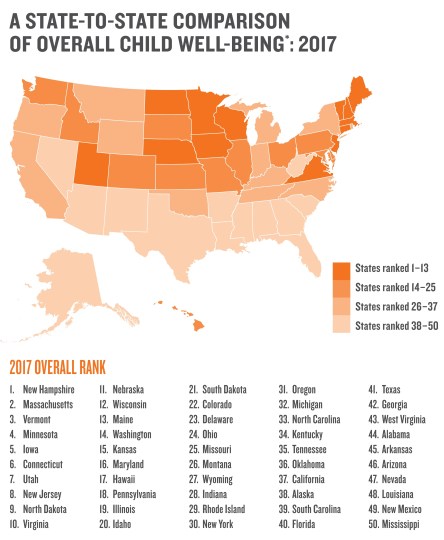
 Recently, Ryan and I had plans to fly to Chicago for my nephew’s wedding. I was concerned because Ryan had not flown in 15 years. How would he do? The long security lines, loud noises, tight spaces, and of course, the inability to leave on time… all of this had me worried, to say the least. Fortunately, he did great! He watched out the window the entire time we were in the air. However, I know air travel is problematic for many families.
 I’d encourage you to investigate if there is a “Wings for Autism” chapter in your community and/or work with your local ARC chapter to help ease air travel. I’m going to write to our local airport municipal authority, as well as the airlines that service Erie, to see what we can do to bring these same services to our community. Why don’t you do the same?
 As school starts to let out, I’m sure many of you are considering how the transition from school to summer will go. This can be a challenging time for some families – it was certainly a challenge for Ryan and I! What I learned over the years was that structure is essential and a day full of planned activities was best. To facilitate this, we would look at the calendar at the beginning of the summer and count the number of days for summer vacation. Then, we would add our activities to each day. This way, Ryan could look ahead and see what day he was going to be golfing, or going to the amusement park, or just beaching it on Lake Erie. Having a schedule helped to reduce his anxiety about what he would do the following day and reassured him that he would be having lots of fun throughout his summer vacation!
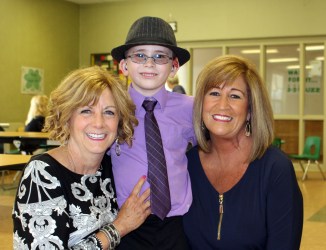 Last night was a momentous evening at the Barber National Institute! We celebrated the 2016 graduation with over 70 preschool, elementary, and high school students. Each of our students comes to the stage and receives their diploma. A representative from the local school district presents their official diploma to the high school graduates. We close the program with our school song, which was written by one of our teachers (Julie) and her husband Chris, members of the band Tennessee Back Porch when Dr. Gertrude Barber passed away. It has been sung at every graduation since! There were only a few dry eyes in our crowd of 400 family members and friends of our graduates!
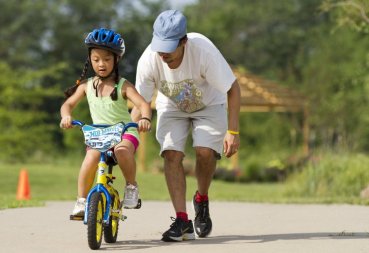 Certainly, no one would argue that a healthy lifestyle is an important goal for all individuals, both young and old. This National Physical Fitness & Sports Month is a great time to renew your commitment to a healthy, active lifestyle. Children with special needs in particular benefit from having a healthy influence in all aspects of their life: social, physical, and mental. The participation of children with disabilities in sports and recreational activities promotes inclusion, minimizes negative behavioral incidents, optimizes physical functioning, and enhances overall well-being. Despite these benefits, children with disabilities are more restricted in their participation, have lower levels of fitness, and have higher levels of obesity than their peers without disabilities.