
This Saturday, I’ll be walking in my 16th annual walk for Autism. When I started, Ryan was in first grade. He received a diagnosis of autism when he was 18 months old. When I heard about the first walk, I knew that Ryan and I would definitely be there. I wanted to walk:
- In encouragement of Erie’s children and families impacted by autism
- In appreciation for the outstanding services available for children with autism
- To expand awareness of autism
- To let parents who just received an autism diagnosis know they are not alone
- In thanks for the overwhelming support I have received from my friends and family
- To help boost autism research
- To express my gratitude to the many individuals who have helped Ryan
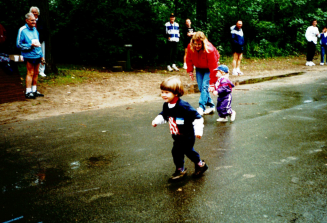
Ryan at one of his earliest walks
Amazingly, after 16 years, on Saturday I will be walking for these same reasons. However, I do have some new additions:
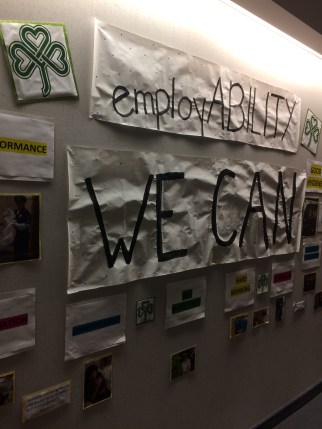
- In honor of the thousands of adults with autism graduating from school and entering the world of work
- To enlighten employers of our community on how employees with autism can become wonderful assets to their companies
- To reacquaint myself with children and families who once attended our school and have now moved on to exciting new educational opportunities but are always a part of the Barber National Institute family
This day, along with dozens of others across the country, is a strong statement to the world of the compassion, conviction, and commitment of individuals from many walks of life to autism.
 To register for the 16th annual Autism Society of NWPA’s Walk, visit:
 supports. As autism has become the fastest growing disability in America, this means that thousands of young adults suddenly find themselves without the help they need.
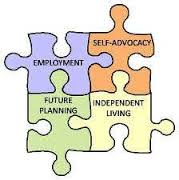 At first, I was taken aback; but the more I thought about this concept, I knew he was right. So, at each of his IEP meetings I would always preface the discussion by saying, “What we are planning today needs to address what he will need when he turns 18.” I do believe that Ryan was better prepared than most because of my continued focus on preparation.
 What is most startling to me is that for many years we have drawn attention to the importance of transition for students with disabilities, yet these statistics would indicate that our success has been minimal. Is this occurring because we have insufficient funding? Perhaps we have not dedicated sufficient focus to the policies that would have decreased, if not eradicated, this problem. Whatever the underlying issue, we must renew our attention to this important area to provide greater support to these students.
 Scientists and researchers are constantly uncovering more information related to autism, offering insights into the origins, possible causes and even at times potential cures. I come across dozens of articles on a weekly basis, some of which seem more important than others. I thought I would share on a monthly basis stories that caught my eye.



 Created in 1996 by Camp Fire, Absolutely Incredible Kid Day, held this year on March 16th, is a day focused on letting children know how much they are appreciated. To honor the day, adults write letters of encouragement and inspiration to the incredible kids in their lives.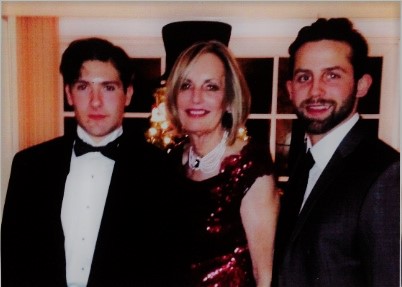
 Dr. Gertrude A. Barber
 Helen Keller
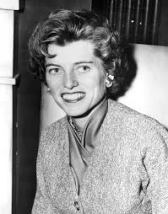 Eunice Kennedy Shriver
 Temple Grandin
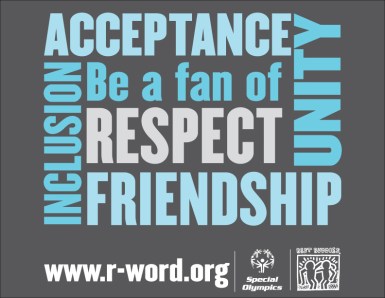 to be a slur, but to millions of individuals with intellectual and developmental disabilities, that is what it can feel like. Language can have a huge impact on attitudes and actions. By eliminating the R-word from regular speech, we can work on creating more accepting attitudes and communities for all people.
 Started in 2012, Digital Learning Day has provided a great opportunity for schools to showcase their innovative technology programs and share all of the creative ways they use technology in the classroom. More than just a chance to celebrate technology, it’s a chance to celebrate learning.


 All About Autism