Guest Blog: Mental Health Month, by Dr. Rochelle Von Hof

In honor of National Mental Health Awareness Month, I asked Rochelle Von Hof, Ph.D., Director of Clinical Programming and Services at the Barber National Institute, to say a few words about her experiences in this vast and ever-changing field. 

~ Maureen


Rochelle VonHof72px

Dr. Rochelle Von Hof

Hello!  Let me take a minute to introduce myself.  My name is Dr. Rochelle Von Hof.  I am the Director of Clinical Services and Programming at the Barber National Institute.  I have been with the Institute since March 2011; however, I have been in the mental health field since 2004.  I have a passion for working with children, adolescents and families who have experienced trauma or have relational issues.  When I started my journey into mental health I had no idea that it would lead me into this direction.  Originally, when I started my career I thought I was going to be a teacher for special education.  Boy did that change!

When I first entered the field it seemed that anyone could get services and have these services for almost any length of time.  This is one of the biggest changes that I have seen in the field.  In the current world, it seems that it is difficult to get children approved for services.  I often hear of children being denied services or only getting part of their services approved.  This is something that I think is frightening due to the potential impact on the child’s recovery and overall wellbeing.  I feel that if a child is prescribed services by a psychologist or psychiatrist it is something that should be honored.

Outside of payment and authorization for services, one of the most positive growths I have seen in this field is the improvement of delivery of quality services and the view on trauma.  There has been a large focus on quality improvement initiatives and quality checks being conducted.  This is something that has grown since I began the field.  It is really nice to see that our auditors want to see that children and families in services are improving and that the clinician is clearly documenting this.  Quality is another passion of mine because I believe it is a quality service that drives an agency to be successful.  I believe that every individual being served should receive the same quality treatment no matter who the individual’s therapist is.

The view towards individuals who have been traumatized has also improved.  In some agencies they treat everyone as if they have experienced a traumatic event.  Other agencies, such as Barber National Institute, have become Certified Trauma Informed Learning Communities.  This is a movement to spread the word about trauma throughout the agency, to educate staff and clients about trauma, and to increase safety awareness.  Additionally there are evidence based models of treatment, such as Trauma Focused Cognitive Behavior Therapy (TF-CBT) and Eye Movement Desensitization Reprocessing (EMDR), empirically proven to help children, adolescents and adults recover from the traumatic event.

As the mental health community grows I would like to see more funding available for the children’s services.  I believe that the split between funding for adults and children is 80/20.  It would be nice to see the split in funding be closer to equal amongst the two populations.  If children have a better chance of getting services early in life than maybe they will not need as many services or intensive services later in life.

At the Barber National Institute we offer a variety of mental health services to children and families.  These services include Early Intervention, Behavioral Health Rehabilitation Services (BHRS), Family Based Mental Health, Acute Partial Hospitalization Program, Blended Case Management, and the Outpatient Clinic.  For adults the mental health services offered include Adult Behavior Specialists, Blended Case Management, Adult Partial Hospitalization Program, and the Outpatient Clinic.  All of our therapists are highly skilled and trained in a variety of backgrounds.  Our clinical therapists receive monthly trauma training and consultation from a local trauma specialist.  The therapists also receive training in family therapy.  Additional trainings are offered to the clinicians throughout the year as well.

It is important to seek mental health help if you feel that you are struggling with anxiety, depression, or even a recent change in your life.  Feel free to reach out to the Barber National Institute for an appointment or to help answer any questions you may have.


Dr. Von Hof joined the Barber National Institute in 2011 as a mobile therapist and behavior specialist, and also served as program director of the family based mental health program. Dr. Von Hof was awarded a doctoral degree in psychology from Walden University in January of 2017. Her dissertation focused on the effects of childhood trauma on family dynamics. A graduate of Mercyhurst University, where she received bachelor’s and master’s degrees, Von Hof completed additional training in family therapy, trauma focused cognitive behavior therapy and Parent Child Interaction Therapy (PCIT.)  She has extensive experience relating to the treatment of trauma and other mental health issues.
Posted in Uncategorized | Leave a comment

OCD in the Autism Community

ocd.00I recently had the opportunity to attend the conference “Treating OCD in the Autism Community,” sponsored by the Obsessive-Compulsive Foundation of Western Pennsylvania (OCDFWPA) and Autism Connections of PA. Going into the conference, my driving questions were: “How does OCD look in a person with autism? How do you differentiate the repetitive behaviors which we find in autism from OCD?”

As it turns out, this really was one of the major thrusts of the conference. I learned that in OCD, one has recurrent and persistent thoughts that are intrusive and unwanted. Often, the focus of these thoughts and behaviors centers on the themes of contamination, harm, hoarding, counting, and/or doubt. A person with an OCD wants to stop these thoughts from occurring and is significantly distressed about his/her inability to control these symptoms.

While the person with autism spectrum disorder often insist on sameness, adherence to routines, has highly restricted interests and focuses his thoughts and behaviors on repeating things and engaging in repetitive behaviors, in contrast to a person with OCD, a person with ASD is not bothered by his thoughts and behaviors, may not want to stop the thoughts, and may likely enjoy his specialized interests. With OCD, symptoms can wax and wane and the focus of the OCD can change over time. In persons with ASD, symptoms are typically recognized before 24 months of age, but may look differently at different stages of life. ocf_logo

Ryan began exhibiting repetitive behaviors when he was only one year old. He thoroughly enjoyed opening and closing doors, whether it was the microwave, a cupboard door, or closet doors. I thought this was rather odd, but at the time I did not make the connection to autism. Another repetitive behavior he had very early on was an interest in walking the stairs. When we would go to my brother’s or sister’s houses, he would repeatedly walk up and down the stairs. I attributed this to the fact that stairs were a novelty to him, since we had no stairs in our home. Around the time Ryan was 18 months old, I began putting the pieces of the puzzle together and realized that I was seeing more than just a repetitive behavior. It was at this time that my brother, pediatric neurologist Joe Barber, completed an evaluation and gave Ryan the diagnosis of ASD.

Over the years, Ryan has always had some repetitive behaviors that, for him, are calming and reduce anxiety. What I learned at the conference was that these behaviors that I see are not OCD-related, but in fact another symptom of autism.

The OCDFWPA has a wealth of resources on their website, which I encourage you to review: http://www.ocfwpa.org/resources1.html.

I hope you all have a wonderful Mother’s Day this weekend!

Posted in Uncategorized | Leave a comment

Monthly Research Articles

Scientists and researchers are constantly uncovering more information related to autism, offering insights into the origins, possible causes and even at times potential cures. I come across dozens of articles on a weekly basis, some of which seem more important than others. I thought I would share on a monthly basis stories that caught my eye.

~ Maureen


researchTracing autism’s trajectories could help explain its diversity

There is enormous variability in the developmental trajectories of children with autism, which shows how little we know about a child’s future at the time of diagnosis. Much of this uncertainty stems from how we study autism. Currently, the trend is to group children together based on features they share at a given point in time, and then assume that children within a particular group will share a similar developmental path. But children develop at different rates, and their individual developmental paths are rarely linear. In this new research article, scientists propose the term ‘chronogeneity’ to describe the heterogeneity of autism features over time.

Read the full article here.

Study Looks At How Autism Impacts Parents

Moms and dads of kids with autism spend less time together than couples with typically-developing children, new research suggests, but that doesn’t mean they don’t support one another. In a study looking at the day-to-day experiences of parents of kids on the spectrum, researchers found that such couples spend an average of 21 fewer minutes per day together.

Read the full article here.

Social-Emotional Skills in Early Childhood Support Workforce Success

Across the country, business executives have observed that too many employees and job applicants lack the “social-emotional skills” necessary to succeed on the job. This has consequences for the capability of businesses to compete in the global economy. Businesses need employees who can communicate well with coworkers or customers, collaborate to solve problems, and persevere to overcome challenges. The truth is, the foundation for these skills is laid in a child’s earliest years, as much of a child’s brain architecture is developed during the first five years of life. This directly impacts the development of the social and emotional capabilities that support long-term success in school and the workforce. In a recent Zogby Survey of 300 business decision-makers, 92% agreed that early childhood experiences affect the development of social-emotional skills later in life.

Read the full article here.

Tune in next month for an update on autism research!

Posted in Uncategorized | Leave a comment

Guest Blog: Why We Volunteer, by Jim & Judy Dible

vol

Did you know that April is National Volunteer Month? Volunteering is essential to a healthy community – it creates ownership, builds relationships, fosters civic responsibility and fulfills vital needs. Thousands of people in the Erie community have given the gift of themselves by choosing to volunteer. While the Barber National Institute thrives from dozens of volunteers on a daily basis, I thought I would ask two of our long-time volunteers and friends a few questions about their love of volunteering. 

To all of our loyal friends, thank you for all you do each and every day to make the dreams of children and adults of the Barber National Institute come true!

~ Maureen


How long have you been volunteers?

We have been volunteers most of our adult lives. Judy started in the schools our two sons attended in Ohio, then with the local hospital auxiliary, on church committees and at the local library. She met Dr. Gertrude Barber when we moved to Erie in 1996 and she began volunteering at the then-Barber Center and is in her 20th year.

Jim’s volunteer career began in earnest when we moved to Lewistown, PA in 1981, where he was a member and, at the time, chair of the boards of the local hospital and economic development corporation. Since living in Erie he has volunteered as a board member with United Way, VisitErie, Erie Regional Chamber and Growth Partnership, Athena, Erie Together, and most recently, Erie Arts and Culture.

Judy and Jim share two other volunteer activities. They are both members of the Erie Regional Library Foundation board and are eucharistic ministers at St. Jude the Apostle Church.

What inspired you to begin volunteering?

We are both inspired by the belief that we have a responsibility to help those in need and to give back to the community that enabled us to earn a living. Judy likes to look where there is a need to fill a spot not covered by staff. Jim is inspired by the challenge of helping bring people together to build organizations devoted to the community’s greater good.

What do you look for when selecting a place to volunteer with?vol 2

When we look to volunteer, we first decide what interests us, and more importantly, what moves us when we see a need. Then we talk to friends who might know something about where our time and talents might fit best. Reaching out to places that might be a good fit for them and us as volunteers, we then explore what needs to be done, and how that matches our skill sets and available time.

What have you learned as a result of being a volunteer?

Both of us have learned that there are so many caring people, both staff and other volunteers, in the organizations where we choose to volunteer our time. We also know that we get back far more than we give in our volunteer services. For example, at the Barber National Institute Judy enjoys seeing that what she does as a volunteer pleases and makes things easier for the staff she works with. And Jim, who tutors in the Adult Basic Education classes at the Barber National Institute, gets as excited as his students when they succeed in the classroom and are able to carry that success into their everyday lives.

What is one thing you wish more people understood about volunteering?

We wish more people, including retirees like ourselves, realized how easy it is to volunteer. You can decide how little or how much time you want to spend, and you will be welcomed. The need for volunteers always exceeds the supply, And we promise that when each time you volunteer comes to an end, you will feel good about being able to give back to others and that what you have contributed in time and talent has made a difference.

Posted in Uncategorized | Leave a comment

Why I Walk

This Saturday, I’ll be walking in my 16th annual walk for Autism. When I started, Ryan was in first grade. He received a diagnosis of autism when he was 18 months old. When I heard about the first walk, I knew that Ryan and I would definitely be there. I wanted to walk:

  • In encouragement of Erie’s children and families impacted by autism
  • In appreciation for the outstanding services available for children with autism
  • To expand awareness of autism
  • To let parents who just received an autism diagnosis know they are not alone
  • In thanks for the overwhelming support I have received from my friends and family
  • To help boost autism research
  • To express my gratitude to the many individuals who have helped Ryan
Scanned Ryan Pictures (4)

Ryan at one of his earliest walks

Amazingly, after 16 years, on Saturday I will be walking for these same reasons. However, I do have some new additions:

  • In honor of the thousands of adults with autism graduating from school and entering the world of work
  • To enlighten employers of our community on how employees with autism can become wonderful assets to their companies
  • To reacquaint myself with children and families who once attended our school and have now moved on to exciting new educational opportunities but are always a part of the Barber National Institute family

This day, along with dozens of others across the country, is a strong statement to the world of the compassion, conviction, and commitment of individuals from many walks of life to autism.


Walk-Logo-2017-300x240To register for the 16th annual Autism Society of NWPA’s Walk, visit:

http://nwpa-asa.org/events/walk-information/

Posted in Uncategorized | Leave a comment

Autism Waivers in PA: What You Should Know

As we mark Autism Awareness Month this April, there is great hope that 2017 will become a banner year for adults on the autism spectrum.  The optimism arises from the draft budget that Gov. Tom Wolf has submitted to the Pennsylvania Legislature, which includes significant changes to two major sources of government funding for individuals with autism and their families.

The funding is described in legislation known as a waiver, specifically the Person/Family Directed Services waiver and the Consolidated waiver.  Historically, this waiver funding has only been available to individuals with intellectual disabilities.  When children with autism turn 21 years of age and graduate from school, they are no longer eligible to receive any government-supported sources of funding.   In other words, young adults are not eligible to receive most services that would help them train for and locate a job, live independently or even receive vital therapies or other puzzle in handsupports. As autism has become the fastest growing disability in America, this means that thousands of young adults suddenly find themselves without the help they need.
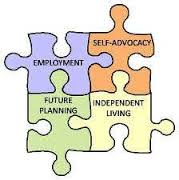
The changes Gov. Wolf has proposed for these waivers, and the funding they provide, would expand the eligibility for services to include people with a diagnosis of autism who do not have an intellectual disability.

In essence, the waivers work by enabling Pennsylvania to receive federal funds that will match the amount designated by the state. This funding can then be used by the individuals and their families in numerous ways, whether by covering the costs of a job coach, of residential living arrangements, community-based services, and much more. Now, not only will people with an intellectual disability be eligible for this funding, but individuals with autism will as well.

You might be thinking that this change will affect only a small percentage of our state’s citizens, but what Gov. Wolf has tapped into is, in fact, a national issue. Currently, 3.5 million Americans are diagnosed with ASD; an estimated 40% – 50% of these individuals do not have an intellectual disability that made them eligible for services under the current waivers.

I applaud Governor Wolf’s inclusion of these waiver expansions in his budget; he is blazing a trail I hope the rest of our nation will follow. Make no mistake, the efforts required to continue down this path are enormous. On one hand, we must strive to search for and make the most efficient use of our scare societal resources. However, we must continuously seek to grow and expand these resources as we prepare for the thousands of children with autism in our country who will soon be entering adulthood.

Being prepared to meet this need will require some creative and, more importantly, collaborative thinking across services and sectors in various service systems.  One such example is Gov. Wolf’s proposal to create a Department of Health and Human Services that will combine the departments of Human Services, Health, Aging, and Drug and Alcohol Programs to streamline services and hopefully reduce costs.Wolf

Gov. Wolf’s budget will move Pennsylvania forward in this critical social issue, supporting individuals and families with autism, and leading to a real difference in the opportunities they will have in our state. Let’s show the governor our support by contacting our local legislators and encouraging them to vote “Yes.”

Posted in Uncategorized | Leave a comment

Are They Prepared?

As a parent of a child with a disability, one of the thoughts I had throughout Ryan’s educational career was, “Will he be prepared for life after school?” Thinking back, Ryan was seven years old when my brother, pediatric neurologist Dr. Joe Barber, said: “It’s important to begin planning for transition now, and not to wait until he’s in high school.” transitionAt first, I was taken aback; but the more I thought about this concept, I knew he was right. So, at each of his IEP meetings I would always preface the discussion by saying, “What we are planning today needs to address what he will need when he turns 18.” I do believe that Ryan was better prepared than most because of my continued focus on preparation.

The recently published findings of a 2012 study, exploring the characteristics and experiences of 13,000 students between ages 13-21, suggest
some disturbing facts surrounding this issue:

  • Youth with an IEP are more likely than the
    ir peers to be socio-economically disadvantaged and to face problems with health and communication
  • This same group is also more likely than any other youth group to struggle academically, yet by contrast, they are less likely some form of school-based support
  • Five groups – Youth with autism; intellectual disabilities; multiple disabilities; deaf/blindness; orthopedic impairments – appear to be at a higher risk than all other youth for challenges in making successful transition from high school

speaker.jpegWhat is most startling to me is that for many years we have drawn attention to the importance of transition for students with disabilities, yet these statistics would indicate that our success has been minimal.  Is this occurring because we have insufficient funding? Perhaps we have not dedicated sufficient focus to the policies that would have decreased, if not eradicated, this problem. Whatever the underlying issue, we must renew our attention to this important area to provide greater support to these students.

Posted in Uncategorized | Leave a comment

Monthly Research Updates

researchScientists and researchers are constantly uncovering more information related to autism, offering insights into the origins, possible causes and even at times potential cures. I come across dozens of articles on a weekly basis, some of which seem more important than others. I thought I would share on a monthly basis stories that caught my eye.

~ Maureen


Wearable camera captures eye contact in children with autism

A camera embedded in a pair of eyeglasses can reliably gauge a child’s tendency to look another person in the eye. A tendency to avoid looking at others’ eyes is a hallmark of autism and may appear in infancy — years before clinicians can diagnose the condition. Recordings from the new device may eventually help clinicians spot toddlers at risk for the condition.

Read the full article here.

Brain Stem Size May Predict Aggression in Those with ASD

Biological differences in the brain could explain why some with autism display problematic behavior, researchers say, and pinpointing the root of such issues may lead to interventions. In a study looking at magnetic resonance imaging, or MRI, scans of kids with and without autism, researchers found a correlation between brain stem volume and a child’s propensity for aggression. Those with a smaller brain stem were more likely to have difficulty controlling themselves, according to findings published this month in the journal Research in Autism Spectrum Disorders.

Read the full article here.

Landmark autism genetic study seeking participants

Families affected by autism are invited to a special on-site registration and data collection event for the nation’s largest-ever autism research study. The research project, called SPARK (Simons Foundation Powering Autism Research for Knowledge), aims to uncover causes and treatments for autism by collecting behavioral information and saliva DNA samples from 50,000 individuals with autism and their biological family members.

Read the full article here.

In trials, repurposed drug shows promise for autism

A drug used to treat excessive swelling seems to ease autism features in some children on the spectrum, according to results from a trial in France. Clinicians prescribe the drug, called bumetanide, to relieve fluid retention after heart failure and in people with liver or kidney disease. The drug is also used to lower blood pressure. In the brain, it affects a chemical messenger, gamma-aminobutyric acid (GABA), thought to be important in autism.

Read the full article here.

World’s Largest Autism Genome Database Shines New Light on Many New “Autisms”

Latest study from the Autism Speaks MSSNG program identifies 18 new autism-linked genes, deepening understanding of autism’s broad spectrum. What’s more, 80% of the 61 gene variations discovered through the program, to-date, affect biochemical pathways that have clear potential as targets for future medicines.

Read the full article here.


Tune in next month for an update on autism research!

Posted in Uncategorized | Leave a comment

“Our Gift:” A Guest Blog


In honor of Down Syndrome Awareness Day, I asked one of our faculty if she would be willing to share her personal experiences as a mother of a child with down syndrome – I am so glad I did! I hope Devon’s sweet story inspires you as it inspired me. 

~ Maureen

Devon Mellin has been a Special Education teacher to high school-aged students at the Barber National Institute for the past 7 years. She has been married for 15 years to her high school sweetheart, Garrett, and is the mother of three delightful, energetic and amazing children: Broc (11 years old), Addyson (9 years old) and Harper (5 years old) and the newest addition, Chloe (a 1 year old boxer). She graduated from Edinboro University with a degree in Elementary and Special Education, and has been teaching for nearly 15 years. 


My husband, Garrett, and I had our middle child in 2007.  We welcomed to the world a baby girl named Addyson Mae. As any parent, we knew our lives would change, but we were not expecting the news we received that day in the hospital.  We had chosen not to participate in any of the prenatal tests beforehand. We knew we would love our baby unconditionally. Addy, as we call her, was born with an extra 21st chromosome – she had been diagnosed with Down Syndrome (DS). Each year, 1 of every 700 babies is born with DS in the United States. Many people may not know that there are three types of Down Syndrome: Standard Trisomy 21, Translocation, and Mosaicism. Addy was diagnosed with Trisomy 21. With this type of DS, there is an extra copy of chromosome 21 in every cell. 95% of babies born with DS are diagnosed with Standard Trisomy 21 Down Syndrome.ds

We spent the first three years of Addy’s life working with therapists through the Barber National Institute and researching everything we could about Down Syndrome to help Addy accomplish her milestones. When I look back at those days, I have to laugh. She was so hard to motivate during her therapy sessions… until I pulled out the ice cream! Addy did not really care for toys, but she would do anything for ice cream!! Addy flew through her milestones with hard work from Addy and dedication from me and other family members working with her on her daily exercises.

Addy is currently in 4th grade at Fairview Elementary School. She participates in a regular education classroom most of her day with the support of a paraprofessional. She is not a fan of math. That Down Syndrome stubbornness comes out for sure, but these days she’s a little easier to motivate with high fives, clapping and praise. Her love of books and reading has helped her be successful in Reading classes at school. Addy reads anything she can get her hands on and is reading on grade level. Addy loves school and loves learning new concepts. My husband and I are very fortunate that she is so successful in her education and loves to be at school so much. At the end of this year, another milestone will take place for Addy as she leaves the elementary school and heads off to middle school, with all new staff to attend to her. Is it scary? I will not lie, Garrett and I are frightened for this change, but at the same time we have confidence in Addy that she will fight hard and succeed.

As a family, we thought it was important to get Addy involved with community based programs just as we have done with our other two children. She participated in dance classes through the Dance Vibe Studio since she was four years old, dancing hip hop and ballet. She has even competed at large dance shows doing solo ballerina performances, at the Bayhawk’s half time shows and other community dance competitions. She has no fear! Addy also played soccer for three years – until she decided there was way too much running involved. This year Addy has chosen to start gymnastics. She had her first show recently and has shown a love for the sport.

As a parent of a child with Down Syndrome, it is my mission to educate others about the accomplishments and abilities of children with Down Syndrome.   These children have a potential to be successful when the right support system is put into place. These children do have futures! Unfortunately, at the moment 90% of babies diagnosed prenatally with Down Syndrome in the United States are aborted. WHY!? It is one of my goals and the goal of our local Down Syndrome Group, LEADS, (Lake Erie Area Down Syndrome group) to educate pregnant mothers, OBYGYN offices and hospital personnel about the wonderful things a baby with Down syndrome can bring to parents, family members and the community.   Our group also sets up informative meetings and playdates for our children to work on interacting and social situations. Hearing the diagnosis of DS can be scary, but at the same time it is extremely rewarding. We believe our motto: EDUCATE.  ADVOCATE.  ENJOY. My daughter is a blessing to our family, and we would not be the same without her sense of humor, stubbornness and unconditional love.

Happy Down Syndrome Awareness Day!

LotsofSocks_logo.png

Posted in Uncategorized | Leave a comment

Why you need to celebrate ‘Absolutely Incredible Kid Day’

AIKDlogo4site.jpgCreated in 1996 by Camp Fire, Absolutely Incredible Kid Day, held this year on March 16th, is a day focused on letting children know how much they are appreciated. To honor the day, adults write letters of encouragement and inspiration to the incredible kids in their lives.

Why should we do this?

A parent is a child’s first teacher and arguably the biggest influence on their children. Children who feel positively about themselves are better at handling conflicts and resisting negative pressures. Studies also show that children who feel important are well-rounded, respectful and excel in academics, extracurricular activities and hobbies and develop healthy relationships with their peers.

Even if you are not a parent, you certainly may have an incredible kid in your life. It only takes a few minutes to write a letter such as this, but the ripple effect is nearly endless.

I’d like to share with you my letter to Ryan, in the hopes that it will encourage you to write one of your own.

Dear Ryan,

I am writing to tell you what an “awesome” young man you are. I look back to when you were three years of age and so eager to learn that we worked hours at a time on our ABA drills. I was proud of you then and I continue to be proud of you today. You have grown into an independent young man who has an outstanding work ethic and an enthusiasm for being physically fit. Every day, you perform acts of kindness as you help me and others. Your dedication and efforts on a daily basis serve as a model for your peers. You have helped me to grow as well, by teaching me the importance of taking it one day at a time, of setting goals, and to always reach for the stars.

My hope for you is to continue to grow to be the best person you can possibly be. Please know that I will always be there to help you make your dreams come true.

Love, Mom

DOC031517-03152017090055_001.jpg


Posted in Uncategorized | Leave a comment