#WorldKindnessDay

As we anticipate World Kindness Day on Monday, November 13th, I began thinking…

kind2Initiated in 1997, this is a day set aside to focus on extending kindly acts towards others, without the expectation of anything in return. While it would be nice to say that every day should be World Kindness Day, the reality is that sometimes work, current events, and other personal challenges can get the best of us. Not to mention that as soon as we open the newspaper or turn on the television, we are confronted with everything from violence in the world to political debates that sometimes focus on the negative. We could certainly use an entire day dedicated to kindness!

Kindness Day isn’t only about volunteering in the community – it can also about the little gestures, expressions, and even thoughts of kindness, too.

Whether it is buying a coffee for a stranger in line or letting go of resentment, the mental and physical benefits of kindness, including healthier hearts, better aging, and improved relationships, should make us want to smile more and frown less. Not to mention, kindness is contagious!

Focusing on and noticing the good qualities in the world around us gives our moods a boost all by itself. And studies show that compliments amplify positivity; they not only deliver positive effects to others, but those effects bounce back on the person giving the compliment.kind

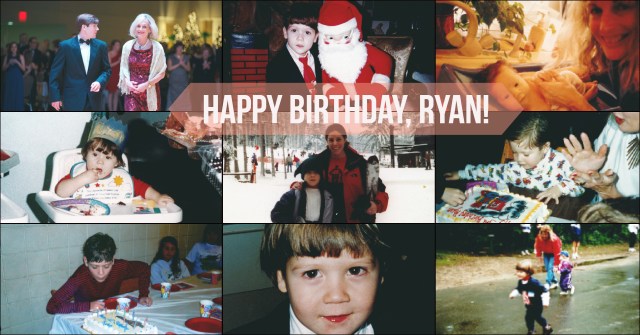
Since Ryan was a young child, I have tried to instill in him the importance of compliments and being kind to others. Sometimes, he goes overboard and will repeatedly thank you for helping him or doing something for him, but all in all I would rather he say it too many times than not enough.

I love hearing his compliment to me: “You’re the best mom ever!” Nothing brightens my day more!

If you are looking for some creative ways to be kind out in the community, Pinterest has a number of “Kindness Challenge” calendars that provide a wealth of ideas. Feel free to share any of your ideas or ways you plan to acknowledge World Kindness Day below!

Posted in Uncategorized | Leave a comment

Stay Safe on Halloween!

Dressing up as a favorite superhero, trick-or-treating for goodies, and spending the evening with friends are just a few reasons why Halloween can be such a fun holiday for parents and kids alike. However, for many children with autism this night also has the potential to be a difficult and stressful time of year.safe 2

If you or someone you know has a child with special needs but still plans to trick-or-treat, here are some ideas to make sure everyone has a safe and fun Halloween:

– Flashlights: Ryan carried one to help him see in the dark/dim evening. It gave him a sense of comfort and some means of control.

– Practice: Try on the costume, including make up or masks, to make sure he/she is comfortable; walk the route you intend to take; and talk about what will happen after trick-or-treating. Predictability is key to helping children with autism feel safe and calm.

– Role play: Similar to practicing, role playing provides structure and outlines specific behavior for trick-or-treating. Halloween is also a great opportunity to reinforce good manners, such as waiting their turn to ring the doorbell, saying “Trick or Treat,” only taking one treat, and always saying “thank you” before leaving.

– Be aware of sensory triggers: Although Halloween decorations can be very entertaining, flashing lights or loud sounds may evoke unpleasant sensory reactions for your child.

– Know your limits: As soon as you see your child becoming over-stimulated or agitated, it’s time to go home.  It’s okay the end the evening earlier than planned.

– Be prepared: If your child is nonverbal or has difficulty communicating, it’s important to make sure that he or she wears an identification bracelet in the event that you are separated while trick-or-treating. Another idea is to create a “Trick-or -Treat” card explaining your child’s special needs and pass it out to houses on your intended route in advance of the evening. It’s a simple way to make everyone feel more comfortable.

safeAlthough Ryan hasn’t gone trick-or-treating in many years, he enjoys the Halloween ESO dance and has always enjoyed this holiday very much. That’s not to say that we haven’t used many of the tips above!

Any suggestions I may have missed? I would love to hear what has worked for your family!

Posted in Uncategorized | Leave a comment

Impact of Trauma: World Mental Health Day

Last week, we recognized World Mental Health Day, a day for global mental health education, awareness and advocacy against social stigma. Initiated in 1992, this important day is now acknowledged in more than 150 countries.

Mental health is impacted in myriad ways, from childhood through adulthood. Most recently, educational professionals and medical professionals alike have focused on the lasting impacts that trauma has on an individual throughout his/her development.

iceberg

The Iceberg Theory explains that behaviors are often the result of deeper, unseen experiences and emotions. 

The statistics that have surfaced out of this research are startling, to say the least. At least 5 million children experience trauma each year; that is 1 out of every 4 students in the classroom. What defines trauma, however, may come as even more of a surprise: in addition to accidents and illness, traumatic experiences can arise out of living in poverty.

With an estimated 20% of all children in the United States living in poverty, the outgrowth of this could be profound. Worse, the effects of trauma are deep and lasting: it has been directly correlated to lower GPAs, decreased reading ability, attention/memory/cognition challenges and increased behavior problems.


In response, schools, child-care facilities and even community support organizations are coming together to bring informed teaching methods into these settings. Some of these tactics include:

  • Establishing safety
  • Expressing feelings and coping
  • Behavior management
  • Connecting to social supports

With 70% of mental disorders onset prior to the age of 25, the childhood and adolescent years are a critical window in which mental health can be addressed, and overall mental wellness can be promoted.

*Special thanks to Dr. Von Hof for her invaluable and insightful contributions to this blog!*


Posted in Uncategorized | Leave a comment

What’s New in Early Childhood Education?

This past week, I attended a board meeting for PNC’s Grow Up Great. Grow Up Great is a $350 million, multi-year, bi-lingual initiative that began in 2004 to help prepare children from birth through age five for success in school and learning. Since its inception, more than 2 million children have benefited from early childhood programming through Grow Up Great. I am excited to share two of the major thrusts of our conversations.

gug

Continuous Engagement:

What became apparent throughout a number of different topics is the focus on engagement of not only children but their families as well. Grow Up Great is looking for creative, exciting, and innovative ways to get teachers and parents working together to prepare children for school and beyond. Some stand-out initiatives include:

  • Text-to-Talk Project
    • utilizes the creative curriculum, sends free texts to parents to increase the use of language at home
  • Grow Up Great Lesson Center
    • Lessons are created by experts and are connected to standards
    • Videos and photos are embedded in the lesson to show how to teach the skill, as well as important vocabulary words and fully downloadable resources
    • Emphasis on inquiry learning
    • Some example lessons include: Animals, the 5 Senses, and outdoor classrooms

Additionally, Grow Up Great also has a Pinterest board available to families, which provides a wealth of information and resources. Overall, the goal is to establish communities of learners. An important consideration for this is how to increase family engagement, and what to do “in the moment” to enhance brain-building. Truly, children are ready to learn from the day they are born – they are innately curious and active learners. By integrating a sense of adventure and curiosity, active learning builds executive functioning skills that have far-reaching positive implications.

Funding:

soda

Philadelphia’s controversial soda tax adds 1.5% per ounce to beverages with added sugar

The other interesting topic reviewed was the multitude of methods for funding Early Childhood Education, particularly on the local/municipal levels. The early childhood community has seen incremental increases in ECE but need something more substantive. Although, state ECE funding is up 47% over the past five years, funding five years ago was extremely limited.

  • Some of the most active communities include:
    • Chicago – social investment bond (a contract with the public sector in which a commitment is made to pay for improved social outcomes that result in public sector savings)
    • Cincinnati & Dayton – passed a referendum vote to increase real estate taxes for ECE
    • Philadelphia – has implemented a soda tax for ECE, allowing it to provide universal Pre-K

I am so honored to serve on this prestigious board and be able to bring back to Erie the latest developments and cutting-edge practices in Early Childhood Education!

Posted in Uncategorized | Leave a comment

Monthly Research Updates

Scientists and researchers are constantly uncovering more information related to autism, offering insights into the origins, possible causes and even at times potential cures. I come across dozens of articles on a weekly basis, some of which seem more important than others. I thought I would share on a monthly basis stories that caught my eye.

~ Maureen


researchAutism in motion

Children with autism are often clumsy, physically awkward or uncoordinated. This understudied and nearly ubiquitous feature has researchers contemplating a new idea: Could motor problems be one source of autism’s social difficulties?

Read the full article here.

https://spectrumnews.org/features/deep-dive/autism-in-motion/

AUTISM AND HEALTH: A SPECIAL REPORT BY AUTISM SPEAKS

Frequent co-morbidities of autism include seizures, gastrointestinal disorders, sleep disturbances, eating and feeding challenges, attention deficit and hyperactivity disorder (ADHD), anxiety, depression, schizophrenia and bipolar disorder. These issues can extend across the life span. The purpose of this special report is to summarize the latest understanding of autism’s commonly associated physical and mental health conditions, including how best to identify, treat and in some cases prevent them to improve overall health and quality of life.

Read the full article here.

https://www.autismspeaks.org/sites/default/files/docs/facts_and_figures_report_final_v3.pdf

Heart rate may foretell autism features in infants

Babies with a family history of autism have heart rates that are unusually low and that respond aberrantly to speech sounds, according to a new study. Studies over the past two decades have shown that heart rate tracks with attention: An infant’s pulse slows briefly when she turns toward a compelling sight or sound and returns to baseline as she loses interest.

Read the full article here.

https://spectrumnews.org/news/heart-rate-may-foretell-autism-features-infants/

Tune in next month for an update on autism research!

Posted in Uncategorized | Leave a comment

Book Review: The Reason I Jump

I am sure that all Moms must ask themselves occasionally: “I wonder why my child does that?” But for those of you who are the parent of a child on the spectrum, it is a question that we frequently ask ourselves… I know I do.

bookThat is was why I was excited when I read a review of The Reason I Jump, which is written by a then-thirteen-year-old boy with autism, Naoki Higashida. Naoki uses an alphabet grid to construct phrases and thoughts that he previously was unable to express.

“Great,” I thought, “I might get some insight into why Ryan exhibits some of his behaviors. Perhaps, there might be some similarities.”

So, I read the book and found it fascinating. The format of the book is that Naoki answers questions he is frequently asked about autism. Some of the questions which were very relevant to me included:

Why do you do things that you shouldn’t even when you’ve been told a million times not to?

Naoki explains that often he has forgotten about being reprimanded about topic previously and feels terrible that he has, yet again, done what he’s been asked not to do.

I see the same pattern with Ryan. At times, he will exhibit behaviors that he knows are not acceptable, but repeats it again and again. He knows he should not, and he is remorseful that this has occurred.

What are flashback memories like?

Naoki tells us that he has lots of pleasant memories, but flashback memories are always bad ones. Out of the blue, Naoki may burst into tears or start panicking, which he explains is because the memory causes him to feel the same helpless feeling that he experienced then.

Recently, I wrote a blog asking Ryan the question: tell me what you remember growing up. Ryan related many negative memories and, in fact, no positive ones. I couldn’t understand why he only focused on the negative, but reading this answer gave me great insight.

Naoki says in his Afterword that he used to ask himself: what will happen to me if my autism isn’t cured? Although he used to worry quite a bit about his future, today he says: “If all of you can grasp the truth about us, we are handed a ray of hope. However hard an autistic life is, however sad it can be, so long as there is hope we can stick at it. And when the light of hope shines on all of this world, then our future will be connected with your future. That’s what I want, above all.”

That, too, is what I want, for Ryan as well as for all children and adults with disabilities.

Posted in Uncategorized | Leave a comment

Founder’s Day: In Dr. Barber’s Own Words

Today is a special day at the Barber National Institute. We are celebrating Founder’s Day to commemorate the legacy of our founder, Dr. Gertrude A. Barber, and our enduring mission.

Dr. Barber’s dream in 1952 was that children and adults with disabilities would be able to learn and grow in their own community, in which they would find acceptance and opportunity. This vision has positively changed the lives of thousands of children and adults over the last 64 years and has opened doors and minds by promoting these ideals.

GAB I recently found a memo written by Dr. Barber in the early 90s that reflects her commitment to these principles.  I wanted to share some excerpts here; who better to tell you of our mission than Dr. Barber herself?

“I believe a leader’s role is one needing to work with legislators, schools, local, state, and federal governments. In doing so, we were able to expand community programs in Erie County, beginning a Franklin Terrace, YMCA, Boy’s Club, Hamilton School, and finally, at Lakeview Hospital.

We recognized the need and importance of establishing a linkage with media to inform the community about the growth and development of the Center. By personally working with the Department of Public Welfare and the Department of Education, we were able to show them our innovative and creative programs, which were on the cutting edge of technology.

These accomplishments were the result of acquiring an excellent staff, seizing the needs of the moment, and being prepared and knowledgeable in finance, programming, etc. I believe a good leader has the ability to foresee the needs of the present and future as it relates to the past.

Our focus has continued to be a mission of faith, hope, and love – to open the doors where they were closed – to bring sunlight where there was darkness – faith where there was despair.

Let’s always lead with a mission to open doors.”

Dr. Gertrude A. Barber, 1995

Posted in Uncategorized | Leave a comment

It’s Time to Have a Chat…

DOC043015-04302015100234_003As we enter our second week of school, I find myself a bit nostalgic as I think back to Ryan’s time in school. It’s hard to believe that it has been five years since he graduated high school! I truly believe that one of the reasons he was successful in his school career was my willingness to commit to working with his teachers.

What do I mean by that? We began each new school year by scheduling a meeting with the principal to walk through his new school and/or new classroom. We took pictures of the various rooms in the building so that he would have a frame of reference when he imagined what the first days of school would be like. This was helpful because Ryan was always very anxious about change. During the first week of inservice, I would meet with Ryan’s entire team. When he was in elementary school, few children with autism were enrolled in the “typical” classroom. I saw this meeting as an opportunity to educate staff; not only about Ryan, but about autism as well.

I provided a fact sheet, “Tips about Ryan,” which identified the essential information that each teacher would want to know. For instance, very loud noises are troublesome to Ryan. He would pay attention to the sound, place his hands on his ears, and be oblivious to everything else going on in the room. In addition, I was always sure to emphasize that because Ryan’s brain functions differently than the teacher’s or mine, this impacts how Ryan would respond to classroom instructions. It’s my belief that these tips helped to make the day much smoother for both the teacher and Ryan.

clip-artSuccessI also believed it was important to meet weekly with the teacher(s) to discuss his progress and challenges. This assured consistency between home and school – a critical variable for Ryan. Looking back, I drove to his school in blizzards as well as frightening early morning meetings at 7:00 AM! I was fortunate that my best friend, Jeanne, attended as Ryan’s advocate. She was great support. I would encourage all parents to take a friend to team meetings. So much is being discussed and it’s helpful to have someone taking notes.

Whether you wish to hold weekly meetings, write letters, or any other strategy, I can’t stress enough how important it is to maintain open lines of communication with your child’s team. Because you know your child best, you are the most important member of that team.

I wish you all a great school year!

Posted in Uncategorized | Leave a comment

New (School) Year, New You

It’s hard to believe that another school year is already here. Where does the time go? Last week was a sort of “soft start” to the year, as all our staff return for a week of inservices. We were excited to introduce to them a new program for this year, Positive Behavior Interventions and Supports (PBIS). Designed to be school-wide, this system of support applies to both students and staff and works by helping individuals to use proactive strategies for defining, teaching, and supporting appropriate student behaviors to create positive school environments. As we begin to implement this with our staff, we are focusing on a trifold matrix: Be Kind, Be Safe, Be Independent. We are excited to see what impact this focus will bring, and I wanted to share with you the thoughts I read to our staff on their first day back.

~Maureen


back to school_1Welcome back to the start of this 17-18 school year! Judging by the smiles on your faces, I’m sure that you all had a great summer. I’m really looking forward to the positive changes that our PBIS team will bring about this year, and I wanted to share a few thoughts of my own.

Some of you may have heard the story of how the Elizabeth Lee Black School began, but for those of you that haven’t, it began in 1952. My aunt, Gertrude A. Barber, was a psychologist for the Erie School District. It was her job to tell parents that their children could not come to the public school – their options at that time were either institutionalization or to keep their child at home. As you can imagine, neither Dr. Barber nor the parents were satisfied with these being their only choices. So, they started a single classroom for children with special needs. The teacher was a volunteer – no funding was available to pay anyone. Over the course of the next decade and beyond, this one room has expanded dramatically into many classrooms serving dozens of children.

You may not know that I began my career here in the school as a classroom aide; so I truly understand each of your roles. It is because of these first-hand experiences that I know how valued each of you are to our team.

pbis

Whether you are a therapist, a teacher, a paraeducator, or support staff, you make a significant contribution to the vision and success of our school. I hope that you believe this and feel this each day as you walk through the doors. You should be proud of your work here with us.

It was my aunt’s mission then as it is my mission today to provide the highest quality services available to these individuals. You are an integral part of that high standard – our work together ensures that we will be successful in making dreams come true for our children and their families. I encourage you to always come to me with your successes as well as your challenges. I know we are already off to a great start of the year!

Posted in Uncategorized | Leave a comment

Guest Blog: Putting Autistic People in the Driver’s Seat, by Lu Randall

Today’s blog was written by friend and colleague Luciana Randall, Executive Director of Autism Connection of PA in Pittsburgh. Lu started her career as an art education major and found many students with disabilities were included in her classrooms. Wanting to know more about how to help them, she went on to get her Master’s in rehabilitation counseling and has remained in the field ever since. She has been teaching and training professionals about autism, the brain, behavior, and communication since 2002. 

I hope you find her blog as insightful and enjoyable as I did!

~Maureen


New TV series about autistic characters are all the rage. My autistic friends and autism parents are so “over it” already. “Who is going to make a show about my son who is 11 years old, still in pull-ups, not talking, and stimming?” or “Where am I – an autistic, female, degreed professional?” Current shows tend to feature talking, white, heterosexual, young adult males – leaving out a huge chunk of our population who then feel further marginalized and unrepresented. To help prevent this, we can try every day to put autistic people in the driver’s seat, or in this case, the writer’s or director’s seat, in showing and telling their own narrative.

IMG_6111

Lu teaches about autism as part of her role as Executive Director

Recently I’ve been given a soapbox (idiom alert! – a location from which to speak about what’s on my mind to a large group of people*) at the Barber National Institute, to talk about autistic culture and help workers do their best with this population. I always feel a lot of pressure to do right by autistic people. Instead of searching Google for articles to prepare my talk, my very first request was to my autistic colleagues – “I want to represent you correctly. Please send me your favorite videos about autistic culture.” Everything they sent me was first-person video. Nothing came from popular media! You can see these on the links below. But to summarize:

Autistic people** want to convey some important aspects of their culture. They are:

  1. Autism is a natural occurrence, not a disease, and not always causing disorder
  2. Society creates disabling conditions when it cannot or will not accommodate differences. “Disabled person” can be one acceptable term, because it tells that people are disabled by outside forces; they are not inherently flawed.
  3. Autistic people manage their bodies and their stress in unique ways. Some cover their ears if things get too loud, other flap their hands to express excitement or nervousness, others type or sleep or hum or talk to themselves, or hang out with their cats or stuffed animals – self regulation and self-soothing take many forms. Neurology and brain part shapes and sizes vary widely in autistic brains, which result in behaviors that may look unusual but are perfectly normal. As long as the behavior is not hurting anyone, allowing expression is the most respectful thing in the world. Imagine being home in your pajamas with one leg thrown over a chair, watching TV. What if someone constantly said “BOTH FEET ON THE FLOOR” “STOP TWIRLING YOUR HAIR” “STOP CHEWING GUM!” all day and night? That would be so offensive and belittling. So let’s try to let autistic people “be” in their own homes, for starters.
  4. If we are non-autistic, our inability to understand autistic body language or sounds could easily be seen as our disability! Not understanding an autistic person’s thinking can be a theory of mind deficit on the part of non-autistics. But we always make it the other way around. Is that really fair? I don’t think so.

Let’s try to meet in the middle, putting autistic people** in charge of teaching and telling, not relying on a TV network or a scientist’s article, and learn awesome new things about others, and ourselves. Here are the recommended videos to get you started: (yes, popcorn may be required for your viewing pleasure). Enjoy!


*When communicating with autistic people, be aware of your use of confusing figures of speech like this one. It’s okay to use them, but give the definition.

** The use of the term “autistic person” may seem different to you especially if you were trained in helping professions or journalism and were forced to use “person first” language. For most autistic adults, this is their preferred term. So I tend to use that.

Links referenced above:


How to be an ally to autistic people: https://www.youtube.com/watch?v=JsllOQeWqNg

What is stimming? https://www.youtube.com/watch?v=WexCWZPJE6A

https://www.youtube.com/watch?v=ysdPfRHE7zw Autism as a language, no words until translation and captions are at 3:14.

Posted in Uncategorized | Leave a comment