In honor of Down Syndrome Awareness month, I asked good friend Rhonda Schember if she would be willing to say a few words for my blog. Rhonda is, in her own words:
former Home Economist and food columnist
Mother of Jaime, and twins, Joe & Jodi
Co-founder of the first Down syndrome parent group in Erie
Current President of The Arc of Erie
Longtime volunteer in Human Services
Married to a guy named Joe, who happens to be the Mayor of Erie!
I was very moved by her blog this month, and I hope you will enjoy it as well!
~Maureen
Every year, during the month of October, we recognize in special ways those born with Down syndrome. Proclamations are written, walks are held, dances are scheduled and, for a few short weeks, media sources bring attention to the most commonly diagnosed genetic anomaly in the United States.
Today, from a grinning Gerber baby to a giant Jumbo-tron montage in Times Square, a child with Down syndrome is embraced and celebrated.
Statistically, 1 in 700 babies born every year in this country has Down syndrome. But, unless they are identical twins, no two are the same. They aren’t all giggly, huggy, chubby reincarnations from a single mold. Each and every one is unique with special talents and skills.
A few months ago, while attending an event on the Bayfront, I noticed a handsome young boy walking hand-in-hand with his Dad. He was dressed in a sport jacket and bright bowtie and was obviously having a great time. When I realized he had Down syndrome, I was immediately drawn to him.
Admittedly, I was jealous. I could not bring my daughter to such an event because she couldn’t handle the crowd, the closeness or even the noise of a boat horn. But a tap on the shoulder quickly brought me back to reality – I actually met this young man when he was just an infant! His Mom stopped to reintroduce herself…and quickly pointed out his twin sister across the room.
Long before Facebook and Instagram and Snapchat, parents met through word-of-mouth and phone referrals. As the parent of similar twins, I had visited this Mom to welcome her to our unique club and provide congratulations, advice and support.
Today, times are different. That “personal” connection is usually a computer screen with answers to a myriad of new-parent questions only a click away. You’ll still find lots of cookie-cutter responses like the first one I ever heard on a hospital hotline: “There is no cure!”
Thankfully, times have changed and most doctors and parents are better informed today. Books have been written, television shows produced and many of the myths surrounding our children have been debunked.
But, if you truly want to understand what makes each child with Down syndrome unique – ask a parent, or two or three. I guarantee each response will be funny, sensitive, loving and different. Of course, if you’re lucky enough to meet the parents of twins like mine – expect the stories to multiply, exponentially!
The next time you’re on the internet, visit The Arc of Erie and Lake Erie Area Disability Supports (LEADS) pages on Facebook. Both provide a direct connection to programs and activities for parents and families in the Erie area. And, if you look soon, you’ll get a glimpse of our new 2019 calendar of smiling faces!
At the end of the day, whether a child is a red-head or brunette, has blue eyes or brown, short fingers or long, clear speech or none at all…it doesn’t really matter. What IS important is that each and every child is loved.


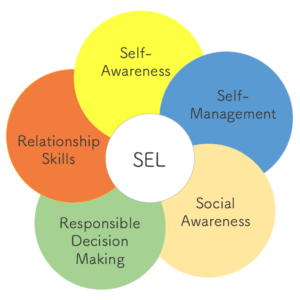 Too often we focus on scores and grades as the basis of students’ academic achievement and overall success. I can certainly remember being at Villa Maria grade school and boasting about how many As I had on my report card – something we all did! At that time, none of us stopped to think or discuss the “other side” of learning.


 Getting a job is something of an inevitability for most of us; even on the board game “The Game of Life,” choosing your career is not a milestone you can skip. As parents, most of us begin asking our children at a very young age, “What do you want to be when you grow up?” I can certainly recall that time in my life… as well how this question – and more importantly, the answer – changed after I had Ryan.

 I had the great opportunity to participate with the PNC Advisory Board’s annual Fall meeting last week in Louisville. I so look forward to this meeting each year. The Council members are a diverse group, with representatives from Temple University, Erikson Institute, National Center for Families Learning, Sesame Workshop, Open Minds, and Fred Rodgers Productions to name only a few. So it will be no surprise that the opportunities for dialogue are many, which is always one of the highlights of the meeting.
 read two stories to 100 preschool children, many of whose parents were also in attendance. It was remarkable to watch how completely engaged with the stories the children were. The actors made an effort to be sure the children actively participated throughout the story telling.
 communities across the US, NCFL has a holistic approach centering on the whole community which is the family. A key to the success of NCFL is their core belief that professional development with teachers helps them understand and then implement research-based practices that result in transferring this knowledge to parents. I was thoroughly impressed with the number of parents attending as well as their level of engagement. In the session I observed, not a single parent was on his/her cell phones; rather, all were actively engaged with their child.
 Scientists and researchers are constantly uncovering more information related to autism, offering insights into the origins, possible causes and even at times potential cures. I come across dozens of articles on a weekly basis, some of which seem more important than others. I thought I would share on a monthly basis stories that caught my eye.
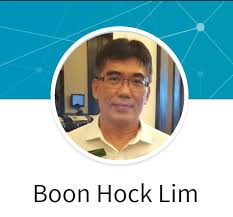 Last week, I had an opportunity to meet with Dr. Boon Hock Lim and his colleague Joseph Lee through our mutual connection, the Richter family. Years ago, Dr. Lim was a foreign exchange student in Erie and stayed with Mr. and Mrs. Richter.
 Likewise, I was very anxious to learn about special education programs in Malaysia and in particular, the story of how he founded Wings Melaka. He and a group of parents of children with special needs wanted to secure services for their children… one year later, Wings Melaka was established. A school-aged program began in 2007 and their next aim is to offer adult services.