Tips for Parents

Many families have asked if I had any tips for parents, so I wanted to share a few of my thoughts.

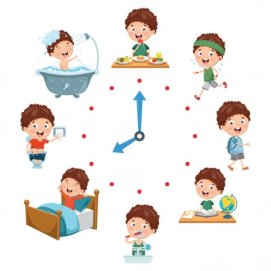
Daily Routinedaily routine

  • Create and maintain a daily routine. Use a daily activity schedule including visual prompts to help your child know what is coming next. Children are used to a set schedule when they are in school, so it’s crucial that they continue to have consistency and predictability at home. Write the daily plan on paper, a whiteboard, poster board – whatever you have available. Be sure to let your child participate in the scheduling.
  • Set a timer – This keeps children on-task and focused. The timer will allow them to visually or auditorily track how much time they need to attend to an activity. You can use a timer for fun or free time activities as well as academics.

What should be on the schedule?

  • Work on the academics your child is doing at school. This can be a great time to “practice” those skills as well as his/her daily living skills. Have your child assist with household chores. Certainly, include time for preferred leisure. Physical exercise is a must!
  • Limit device use. Let them play their digital games and watch TV but put it on the schedule as a “free activity” and use a timer to help limit their use. Encourage use of educational apps and games.

Determine what he/she knows and feels about the virus.

  • For those who are verbal, discover if they are worried and what they are worried about. Don’t dismiss their fears with an easy, “You’ll be fine.”  Listen and reflect back what they are saying.  Validate their feelings.   After you have listened, offer some support and coping mechanisms.
  • Speak at a level that he/she will understand. For instance:  This illness is different because it’s new.   People are working really hard to make sure it doesn’t spread and make lots of people sick.  That is why we’re staying home, so no one gets sick.  If someone does get sick, the doctors will take care of them.  Doctors and scientists are working really hard to figure this out.

Coping Strategies

  • Offer simple coping strategies such as counting to 10, taking deep breaths, making a list of the things we are grateful for or taking a walk. It is important to help your child feel a sense of control in managing his/her feelings. Teach coping skills when your child is calm. Follow up with daily practice at a set time.

healthyTake care of yourself, eat well, get enough sleep and exercise.

  • Keeping your own anxiety in check will help you to stay calm for those around you.

Where can I go to get information on activities?

  • Each school district is approaching this differently, so I’d suggest you go to their webpage.
  • We have many learning resources are available on the Barber National Institute’s webpage for preschool and K-12 for multiple subjects, including math, reading, and science: https://www.barberinstitute.org/online-learning-activities
  • Another thought is to consider virtual tours, which are are also available online for many national and international museums, zoos, and even theme parks.

I care deeply about the wellbeing of our community and urge everyone to stay home, stay safe and stay healthy. These are challenging times, but we’ll get through together. We are here for you.


Posted in Uncategorized | Leave a comment

World Down Syndrome Day Guest Blog, by Brianne McClellan

I invited Mom, Brianne McClellan, to share her thoughts in this week’s blog on World Down Syndrome Day.

-Maureen


I enter the door at daycare and see him sitting in his usual chair, by himself, listening to an audio story of “Pete the Cat” from the cd player. All the other kids are running around, screaming, playing and interacting with each other. “Hey Noah!” I say as I approach my son. He sees me and does his usual greeting; gets up and walks over to me, and then when I kneel down he hugs me for a while without letting go. When he finally lets go, he signs part of the alphabet for me to see, “a-b-c-d-e,” he’s so proud of himself. Then, he grabs my hand and takes me over to a book and points to a horse and signs, “horse.” So I sign “horse” back and make a horse sound. As we walk over to his cubby to get his coat, he towers over the other children in the Toddler classroom because they are probably 3 and he is 9. One child comes up to me and asks me, “Does he talk?” I smile at the child and say, “No. But he signs words.” That’s about all I could say as I was stepping over toys, gathering Noah’s school belongings, and chasing him out the door.

Noah was not only blessed to be born with Down syndrome, but he also has autism and is non-verbal. Before Noah was born, we knew we had an over 50% chance of Noah having Down syndrome. After the initial shock, I was ok with that and started getting educated and prepared. I fully expected Noah to attend public school, join the golf club in high school, have a job, possibly get married someday, and even live on his own with his family or a group home. Then when he was around 2, he was diagnosed with autism. It is said that less than 20% of people with Down syndrome are dual diagnosed with autism. I guess we were one of the lucky ones. My thoughts of the future definitely changed at that point and in the years following.

My thoughts may have changed regarding Noah’s independence as he ages, however, Noah’s uniqueness has shined through and taught me more than what I thought I knew or wanted. What I have found is that Noah brings more joy to life than I ever could. Noah walks into a restaurant and people smile. I drop Noah off at school and the Principal tells me that the staff always enjoys when Noah comes down to deliver papers to their office. Even though Noah doesn’t speak, he amazes people all the time. He shows his intelligence in so many ways, and he loves being praised for it! He shows his sweetness every day with hugs and smiles.

Anyone who knows Noah or someone like him is lucky. They will open your eyes to a kinder world. They will open your hearts to empathy. And they will open your minds to think beyond yourself and what you can do for others. We are lucky to have people like Noah in our world. We can learn so much from them.

world-down-syndrome-day-graphic

Posted in Uncategorized | Leave a comment

Spread the Word to End the Word!

Last Wednesday was “Spread the Word to End the Word.” Started as a simple website by the Special Olympics in 2008, it has grown to a nationwide campaign involving schools and universities across our country, all with the goal of ending the use of the R-word in everyday language.

Although some people might not consider the R-word to be a slur, to millions of individuals with intellectual and developmental disabilities, that is what it can feel like. We know that language has a huge impact on attitudes and actions. By eliminating the R-word from usage, we can work on creating more accepting attitudes and inclusive communities for all.

A bit of history:

In 2010, President Obama signed “Rosa’s Law,” which was inspired by a Maryland woman with an intellectual disability. The bill garnered unanimous support in passing both the House of Representatives and the Senate. Rosa’s Law was commemorated in a White House ceremony with an 11-member delegation of Special Olympics athletes, leaders and self-advocates present to celebrate the milestone. Starting that year, federal agencies dropped the terms “mental retardation” and “mentally retarded” in federal health, education and labor laws and replaced them with “intellectual disability” and since then, almost every state has passed similar legislation. Pennsylvania has done so.

My experience with the R-word goes back to my days as a special education teacher in the Erie School District. I was the teacher of the “R” students, so I could see on a daily basis how my students reacted to being called this. As this left an impression on me to this day, I am one of the most vehement advocates of abolishing this word from everyone’s vocabulary.

I encourage you to sign the petition to not use the R-word: http://www.r-word.org/r-word-take-action.aspx#.VPR5LfnF98F

…and tell your friends and family!Spread the word inclusion

Posted in Uncategorized | Leave a comment

The Importance of Reading!

The first week of March is one of my favorite weeks of the school year. It is not only Read Across America Week, but also Dr. Seuss’s birthday and World Book Day. I love reading! As a child I was probably called “book worm” hundreds of times, because my favorite activity was reading…and still is as an adult.

Reading has the power to transport you to new places, learn new ideas, and become a true citizen of the world. But, there are a number of other reasons why reading is so important.

Reading:

  • Trains your body/mind to slow down, relax and focus on what you are reading
  • Improves your memory
  • Builds a bond between you and your child as you provide him/her with 1:1 positive attention
  • Expands your child’s language and literacy skills

So how do we get our children excited about reading? This can be a special challenge if your child struggles with reading. I have found nonfiction books that allow the child to relate to real life people, places and events are the best course. Another thought: What are his/her high interest topics?

The “2020 What Kids are Reading” from Renaissance is a great resource. It aggregates national reading data by grade level and provides nonfiction and fiction books that children are reading by state. Check it out at https://www.renaissance.com/wkar-report/

As I look back, Ryan started reading words when he was 3 years old and quickly moved on to the short “Bob” books. As he continued in elementary school, I realized that although he was very fluent, his comprehension skills were very weak. This was a struggle throughout his educational career. He never developed my “love of reading,” but I am still not giving up!!!

As Dr. Seuss said, “The more you read, the more things you will know, the more you learn, the more places you will go.” I concur!

IMG_4160

Posted in Uncategorized | Leave a comment

Digital Learning Day!

DLD-Logo-md

I find it difficult to keep up with the latest advancements in educational technology when so many digital devices, educational software and mobile apps are in constant development. In 2012, Digital Learning Day began as a way to actively spread innovative technology throughout the nation and ensure that all youth have access to digital learning opportunities.

When we first began participating in Digital Learning Day in 2014, it was an “in-house” event with school staff and students showcasing the technology they used in their classrooms. Since then, the presenters have expanded to include other programs within the Barber National Institute, outside agencies such as Tobii Dynavox, and local high schools and universities. Eventually, the event became too large for the Barber Center’s North Lobby, so we relocated to our gymnasium!

Thursday will be the Barber National Institute’s 6th consecutive year celebrating Digital Learning Day. We are open from 11am-1pm and we encourage the public to come and see what’s offered! There are numerous prizes and giveaways, as well. If you aren’t able to attend, you can watch us stream live on Facebook.

A special thanks to Nina Wolfarth, B.S., Early Care Coordinator, and Zachary Bair, B.S., Technology Coordinator, for cochairing our event.

For more information about Digital Learning Day, visit, https://digitallearningday.org/

Posted in Uncategorized | Leave a comment

It’s Cool to be Kind!

As I was walking through our hallway today, I noticed a “random act of kindness.”

One of our five-year-old students was in line behind a younger child. When the younger child dropped his paper, the older child picked it up and immediately handed it to him saying, “Here is your paper.”

I thought, how sweet!  Perhaps his Mom or Dad had encouraged him to help others? Was it his teacher who taught him the importance of kindness? Or had he seen others act in such a manner and he was modeling their behavior?

Perhaps, it was a combination of all of the above?

IAWA445-RED-TH-DESIGNThis got me thinking about how Ryan and I have talked about kindness over the years.  It is a discussion that we have had frequently, as I believe that what sets us apart as an individual is how we treat others.

But talking about kindness is only a part of the equation; kindness is best learned by feeling it and then reciprocating…being kind to others.

So, part of our nightly dinner conversation centers around what acts of kindness each of us did that day.  Who did the most?????

As I was writing about kindness, I was pleasantly surprised to read that Autism Speaks has declared 2020 as the Year of Kindness.  Their goal is to achieve one million acts of kindness before the year’s end to create a more inclusive, kinder world for the autism community.

They have created many resources, available on their website:  autismspeaks.org/kindness

Ryan and I are going to sign up for the kindness break…why don’t you?

Posted in Uncategorized | Leave a comment

Top Research Studies of 2019

Autism Speaks science leadership and Medical and Scientific Advisory Committee recently announced its top ten autism studies of 2019. These selections were based on more than 2,000 research reports published in scientific journals. Many I have discussed in previous months’ autism research reviews. Some amazing new directions to consider!

-Maureen

Note: Order does not imply relative importance.


Screening and intervention

A Pivotal Response Treatment Package for Children With Autism Spectrum Disorder: An RCT. Gengoux G, Abrams D, Schuck R, et al. (2019). Pediatrics. 144. e20190178. 10.1542/peds.2019-0178.
In this study, researchers compared a common behavioral intervention called Pivotal Response Treatment (PRT) with a version of PRT that included parent training in how to use PRT at home. PRT was more effective when parents were included, suggesting that consistency across a child’s environment supports greater progress in communication, social and behavioral skills.

research

A Multisite Randomized Controlled Two-Phase Trial of the Early Start Denver Model Compared to Treatment as Usual. Rogers SJ, Estes A, Lord C, et al. Journal of the American Academy of Child and Adolescent Psychiatry. 2019 Sep;58(9):853-865.
This test of a common early intervention technique, known as ESDM, compared its effectiveness with the existing standard interventions for young children with autism. One goal was to replicate earlier findings of ESDM’s effectiveness, which the study did find held true for language skills but not for autism behaviors.

“Both studies [of PRT and ESDM] demonstrate the progress being made in meeting standards for rigorous tests of early interventions: randomization, blinding of assessors, independent analyses, and most importantly attempts at replication of earlier findings,” said Connie Kasari, Professor of Human Development and Psychology at the UCLA Graduate School of Education & Information Studies and Professor of Psychiatry at the David Geffen School of Medicine at UCLA.

Improvements in the standard of autism care in community settings may have played a role in the partial findings in the ESDM study, Kasari suggested. “As the field of intervention science continues to mature, more attention to replication and deployment into the community is essential. Earlier effectiveness is much smaller when the same study is repeated years later due to improvements in community practices generally.”

Effectiveness of community‐based early intervention for children with autism spectrum disorder: a meta‐analysis. Nahmias, AS, Pellecchia, M, Stahmer, AC, and Mandell, D.S. (2019). Journal of Child Psychology and Psychiatry, 60: 1200-1209.

The meta-analysis of community practice suggested, however, that we are not doing very well in this regard, Kasari said.

“Nahmias and colleagues examined treatment as usual groups in early intervention trials to determine if over time we are getting better at improving child outcomes in the community. The result was discouraging, except for when trials were conducted near academic settings such as in the first two papers,” Kasari noted. “These conflicting interpretations require further investigation with the goal that we get a better handle on which treatments are effective for whom, and when.”

Advances in health equity and lifespan issues

Assessment of racial and ethnic bias in autism spectrum disorder prevalence estimates from a US surveillance system. Imm P, White T, Durkin MS. Autism. 2019 Nov;23(8):1927-1935
In this study of data from national autism monitoring sites used to calculate prevalence estimates, researchers found that children excluded from those estimates were more likely to be Hispanic or non-Hispanic black. For Hispanic children, exclusion was more likely to be due to lack of residency information, and both groups were more likely to have missing relevant health records. Although the exclusion of their data would not have affected estimates of prevalence, this study highlights the lack of access to care for developmental evaluation in underserved groups.

Accuracy of Autism Screening in a Large Pediatric Network. Guthrie W, Wallis K, Bennett A, et al. Pediatrics. 2019 Oct;144(4). pii: e20183963. doi: 10.1542/peds.2018-3963.
To test the accuracy of the M-CHAT, a common autism screening questionnaire, researchers at Children’s Hospital of Pennsylvania were able to get all pediatricians in their health network to use the M-CHAT as the recommended autism screening pediatricians are recommended to conduct at 18- and 24-month checkups. They found that it was less accurate with a broader population than it was tested in research studies. It also highlighted delayed diagnosis for children of color in the network.

autism

“These two large studies identify disparities – in screening, detection, and diagnosis of ASD – associated with racial, ethnic, and socio-economic characteristics. So, we now have substantial empirical evidence of these types of health inequities in ASD,” said Stelios Georgiades co-director of the McMaster Autism Research Team, at McMaster University and Hamilton Health Sciences, in Hamilton, Ontario. “What is needed is action toward the development and testing of more comprehensive outreach methods to reduce disparities and increase access to services for all.”

Broken bridges-new school transitions for students with autism spectrum disorder: A systematic review on difficulties and strategies for success. Nuske HJ, McGhee Hassrick E, Bronstein B, et al. Autism. 2019 Feb;23(2):306-325.

This study analyzed the research of autistic students transitioning to new schools to uncover what was difficult for students, their families and teachers, as well as support strategies that were effective. Researchers found that anxiety and social pressure affected the students, while parents were similarly worried about their children’s well-being. Teachers were found to have inadequate resources to give appropriate support to transitioning students. Effective strategies to support new school transitions included personalized support, parent information on the transition process, and improved communication between schools as well as between school and home. This paper highlights the need to develop systems of support that guide students and families through school transition in a comprehensive, effective way to reduce stress and increase chances of successful transition.

Trajectories in Symptoms of Autism and Cognitive Ability in Autism From Childhood to Adult Life: Findings From a Longitudinal Epidemiological Cohort. Simonoff E, Kent R, Stringer D, et al. Journal of the American Academy of Child and Adolescent Psychiatry. 2019 Dec 18.
Simonoff and colleagues conducted the first longitudinal study of a group of children with autism through early adulthood that tracked cognitive skills and autism symptoms. They found that certain groups of children saw higher IQ scores as adults and was linked with their early language skills and type of school environment. Children who attended mainstream schools, rather than specialist schools, had fewer autism symptoms as adults.

“The use of population-level data to study trajectories in ASD allows for increased generalizability of research findings. At the same time, the relatively small sample size (n=126) of this study highlights the challenges associated with longitudinal research in ASD,” said Dr. Georgiades. “There is a need for the ASD community to work toward larger collaborative studies using a lifespan approach.”

Advances in Genetics 

Association of Genetic and Environmental Factors With Autism in a 5-Country Cohort. Bai D, Yip, BHK, Windham, GC, et al. JAMA Psychiatry. 2019 Jul 17.

Identification of common genetic risk variants for autism spectrum disorder. Grove J, Ripke, S, Als, TD, et al. Nature Genetics. 2019 Mar;51(3):431-444.

Inherited and De Novo Genetic Risk for Autism Impacts Shared Networks. Ruzzo EK, Pérez-Cano L, Jung JY, et al. Cell. 2019 Aug 8;178(4):850-866.e26.

“The first study examined genetic and environmental factors contributing to autism in Denmark, Finland, Sweden, Western Australia and Israel. Estimates of additive genetic risk ranged from 51 percent in Finland to 87 percent in Israel and estimates of environmental risk ranged from 13 percent in Israel to 35 percent in Finland,” said Ed Cook, Earl M. Bane Professor of Psychiatry, Director of the Program for Neurodevelopmental Disorders and Director of the Division of Child and Adolescent Psychiatry at University of Illinois-Chicago College of Medicine.

The second study, by Grove and colleagues, reported the largest genetic study to date, looking for gene changes that are linked with autism. It included more than 18,000 subjects with autism and more than 27,000 control subjects. “Five statistically significant loci were identified and relationships were found between polygenic scores for ASD and several other conditions, including ADHD and major depression,” Cook said.

Finally, Ruzzo and colleagues used a dataset featuring more detailed genetic information via whole genome sequencing looking for new genes that may contribute to autism. They performed WGS on samples from the Autism Genetic Research Exchange, supported by Autism Speaks, of people with two or more affected siblings with autism spectrum disorder. “They also contrasted the biological effects of genes found in these multiplex families to genes implicated by findings in families with only one child with ASD,” Cook said.

Taken together, these three studies represent a shift toward larger datasets, whether through collaboration or through more detailed sequencing available with more sophisticated genetic tests like whole genome sequencing. “ASD risk remains complex and multifactorial,” Cook said.

Posted in Uncategorized | Leave a comment

Expanding Communication Opportunities

Amy M

Amy Moczulski, M.A., CCC-SLP

I sat down with Amy Moczulski, M.A., CCC-SLP, speech-language pathologist at the Barber National Institute. Amy’s role in the classroom is to assist students in learning to use augmentative and alternative communication (AAC) devices, and this past year, she began a project with Tobii Dynavox’s Marleah Herman-Umpleby, M.S., CCC-SLP working with adults in our group homes.

Amy told me the idea began at one of our monthly Technology Device Committee meetings, where discussion had shifted from what we were accomplishing in the school to replicating those efforts in the adult division.

“Learners with complex communication needs requiring AAC typically receive the necessary services to meet their language needs while in a school-based setting,” Amy stated, “however, there is a lack of continuity and support when transitioning out of the school systems.”

Three participants were chosen, two in Erie and one in Pittsburgh. Thanks to a grant from Erie Insurance, the group homes already had Microsoft Surface tablets available. Amy’s objective was to determine if communication opportunities could increase by utilizing the Surface tablets and Tobii Dynavox’s software, Snap Core First.

Tobii Dynavox Snap Core First

The scope of the project was to provide training and support to group home staff in order to provide the residents with meaningful communication opportunities throughout their daily routines through the use of AAC.

Challenges included staff turnover, lack of staff communication between shifts, and overall limited staff training on complex communication needs and AAC.  Additionally, the selected residents did not have personal tablets, which limited communication opportunities.

Despite the challenges, there were major successes with two of the participants, Missy and Will.

Missy had a strong intent to communicate with the group home staff and visitors. Using Snap Core First, Missy had a clear understanding of selecting icons on the screen to activate the speech output. Through use of the device, she found topics that interested her and her social interactions with the staff and her housemates increased. Because of this success, Missy now has her own iPad.

Will

Will using Tobii Dynavox’s software, Snap Core First

Meanwhile, Will made a connection with his housemate on his first night using the device, and continued to connect with visitors while watching sports on television. With continued use, staff reported less behavior issues and an increase in Will’s natural speech and engagement. Will also now has his own personal iPad with the Snap Core First software.

So what are the next steps?

“Expanding AAC across all programs,” said Amy, “not just in their home, but in the day program, work and the community. We would like to continue building independence in teams, expand to other participants, and create a series of videos demonstrating use in the home for residential staff and families.”

Amy Moczulski and Marleah Herman-Umpleby presented the project’s success this past fall at the annual American Speech-Language-Hearing Association (ASHA) convention in Florida.

Posted in Uncategorized | Leave a comment

Happy National School Choice Week!

Why are Elizabeth Lee Black School students unpacking their yellow fleece scarves, signs and other materials???? It is National School Choice Week!

Starting last Monday, National School Choice Week is the largest ever celebration of opportunity in K-12 education… Millions are participating in over 51,000 events and activities from coast to coast.

This week is inclusive, positive and welcoming with the goal of raising awareness of all educational options:  public, charter, private, magnet, online and homeschooling. Hopefully, families can find schools and learning environments that best meet the needs of their children.

In Erie Country, we have a number of options available which is not the case in many communities.

Our students made artwork showcasing why they love their school!

IMG_3954IMG_3943IMG_3922

IMG_3944

IMG_3924 IMG_3919

Posted in Uncategorized | Leave a comment

The Playhouse Returns

passitThis is an exciting week for us at the Elizabeth Lee Black School because the Erie Playhouse again returns to us!

Today is our first play practice!

The Playhouse has been coming to the ELBS for nine years but this will only be the third year that we will be anticipating our finale on the LECOM stage at the Playhouse.

Trisha Yates, Erie Playhouse director, producer, and creative artist par excellence, has selected the book “Pass It On” by Sophy Henn.

“Pass it On” is the story of a young lady who spreads joy to others by sharing good experiences and feelings, whether it is a smile, a hug, a happy face or a moment of wonder.

Twenty six of our students between the ages of 6-16 will be on the stage on May 22nd as they attempt to become the next Meryl Streep or Brad Pitt.

Mark your calendars; you will be receiving a formal invitation.

I can guarantee you that the next 4 months will be a busy, exciting and happy time for our students!  Pass it on!

Posted in Uncategorized | Leave a comment