Grow Up Great… with Sesame Street!

pncLast week was my annual PNC Grow Up Great meeting in Detriot, MI. I am honored to serve on the advisory board of this great initiative. It’s truly amazing what they have accomplished:
  • More than $109 million in grants awarded since the program’s inception
  • 600,000 volunteer hours in the community and a “Great Day” at PNC where over 50,000 employees participate
  • Acknowledging the critical importance of vocabulary development in young children’s lives, PNC Grow Up Great partnered with Sesame Workshop to launch their Reading Adventures Digital Storybooks: Words are Here, There, and Everywhere!
  • One of my favorite ventures was “We are Amazing, 1,2,3!” a story that introduces a new character Julia, a young girl with autism, into the neighborhood
  • Many new projects are on the horizon as PNC Grow Up Great looks to the future

Although I can’t share any details just yet unfortunately, I am particularly excited about an upcoming project of the Sesame Street workshop that happens to dovetail with an initiative of our own this year. I look forward to being part PNC Grow Up Great as it moves ahead, expanding initiatives for young children.

I find these resources to be so helpful. Best of all, they are free to all! Please check out their many tools below and share!

https://www.pnc.com/en/about-pnc/corporate-responsibility/grow-up-great/sesame-street-learning-resources.html

Click to access words_activity_cards.pdf

Click to access WAHTE%20Final%20Cards.pdf


Posted in Uncategorized | Leave a comment

End Bullying!

October is an important month – it is National Bullying Prevention Awareness Month. While it is encouraging to see communities take a stand against bullying and to make people aware of the issue, the unfortunate reality is that one out of every four students report being bullied during the school year. And while this isn’t an issue that affects only children with disabilities, studies show that these children are two to three times more likely to be bullied than their nondisabled peers. Being bullied may also lead to problems later in life; children who experience bullying are at increased risk for anxiety, depression, and other mental and behavioral health issues. (Source)

There is no doubt that these statistics are upsetting; however, there is much that we can do to bring an end to bullying!

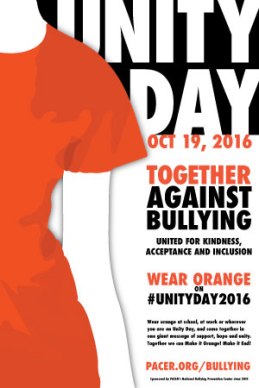
unitydayposterIn your community, consider planning or taking part in an event that celebrates Unity Day. Held this year on Wednesday, October 19th, Unity Day is a chance for communities to stand united for kindness, acceptance and inclusion. Participants wear orange as a way of visually demonstrating solidarity. You may also choose to hold a local walk or run in your town. This is a wonderful, family-friendly way to show your community’s commitment to keeping students safe while at school, in the community, and on-line. The event can be accompanied by pre-and post- activities such as games for kids, speakers, music, prizes and dance.
Both at home as well as at school, you may decide to share some resources with your children to help them understand what they can do if they see bullying occur. There are a number of wonderful resources online – here are just a few to choose from!

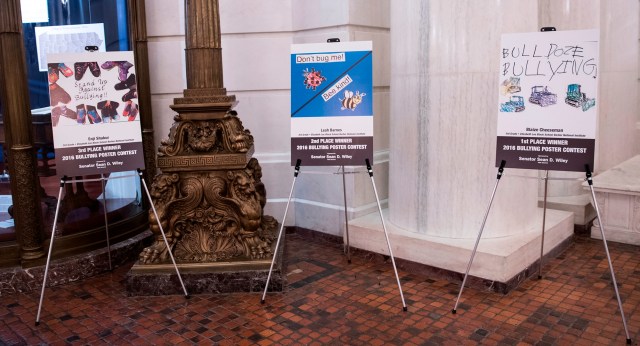
At the Elizabeth Lee Black School, teachers do a wonderful job of incorporating anti-bullying lessons into their plans during October. Students also participate in a state-wide Anti-Bullying Poster contest. This year, three of our students were the lucky recipients of the first, second and third place awards for their posters! They are on display in the Rotunda room at Capitol Hill!

bully-posters-rotunda-wiley-0213

Posted in Uncategorized | Leave a comment

World Mental Health Day

Did you realize that yesterday was World Mental Health day? I did not until an email came across my desk. The overall objective of the day is, perhaps to no surprise, raising awareness of mental health issues around the world. quoteWhile knowing the signs and symptoms of mental or emotional health issues is of course critical, equally as important is knowing where to get help. How common are mental health issues?
At some point in their lives, nearly half of all Americans will have a problem that affects their mental or emotional well-being. Depression, stress, and anxiety are common issues. Unfortunately, there is still reluctance to seek professional help because of the stigma attached to mental illness. However, with the right support, most people learn how to healthily manage their symptoms, successfully complete treatments, and lead a happier, healthier life overall.

In the Erie community, the Barber National Institute has helped individuals with intellectual disabilities to improve and enrich their lives for over 60 years. This commitment to quality care has become a standard of excellence the community knows they can rely on to meet their needs. This year, the Barber National Institute has expanded their continuum of care to offer a new resource for all individuals with mental health needs, the Barber Behavioral Health Institute (BBHI) Outpatient Clinicbbhi_logo.

BBHI offers services for all children and adults with mental or emotional health issues, not just those with intellectual disabilities. These issues may include depression, anxiety, stress, bipolar disorder, panic disorder, postpartum depression, and coping with traumas or serious medical illnesses/diagnoses. Some of these services include comprehensive assessments to evaluate the individual’s needs and goals; counseling and psychotherapy; and even medication therapy that is prescribed and monitored by licensed practitioners.

If you would like to learn more about Barber Behavioral Health Institute, you can check out our webpage or contact us at 814-871-4725. For those of you not in the Erie area, this link is a great starting point to finding the best options in your community: http://www.mentalhealthamerica.net/finding-therapy.

Posted in Uncategorized | Leave a comment

Positive Mind = Positive Life

smileIt’s too easy to be a negative thinker these days. The headlines of the newspapers often focus on controversy and conflict in the United States and overseas. Page after page of troubling stories can make you think, “There’s nothing happy in the world anymore.” Unfortunately, turning on the news programs shows much of the same. So, what can we do?
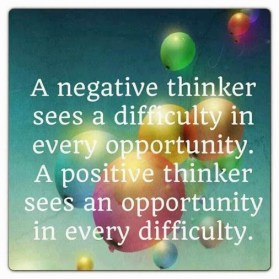
In honor of Positive Attitude Month this October, I want to share some tips (one article referred to them as “secret weapons,” a term I love). Because being positive can improve our health and relationships with others, among other things, it certainly seems like a worthy endeavor!

  • Take time to help other people, whether it is volunteering at a community organization or simply helping your neighbor. Helping others enables you to see how you personally are able to have a positive impact on the world. I can promise you that you’ll feel good after!
  • Positive Thinking. Thinking positively can actually change what is possible for you …really! Replace negative self-talk with positive affirmations, for example: “I hate getting up in the morning” with “I am grateful for a new day.” Eventually changing our self-talk can lead to changes in our behavior and attitude.
  • Surround yourself with positive people. You read everywhere that whom you surround yourself with will directly impact your attitude… and it’s true!

positive-thinkerAt ELBS, we’ve been embracing the Positive Attitude month as more of a year-long theme. Emotional well-being of our faculty and students is our first priority. We brought in a guest speaker to help us begin this journey. Our next step is to develop a school-wide Positive Behavior Supports plan. I’ve also begun emailing staff bi-weekly with a short note that shares a resource, quote, a book, etc., that has inspired me to work on positivity and kindness.

As we continue to dig deeper into this idea, it’s refreshing to see how many resources such as books, blogs, etc. exist to help you look on the bright side more often and more automatically. Yes, we face many challenges in our world today, but one person, one positive action, can make a difference!

Here are some great resources for Positive Attitude Month:

http://www.prweb.com/releases/2005/10/prweb302342.htm

https://www.verywell.com/make-the-most-of-positive-attitude-month-3144434

Posted in Uncategorized | Leave a comment

Are You Prepared?

preparedAs I read that September is National Preparedness month, I began thinking about what parents of children with disabilities should be thinking about and planning for in the event of an emergency. Certainly, there are lots of different types of emergencies. One immediately considers natural disasters such as hurricanes, tornadoes and flooding. But even smaller scale events can have the feel of an emergency if you aren’t prepared. For example, often our power goes out during a thunderstorm. If it’s dark outside, the house becomes pitch black in an instant. Candles aren’t a consideration, as they are too easily knocked over. So I went out and purchased some battery-operated lights that I keep in all of our rooms. This way, instead of panicking in the dark, I am prepared.

So I thought I would share some basic tips to help families prepare and plan for “the unpredictable.”

Make a Kit – Many people may think of having emergency kits on hand at home, but it’s also good to have one at work and on for your car while on the road. Stock your kit with essential items which may include medical supplies, assistive devices, food for your specific dietary needs, prescription medicines, diabetic supplies, hearing aid batteries, battery-operated phone chargers and other medical equipment and mobility devices you may need to maintain your health, safety and independence.

If your child is sensitive to loud sounds or highly stimulating environments, you may want to include handheld electronic devices loaded with movies and games (and spare chargers), headphones to decrease auditory distractions, and comfort snacks and toys.

Medication – Aside from emergency stores of medication that you may have in your kit, make sure you have at least 3-5 days of prescription medications on hand in the event you are unable to get a refill.

Make an Evacuation Plan – If you should need to leave your home, make a plan for how to safely exit as well as where you will go.

Fire Safety – This is something that Ryan and I have discussed multiple times. He knows the old saying: “Stop, Drop, and Roll!” by heart. He also knows two ways out of every room in case of fire.

Communication – Be sure your family knows your emergency plans, including a place to reach you if you’ve left your house. Maintain a list of your essential contact numbers, not just on cell phone. Take the time to sign up for emergency emails and text messages on your cell phone from your local government alert system.

You may be thinking, “Why bother? We don’t live in an area with hurricanes/tornadoes/blizzards.” But that’s all the more reason that you should be prepared. That way, you can feel calm and in control of the situation. If you’re calm, your child will be calm.

I encourage you to watch a great video about preparedness for families who have children with disabilities as well as review other resources here: https://www.ready.gov/individuals-access-functional-needs.

I’ve also touched on other aspects of Emergency Preparedness in previous blogs that you can read here and here.

Graphic: Get Involved.

Posted in Uncategorized | Leave a comment

Who are Direct Service Professionals?

National Direct Support Professional Recognition Week, September 11th – 17th, 2016. You’re probably wondering who that person is, as it is not a commonly heard job description. However, the persons in this role make a critical difference in the lives of children and adults with disabilities.

20 years ago, a person might have been called “Aide” or “Paraprofessional.” Today, they are most commonly referred to as “Direct Support Professional.” Regardless of their title, the job description is typically the same:

A direct support professional is a person who assists an individual with a disability to lead a self-directed life and contribute to the community, assists with activities of daily living if needed, and encourages attitudes and behaviors that enhance community inclusion. (Source) https://en.wikipedia.org/wiki/Direct_support_professional

Direct Support Professional Recognition Week is part of the American Network of Community Options and Resources (ANCOR) National Advocacy Campaign, whose mission is to enhance the lives of all people with disabilities who rely on long-term supports and services by obtaining the resources to recruit, train and retain a highly qualified and sustainable workforce.dsp.png

Individuals in this position may have a high school degree or beyond, but what makes them unique is their commitment to assist and support persons with disabilities, which is not always an easy job. Many of our individuals require a direct support professional to be with them 24/7, including holidays. A DSP receives intensive training during orientation and learn about the individual(s) he or she will be working with (likes, dislikes, strengths, challenges).

At the Barber National Institute, Direct Support Professionals are an integral part of our team. They support our fundamental belief that learning is a lifelong process, and that all individuals should be provided the opportunity to reach their greatest potential.

People who need support are more likely to fulfill their life dreams if they have well-trained, experienced, and motivated people at their side in long-term, stable, compatible support relationships. These are the people who we hire as Direct Support Professionals. DSP Recognition Week is just one of the many ways we try to say “thank you” to the people who provide opportunities for people with disabilities – They are truly “Making Dreams Come True!”

Posted in Uncategorized | Leave a comment

Beast Mode!

beastThis past Saturday was our fourth annual “Barber Beast on the Bay.” For those readers who are not from the Erie area, the Beast on the Bay is an adventure obstacle course challenge that includes natural and manmade obstacles on Presque Isle State park. The annual event helps support the Barber National Institute and its work with children and adults with disabilities and behavioral health challenges.

What even local readers may not know is that in addition to the 10 mile obstacle course, we also offer a one-mile adapted course will also be offered for adults (age 16+) with physical or intellectual disabilities at adjacent Waldameer Park.

This year we had a record number of individuals complete the adapted course. Participants are welcome to have a course buddy to go through the course with them at no extra charge. The adapted course is one of the highlights of the Beast event; it’s a wonderful opportunity to showcase how important inclusiveness and equal opportunity are to our mission.

I think that challenges like this are a great moral booster for schools and organizations nationwide. Many groups offer 5K runs in honor of a disability, but few offer the opportunity for those with disabilities to participate in their own cause. I would encourage any group to consider an obstacle course similar to the adapted Beast for their own fundraising efforts, which is why I would like to share some of our obstacles as examples that could even serve as a model for your own “Beast!”bni-2016-beast-on-the-bay_375

“Feed the Beast”

In this obstacle the participants stand a few feet in front of two hand painted boards, one deigned to look like “the beast” and the like a scary pirate, with sections cut out for participants to throw bean bags through the holes.

“Beast Cave”

This obstacle was a 10-foot high structure that the participants had to go through the middle of. Inside, there were different weighted bags that hung from the ceiling. Participants had to push these bags out of the way to get to the other side.

“The Watering Hole”

This obstacle was in the in the Waldameer Wave Pool. Participants can either enter the wave pool or stay on shore if they do not want to get wet. The object is to throw a beach ball in to a hoop to score a point. After scoring, participants use water shooters and attempt to get the volunteers wet!

Of course, none of this would be possible without great support from our community. The Beast on the Bay had over 200 volunteers helping throughout the day, from setting up and tearing down, to cheer teams on the sidelines, water stops, and of course assisting on the obstacles themselves. It is truly a wonderful team-building event for all!

The 5th annual Barber Beast on the Bay is set for Saturday, September 9, 2017 at Presque Isle State Park in Erie, PA. We hope to see you there, or hear of your own “Beast” happening in your town!

ryan-1

Ryan, with friends Bryant and Craig, beat the Beast in 3 hours this year!

Posted in Uncategorized | Leave a comment

Childhood Obesity: Take Action!

It seems like childhood obesity is a topic that is mentioned again and again in the media. But unfortunately, it continues to be a topic that is critical for us to discuss, considering more than 23 million children and teenagers in the United States are obese or overweight. What is even of greater concern is that obesity rates for children with disabilities are approximately 38% higher than children without disabilities. With statistics like these, it is essential to make this a frequent topic of conversation. obesity.jpg

As September is “National Childhood Obesity Awareness Month,” I thought I would share some ways that all of us as parents or caregivers can help prevent obesity and support healthy growth in our children.

Maintaining a healthy weight has two primary components: engaging in regular physical activity and making healthy eating choices.

The CDC recommends 60 minutes of physical activity a day. To meet that goal, encourage your child to participate in a variety of physical activities. Some children enjoy team sports, while others prefer to do activities on their own. Regardless, there are nearly limitless ways to be active – just take the time to figure out what your child enjoys so that he or she will be more likely to exercise.

The USDA food pyramid is still generally considered to be the best measure for a balanced diet. Some easy suggestions for meeting those guidelines are:

  • Always provide healthy food choices such as fruit and vegetables at meals and as snacks
  • Offer water as a no-calorie alternative to sugar-sweetened beverages
  • Eat moderate portions

food_pyramidUnfortunately, some medications can contribute to weight gain and physical limitations can reduce a child’s ability to exercise. There is no easy fix for these restrictions, but I would suggest you talk to your physician as well as your child’s team at school for their suggestions and ideas on these challenges.

Of course, regular sleep is also an important component of being healthy. In addition to maintaining a healthy weight, sleep is proven to improve memory, reduce inflammation, improve grades, and sharpen attention, among other benefits.

On a personal note, Ryan’s exercise regimen began when he was seven. Today, Ryan knows that he feels better when he exercises, so he is the one to wake me up at 5:30 AM to go to the gym … and I’m the one who needs the push to get out of bed! Ryan and I worked for many years to establish a regular pattern of exercising and healthy eating. It’s rewarding to see that Ryan now has adopted these habits and independently makes the “right choices.” I’m so proud of him!

Posted in Uncategorized | Leave a comment

Monthly Research Updates

researchScientists and researchers are constantly uncovering more information related to autism, offering insights into the origins, possible causes and even at times potential cures. I come across dozens of articles on a weekly basis, some of which seem more important than others. I thought I would share on a monthly basis stories that caught my eye.

 ~ Maureen


Epilepsy in family members raises risk of autism

A study in Sweden states that people with epilepsy are at eight times the risk of autism as the general population. Siblings and children of individuals with epilepsy are also at an increased risk. The findings, which appeared in June in Neurology, lend credence to the idea that autism and epilepsy share genetic roots. Among some individuals with epilepsy and their relatives, a second genetic ‘hit’ or environmental trigger may tip the balance toward autism.

Read the full article here.

https://spectrumnews.org/news/epilepsy-in-family-members-raises-risk-of-autism/

 Insurance Mandates Boost U.S. Autism Diagnoses

                More U.S. children are getting diagnosed and treated for autism in states that require commercial health insurers to cover these services, a new study finds. Fifteen years ago, Indiana was the first state to mandate that commercial health insurers cover behavioral treatments for autism. Since then, 43 other states have also made autism treatment more accessible to families that couldn’t afford it.

Read the full article here.

http://health.usnews.com/health-care/articles/2016-07-11/insurance-mandates-boost-us-autism-diagnoses

 Diabetes drug counters weight gain associated with autism medicines

In a small new study, a commonly used diabetes drug curbed the troublesome weight gain that is a common side effect of the only two medicines approved for reducing agitation in children and teens with autism. The promising results of the study appear in the latest issue of JAMA Psychiatry. Risperidone (brand name Risperdal) and aripiprazole (Abilify) are the only medicines approved by the U.S. Food and Drug Administration for reducing agitation and irritability in children with autism spectrum disorder (ASD). These medicines become important when serious agitation – including aggression – does not respond to non-drug, behavioral therapy. However, both risperidone and aripiprazole commonly produce significant weight gain – a worrisome side effect given obesity’s many associated health risks.

Read the full article here.

https://www.autismspeaks.org/science/science-news/diabetes-drug-counters-weight-gain-associated-autism-medicines


Tune in next month for an update on autism research!

Posted in Uncategorized | Leave a comment

Girls on the Spectrum

I came across a guest post written by Catherine Fozard, a woman who was diagnosed with ASD at 31. The experiences that she shares are frustrating yet also compelling. She encountered mis-diagnosis, mis-information, and mis-understanding for too many years. 25 years ago, a diagnosis of autism was seldom given to anyone, let alone a girl. I, too, remember when Ryan was three years old and a psychiatrist, who was reviewing his eligibility request, said: “He can’t have autism – he talks in sentences.” I was shocked that a professional in the field would believe such a statement! Fortunately, these comments (I hope) don’t occur in today’s well-informed society.

julia

Sesame Street deliberately chose to make their new character with autism a girl, hoping to bring greater awareness to the differences between boys and girls on the spectrum.

Still, we know that some misconceptions continue. There is a need to expand our knowledge about autism as it relates to girls. For Women’s History Month, I wrote a blog on why girls with autism are diagnosed later, and less frequently, than boys are. (You can read the full article here.) We know that ASD is about 4.5 times more common among boys (1 in 42) than among girls (1 in 189), but in fact we have little understanding of the roots of these differences.*

Part of what I found so moving in Fozard’s article was her challenge to us to help create more awareness of the struggles of girls with autism and the adversity they face every day, in the hope that we can create a better support system for them. As she says, “the world is hard enough without having to go it alone.” I was fortunate not to have to “go it alone” because of my network of family, friends, and supporters who walked with me on my journey with Ryan. And yes, the journey continues!

Read Fozard’s complete article here: https://www.autismspeaks.org/blog/2016/07/20/invisible-girls-autism-spectrum

*Source: http://www.cdc.gov/ncbddd/autism/data.html

Posted in Uncategorized | Leave a comment