
Scientists and researchers are constantly uncovering more information related to autism, offering insights into the origins, possible causes and even at times potential cures. I come across dozens of articles on a weekly basis, some of which seem more important than others. I thought I would share on a monthly basis stories that caught my eye.
~ Maureen
 Autism in motion
Children with autism are often clumsy, physically awkward or uncoordinated. This understudied and nearly ubiquitous feature has researchers contemplating a new idea: Could motor problems be one source of autism’s social difficulties?
Read the full article here.
https://spectrumnews.org/features/deep-dive/autism-in-motion/
AUTISM AND HEALTH: A SPECIAL REPORT BY AUTISM SPEAKS
Frequent co-morbidities of autism include seizures, gastrointestinal disorders, sleep disturbances, eating and feeding challenges, attention deficit and hyperactivity disorder (ADHD), anxiety, depression, schizophrenia and bipolar disorder. These issues can extend across the life span. The purpose of this special report is to summarize the latest understanding of autism’s commonly associated physical and mental health conditions, including how best to identify, treat and in some cases prevent them to improve overall health and quality of life.
Read the full article here.
https://www.autismspeaks.org/sites/default/files/docs/facts_and_figures_report_final_v3.pdf
Heart rate may foretell autism features in infants
Babies with a family history of autism have heart rates that are unusually low and that respond aberrantly to speech sounds, according to a new study. Studies over the past two decades have shown that heart rate tracks with attention: An infant’s pulse slows briefly when she turns toward a compelling sight or sound and returns to baseline as she loses interest.
Read the full article here.
https://spectrumnews.org/news/heart-rate-may-foretell-autism-features-infants/
Tune in next month for an update on autism research!
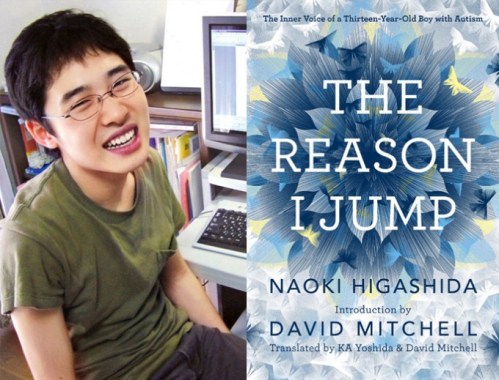 That is was why I was excited when I read a review of The Reason I Jump, which is written by a then-thirteen-year-old boy with autism, Naoki Higashida. Naoki uses an alphabet grid to construct phrases and thoughts that he previously was unable to express.
 I recently found a memo written by Dr. Barber in the early 90s that reflects her commitment to these principles. I wanted to share some excerpts here; who better to tell you of our mission than Dr. Barber herself?
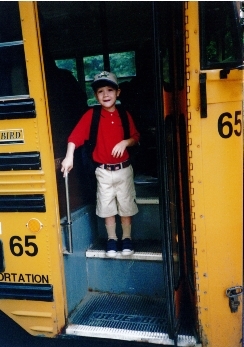 As we enter our second week of school, I find myself a bit nostalgic as I think back to Ryan’s time in school. It’s hard to believe that it has been five years since he graduated high school! I truly believe that one of the reasons he was successful in his school career was my willingness to commit to working with his teachers.
 I also believed it was important to meet weekly with the teacher(s) to discuss his progress and challenges. This assured consistency between home and school – a critical variable for Ryan. Looking back, I drove to his school in blizzards as well as frightening early morning meetings at 7:00 AM! I was fortunate that my best friend, Jeanne, attended as Ryan’s advocate. She was great support. I would encourage all parents to take a friend to team meetings. So much is being discussed and it’s helpful to have someone taking notes.
 Welcome back to the start of this 17-18 school year! Judging by the smiles on your faces, I’m sure that you all had a great summer. I’m really looking forward to the positive changes that our PBIS team will bring about this year, and I wanted to share a few thoughts of my own.

 As this past Sunday was Friendship Day in the US, I wanted to share a few of my thoughts about friendship. Friendship can be a challenge for children on the spectrum. From my personal experience, Ryan sadly had no friends during his years at school. I often thought, “Wouldn’t it be wonderful if someone would invite him to their birthday party?” Unfortunately, that never happened. Ryan preferred the company of adults. I think that was because the adults would take the time to listen to him when he would speak in a rapid manner and would wait patiently for him to him to formulate his thoughts. I think that these adults recognized the importance of kindness more so than Ryan’s peers.
 If there is not a chapter at your school, consider working with administration to start one. Ryan participates in







 All About Autism