Martin Luther King, Jr. Day

martin_luther_king_jr_by_edwinartwork-d6k52r5

Posted in Uncategorized | Tagged , , , , , | Leave a comment

ELBS Recognized for Innovative Use of Technology

Yesterday, we received some great news! The Elizabeth Lee Black School at the Barber National Institute has received the “Award for Leadership and Innovation in Special Education” from the National Association of Private Schools (NAPSEC). NAPSEC, headquartered in Washington, DC, is the largest national organization representing private special education programs.

This prestigious award recognizes the school’s consistent efforts to ensure that children with disabilities receive the many benefits that digital technology offers for state-of-the-art education. In particular, the school is being recognized for an artist-in-residence project that brings a professional artist together with students and faculty to create multimedia publications such as digital books, movies and animations that reinforce or expand upon concepts taught in the classroom. Many of the students create “social stories” that help them achieve their individual communications or behavior goals.

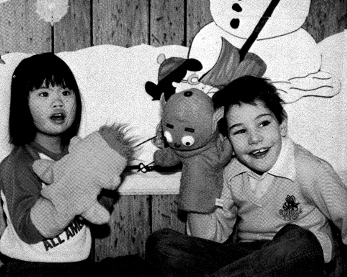
PreKThis recognition made me look back in time to when Dr. Barber established our initial program at the YWCA in 1952. Dr. Barber was a school psychologist for the Erie School District, and was responsible for telling parents of children with special needs that they were not eligible to attend school because of their disability. She and the parents wanted more for these children, and so began the first classroom.

earlytech

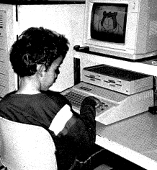
A BNI student with Apple’s IIe

In 1963, the Barber Center was designated as one of the first Approved Private Schools in Pennsylvania by the Department of Education. Approved Private Schools were established to serve children with special needs who cannot receive an appropriate education in their local school district. Over the years, the school has expanded and developed an expertise working with children with autism, intellectual disabilities, multiple disabilities, and mental health challenges.

Our first venture with technology was with the Apple IIe, in 1983. Who would have believed that in a short 30 years, we would go from one machine in the school to computers and iPads in every classroom? Today’s software programs and applications focus on addressing students’ social-emotional learning, as well as adding new dimensions to communication skills and real-world exploration.

PreK2I believe that digital technology continues to change society, self-expression and education, but too often children with disabilities are left behind. At ELBS, we are intent on bridging the digital divide for our students and using technology to broaden their opportunities for learning. Without question, there is great potential, but we need to be thoughtful and intentional in our use of technology.

Who knows what another 30 years will bring us?

Posted in Uncategorized | Tagged , , , , , , , , | Leave a comment

Mindfulness by Emily Pinto Taylor

My niece, Emily Pinto Taylor, is as she describes herself: a full-time chocolate chip cookie baker and half-marathon runner and a 4th year medical student at Loyola University Chicago, Stritch School of Medicine. She is a graduate of Collegiate Academy, Emory University and plans a career working in Med-Peds palliative care. Emily spent the month of July 2014 working in a rural hospital and clinic in the middle of the Amazon rainforest in northwestern Peru. To read more about her experiences, visit an earlier blog post here. She is one of Ryan’s most enthusiastic supporters. They email each other daily…I don’t know how Emily finds the time, but she does!

~ Maureen


Emily and husband Josh, in Peru.

Emily and husband Josh, in Peru.

Anyone raising a child with an autism spectrum disorder will tell you that life can be pretty stressful at times. Growing up with a cousin on the spectrum, as well as surrounded by friends and their families with siblings with intellectual disabilities and autism, I was well-aware of the varied struggles that these families endured during their daily lives.

When I entered medical school in Chicago, I began to see these struggles even more clearly when talking with patients and their families who lived in the communities around Loyola, which are statistically under-resourced. Maywood, IL, for example, contains the Loyola University Medical Center, and also has significant socio-economic risk factors: 70% of families are headed by single mothers; 21% of families receive food stamps; 25% of the residents never obtained a high school diploma or GED (twice the number of US citizens without a high school diploma), according to the US Census in 2000. In this community, which is also notable for being a “food desert” with poor access to healthy foods/grocery stores, and for having higher-than-national rates of obesity, cardiovascular disease, and diabetes, parents of children with ASDs have significant added stressors compounding those faced by all parents of these special-needs children: greater rates of depression, anxiety, and parenting stress.

We knew we wanted to help these families and give them skills to add to their own parenting toolbox, but we weren’t sure where to start.

In recent years research has shown that practicing Mindfulness-Based Stress Reduction techniques among parents of children with autism spectrum disorders leads to fewer unwanted behaviors in those children. Mindfulness-Based Stress Reduction was developed by Jon Kabat-Zinn, a clinical psychologist, and has been defined as “a group program that focuses upon the progressive acquisition of mindful awareness.” It’s basically a practice of meditating, body-scanning (where you think about how you feel sitting in this chair, or how the ground is supporting your feet), and simple yoga postures (like sitting fully upright).

Here’s a video of Dr. Kabat-Zinn describing MBSR: http://youtu.be/HmEo6RI4Wvs

Through the creation of a Mindful Parenting program, we have been studying how basic concepts of Mindfulness (like doing tasks effectively, one-mindfully, and nonjudgmentally) can be incorporated into parenting techniques for families with children with autism spectrum disorders. Our class teaches these skills with an emphasis on class discussion, equipping parents with skills for emotional control, nonjudgmental interactions, and positive self-awareness.

What does this mean? It means that once a week for 8 weeks, we practiced some meditation (or prayer, for many of the participants). We texted them reminders of 30 second meditations to take a break from a part of their day, check in with their breathing, be thankful for their health and for their bodies, for the lungs breathing for them and the oxygen in the air. We spent the weekly classes focusing on how to observe our surroundings, to describe the world without judgment (“my child is hearing loud noises”, not “my child is misbehaving.”). We talked about doing one task at a time, which I know many parents have a hard time with! And, most importantly, we provided a support-group environment for parents to check-in with each other, support each other in trying to use their MBSR skills, and learn from each other’s mistakes.

The most interesting part of this study has been the ability to unite the instruction of MBSR skills and the daily realization of them in participants’ lives with weekly class discussion, where community members facilitate conversations and hold each other accountable to utilization of these skills. At the end of the 8-week course, we found that, through survey assessments, parents did not report significant decreases in depression, but anxiety was noted to be decreased at a level that trended toward significance, as well as parenting stress. Interestingly, we found that parents noticed more negative behaviors in their children, which we hypothesize is due to their instruction in observing the world around them mindfully and non-judgmentally, but these negative behaviors did not correlate with them becoming more stressed or anxious (as these scores decreased).

When we repeat our curriculum this academic year with a new cohort of parents, we hope to follow them for longer after completion of the course, with an aim of attempting to trend the positive and negative behaviors in their children – do their kids continue to “do more negative/unwanted things” after the course, or are they just noticing what the kids were doing before? Does this taper off after a few months after completing the mindfulness course? Do parents continue to be less stressed/anxious? Does their likelihood of depression start to go down? These are all questions we’d like to answer.

Right now, our group at Loyola is in the process of writing up our results for publication, and are hoping to also publish our curriculum on an open-access website interface, to allow other groups to facilitate repeating this class with our powerpoints and suggested materials. If you’re interested in more information about a similar study, a landmark study was published recently in the Journal of Pediatrics showing similar results:

http://pediatrics.aappublications.org/content/early/2014/07/16/peds.2013-3164.abstract

If you’d like to try a simple MBSR meditation in your own life, YouTube has lots of good ones. Here’s one we recommend. Enjoy!
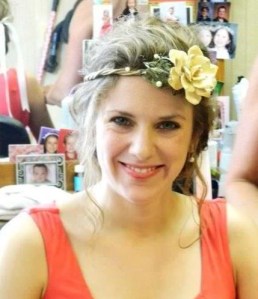
~ Emily

Posted in Uncategorized | Tagged , , , | Leave a comment

World Braille Day

Did you know that January 4th was World Braille Day? As I researched Braille Day, I learned some new, interesting facts.

  • Braille is not actually a language, but a code used by blind people
  • A blind Frenchman, Louis Braille, in 1821 devised this code to provide access to literacy, intellectual freedom, equal opportunity, and personal security
  • Braille is the official communications code world-wide

Today, Braille is incorporated into many aspects of public life. braileBuildings with elevators have buttons with Braille markings, and Braille announcements and instructions are posted on walls so that people with vision impairments traveling on their own can navigate through the area. Even ATM machines now include Braille markings.


Technological devices have also been adapted to facilitate Braille users. Computers now incorporate the use of Braille through specialized displays, keyboards, and portable displays that connect to mobile phones. Alternatively, “Stand-Alone Braille Devices” are portable hardware devices that essentially function like PDAs. They include a word processor, email, calendar, contacts, calculator, etc. Users do not have to connect this machine to a computer in order for it to function, making this a great tool for individuals who prefer greater independence and privacy. There are also printers for Braille, known as embossers.

Here at Elizabeth Lee Black School, we have many students with vision impairments. Braille-printed materials are now in all of our classrooms. Not only are they great tools for these children, but also for children who may have limited vision and are non-verbal, as they aid in increased communication and a greater capacity for learning. Our Braille materials, referred to as “texture books,” are used in an introductory, sensory-based manner to assist with orientation and other fundamental skills. Each student has personalized materials with his or her name printed in Braille. That way anything they touch is recognizable to them, making them feel comfortable and safe.

I wonder if Monsieur Braille would have ever guessed that a code that he developed would still be used worldwide, 194 years later?

Posted in Uncategorized | Tagged , , , , , | 3 Comments

New Year’s Resolutions

Last week, I decided to tackle the four boxes of paperwork that had been relegated to a corner of my office since my file cabinet fell apart. I, like many moms, saved Ryan’s papers, reports, classroom assignments, and report cards going back to Pre-School. I even had his art projects from his days in Happy Hearts Toddler Childcare! My initial reaction was, “Some of these papers are 20 years old; why should I be saving them?” However, as I began reading, I was enthralled by the stories that were unfolding before me. So many of these moments had been forgotten, it was almost like reading a book. Some were happy, some were sad, but by the time I finished reading his 12th grade file I was thoroughly pleased and proud of Ryan and the way his story has evolved.

So often, I am asked about Ryan’s future. This is a worry of all parents, but especially for parents of children with disabilities. It’s very easy to allow these concerns to overshadow the achievements and successes that your child experiences. So I decided that for my New Year’s resolution I would take a moment every day to celebrate how far Ryan has come. No, I’m not going to stop planning for the future; but I am going to focus on his day-to-day accomplishments as well, feeling grateful that he is able to achieve so much and has been blessed with such an outstanding (albeit ever-changing) team since the beginning, helping to make his dreams come true.

I encourage you to find time in the coming year to pause and celebrate your child’s successes, too. Happy 2015!

RyanAchieve

_DSC1633

Posted in Uncategorized | Tagged , , , , , , , , , , , | 4 Comments

Happy New Year!

blog

Posted in Uncategorized | Tagged , , , , , | Leave a comment

Achievements of 2014!

As we wind down December and head into the New Year, I can’t help but think of the many accomplishments we can celebrate for 2014. My first thoughts are of our children, adults and staff throughout the Erie, Pittsburgh, and Philadelphia campuses. They have accomplished so much! Be it learning to walk, to talk, to use an iPad or to secure a job, each person established a goal and worked hard to achieve it. Our staff was with them along the way to aid in their success.

acutepartThere were a few notable program additions to Barber National Institute this past year. To further assure a seamless system of care for children, we initiated a Children’s Acute Partial Hospitalization program. Additionally, due to the success of our Blended Case Management services for children we began offering a similar service for adults.

As always, the Arts continued to play an essential role in our programs through the year; we were pleased to be invited to participate in John F. Kennedy Center for the Performing Arts’ 2014 conference – VSA Intersections: Arts and Special Education. Our presentation was a look at the positive impact digital art has had for children with special needs.

IMG_4074This initial foray eventually led to a webinar through VSA, the international organization on arts and disability, titled “Video Self-Modeling in the Classroom with Students with Autism Spectrum Disorders.” We went global and received such great feedback that viewers were asking when Part 2 would be! (If you’re interested in watching the webinar, click here.)
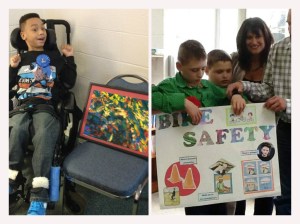
Also in 2014, two of our students won nation-wide art contests. Jonah Derlink was selected as one of the 36 students artthroughout the U.S and Canada to receive the 2nd place award for his National Flagship Safety poster. Todd Harvey was selected as a winner of the statewide art contest for artists with disabilities, Art: The Universal Language. The competition, first of its kind, was a partnership between The Arc of Pennsylvania, the Commonwealth, and the Pennsylvania Council on the Arts.IMG_3457
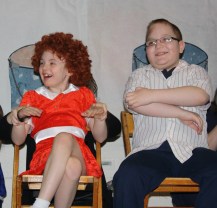
We even had time to do a musical revue in conjunction with the Erie Playhouse, performing a collaboration of several pieces from past autism-friendly shows!

Because we believe that intense physical exercise has many, many benefits for our children, we partnered with two new groups, Achilles International and Variety, the Children’s Charity of Pittsburgh. By integrating Achilles into our phys-ed program, our students are able to complete a virtual marathon through the streets of Erie. IMG_4043One of Variety’s most popular programs, My Bike, generously donated highly specialized adaptive bikes for over 60 of our children. And this is only the first wave!

2014 has been a banner year…we know 2015 will bring us new successes and, of course, new challenges!

Posted in Uncategorized | Tagged , , , , , , , , | Leave a comment

Merry Christmas!

CHristmasPOem_001

Posted in Uncategorized | Tagged | 1 Comment

Top Ten Research Stories of 2014

Recently, a favorite organization of mine, Autism Speaks, posted an article that reviewed 2014’s “Top Ten” stories in autism research. pieceThese stories are so encouraging that I think it is important to share with my community as well, and to take a moment to remember that we are making progress in many ways, every day.

#10 Autism and GI Disorders: Largest-Ever Analysis Confirms Strong Link

The first meta-analysis of all peer-reviewed research on autism and gastrointestinal conditions showed that children with autism have four times the rate of GI problems as do other children. At the forefront of this research, Autism Speaks launched an unprecedented initiative funding major investigations into autism’s gut-brain connection.

 #9 Autism ‘Baby Sibs’ Study Identifies Another Early Red Flag

Researchers with the Autism Speaks Baby Sibling Research Consortium used eye-tracking technology to discover that babies who begin showing decreased interest in facial expressions at 8 months go on to develop more-severe autism symptoms by age 3. The authors expressed hope that this early red flag signaled an important window of opportunity for early intervention that improves outcomes.

 #8 Autism’s Subtle Early Signs: More Findings from Infant Eye Tracking

Another Autism Speaks “Baby Sibs” study found that even earlier differences in social attention – this time at 6 months – flag high risk for autism. The researchers called for the development and testing of very early interventions that engage at-risk babies in enjoyable activities that involve shared attention.

 #7 Study Links Specific Gene to Autism Subtype

Researchers linked a specific gene mutation to a newly identified subtype of autism. Experts hailed the finding as a crucial step toward using genomic testing to develop individualized treatments for autism spectrum disorder.

#6 Brain Study Suggests that Autism Involves Too Many Synapses

Researchers analyzing donated postmortem tissue from children affected by autism found that their brains had a significant surplus of connections between brain cells. These excess synapses appeared to result from a slowdown in the normal pruning process that occurs during brain development. The investigators then used a mouse model of autism to show that they could restore normal synaptic pruning and reduce autism-like behaviors with an experimental medication. They called for further research that might advance to a clinical trial involving people with autism.

 #5 Studies Implicate Early Injury to Cerebellum as Major Cause of Autism

In a review of published studies, Princeton researchers said they found strong evidence that injury to the cerebellum during pregnancy or birth may be the leading nongenetic cause of autism. A small but crucial brain region, the cerebellum sits near the base of the skull and is best known for coordinating movement. During brain development, it plays a crucial role in directing cross wiring to other brain regions.

 #4 Broccoli-Sprout Extract Shows Promise for Easing Autism Symptoms

In a small placebo-controlled trial, sulforaphane supplements eased autism symptoms in nearly half of 29 participants affected by autism. Experts called the results “promising” but cautioned that larger studies were needed to determine effectiveness and safety.

 #3 MSSNG: Changing the Future of Autism with Open Science

This historic collaboration between Autism Speaks and Google is queueing up 10,000 anonymous autism genomes and making the data freely available for research anywhere, anytime. “We don’t know enough about autism. MSSNG is the search for the missing answers.”

#2 Physical Evidence that Autism Starts During Prenatal Development

Researchers found a common pattern of disruption in the prenatal brain development of children who had autism. Their study, supported in part by Autism Speaks, analyzed the donated post-mortem brain tissue of 11 children with autism and of 11 unaffected children. In 10 out of the 11 ASD cases, they found recurring patches of abnormal development in layers of the cerebral cortex that form during prenatal development. By contrast, they found these patches in just 1 of the 11 children unaffected by autism. The researchers propose that early intervention may help the brain “rewire” around these disturbed areas.

#1 New Meta-analysis Affirms No Association Between Vaccines and Autism

A meta-analysis of ten studies involving more than 1.2 million children affirmed that vaccines don’t cause autism. The analysis found that immunization with the measles-mumps-rubella (MMR) vaccine was associated with a slight decrease in risk.

All Autism Speaks research news and expert advice columns are available at http://www.autismspeaks.org/research.


Posted in Uncategorized | Tagged , , , | 3 Comments

Celebrate the Christmas Season with Gratitude

Christmas. Each of us has memories of Christmas that we hold special. As a youngster, I recall going to the Barber family home every Christmas afternoon; relatives everywhere, aroma of scrumptious food coming from the kitchen, and the much-anticipated visit from Santa. This was usually the only time of the year that the extended family got together, so we were greeted by “Oh my! How you’ve grown!” and “So good to see you!”

My brother Joe’s birthday is Christmas Day, mine is two days after, and my late sister’s was a week after mine. Even as we grew older, we continued to believe in Santa – how else could our parents afford to give us both Christmas and birthday gifts?? Yet rather than focus too intently on our presents, my mother always reminded us to be thankful for everything that God had already given us, most especially our family and friends.

When Ryan was a toddler, I encouraged him to think about the fact that when the Magi visited Jesus, they brought with them three gifts. To this day, Ryan has always received and expects three Christmas gifts. What better way to come back to the true meaning of Christmas but in remembering why we celebrate Christmas at all, celebrating the birth of baby Jesus. We also began an annual tradition of making a list of people whom we are thankful to have as a part of our lives, people we celebrate. It has been fun to save the list from the previous year and use it as a way of reflecting on those who are still in our lives, and to see the new people who have joined us.

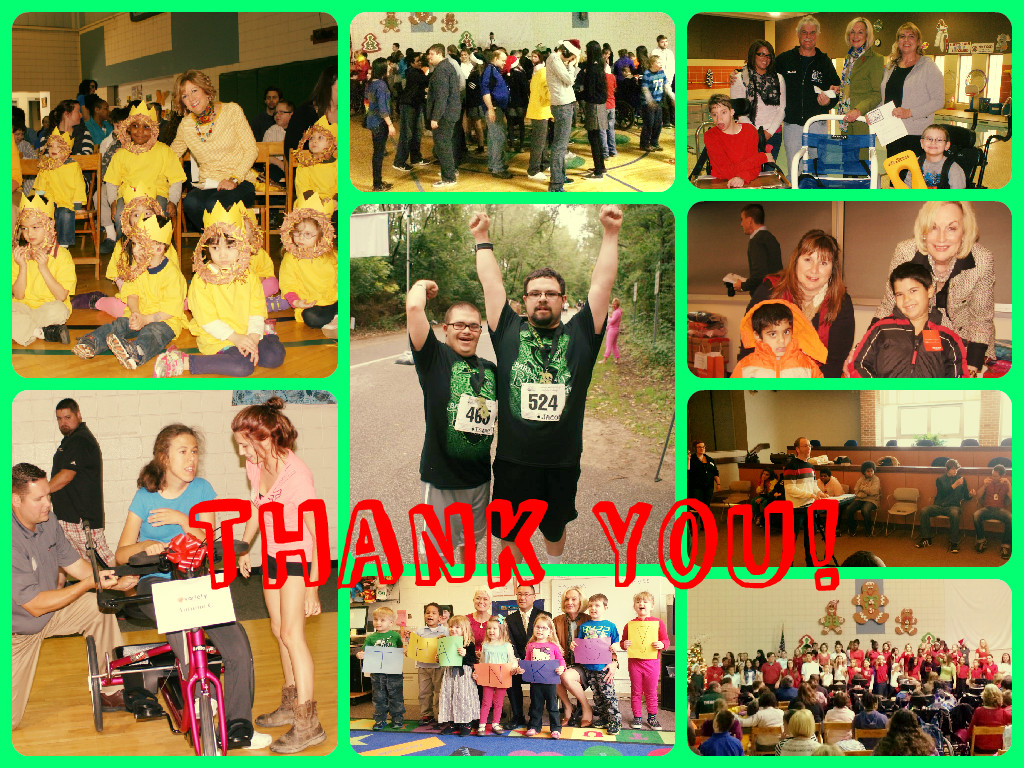
In that spirit, I’d like to thank the long-time friends and supporters of the Barber National Institute, many of whom we consider family now, as well as the new friends we’ve made throughout 2014:

The Barber National Institute parents, staff, volunteers & our generous donors

Achilles

Barber Ball supporters & chair persons

Beast on the Bay supporters

The Blackburns

Bob Boorum & the men and women of the Mannerchor

Erie Arts & Culture

Erie Flagship Council

Erie Insurance

Erie Playhouse

Erie School District; especially East High School, Wayne Middle School & J.S. Wilson Middle School

First Books – Hooked on Books

First Niagara & Erie Bank

GE Community Outreach

Happy Hatters

Ladies Only Luncheon committee and supporters

Marci Smith & the ELBS Parent Group

Mary Beth Pinto, Laurie Sieber and their therapy dogs, Jessie & Charlie

Mr. & Mrs. Claus (Rhonda and Joe Schember)

Perseus House

PNC Grow Up Great

Steve Weiser & the Erie Chamber Orchestra

UPMC Hamot & Highmark

Variety ‘My Bike’ Program

Villa Maria High School students

Young People’s Chorus

Thank You

The above list is only a few of the hundreds of people who support us day in and day out, and allow us to make dreams come true for children and adults with disabilities. This season we are celebrating all that you have done and continue to do for us – Thank You and Merry Christmas!

Posted in Uncategorized | Leave a comment