We celebrate National Autism Awareness Month in April by recognizing the growth of services helping children and adults with autism and other developmental disabilities achieve their full potential. But it’s also important to acknowledge that an area we must continue to develop and expand on is employment.
In the late 1980s, when we first noticed an increasing number of children diagnosed with autism, the incidence was one in 1,000. Fast-forward to 2019, when one in 59 children is now diagnosed with autism.
That tidal wave of children diagnosed in the 1980s and 1990s have graduated from school and are now seeking employment. In Pennsylvania, we are fortunate that Gov. Tom Wolf established an “Employment First” policy for people with disabilities in 2016, and our state has invested in systems that increase opportunities for competitive, integrated community employment.
 Reports that Pennsylvania’s unemployment rate is at 4 percent, a two-decade low, are welcome news for job seekers, and have been very positive for people with disabilities as well.
Last year, the unemployment rate for people with autism and intellectual disabilities dropped to 8 percent, the lowest in a decade. However, as one peels the data further, some disconcerting facts surface. Workers with a disability were more likely to be employed part time, 31 percent vs. 17 percent, when compared to non-disabled peers.
Also, many more people with disabilities are working in the service industries, building grounds and maintenance that are typically seasonal jobs that tend to have lower wages. Surprisingly, a significant number of people with disabilities are self-employed, suggesting that if they cannot secure a job, they often create their own jobs in businesses such as bakeries or car washes.
In the face of these trends, what are we doing to foster employment? First, new programs help students with autism and intellectual disabilities explore employment during high school, and other services help adults build the skills needed to be successful on the job. These include “soft skills,” such as how to use public transportation to get to work, how to dress for the job and how to communicate with your supervisors, co-workers and customers.
Supported Employment helps adults locate and interview for jobs and provides coaches to teach adults the responsibilities of the new position. This service is free of charge for employers, who can be assured that adults they hire will be trained to do the job to their satisfaction.
We can all educate the business community about what people with autism and developmental disabilities are truly capable of. Employers are often unaware of the common strengths shared by many people with autism and developmental disabilities, including intense attention to detail, commitment to quality and consistency, creative and “out of the box” thinking, excelling on repetitive tasks, lower turnover rates, honesty and loyalty.
These are the qualities that one young man, Zack, has put to work at First Amendment Tees Co. in Erie, where he is using his graphic arts background and computer skills. Since his hiring two years ago, Zack has taken on an increasing amount of responsibility to help his employer.
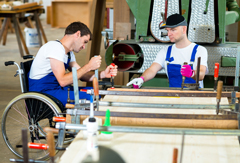 As a community, we need to embrace the belief that people with autism and developmental disabilities bring added value to our jobs. They create diversity in the workplace, which increases workplace morale.
Many national companies, including Amazon, Apple and Home Depot, are recognizing the important role that people with disabilities can play in their workforce. Locally, the Bayfront Convention Center, Grimm Industries, LECOM Wellness & Fitness Center, Mercyhurst University cafeteria, Grapevine Laundry and Bello’s are a few of the businesses to step up and employ people with disabilities. These companies have seen a benefit to their customer market.
Savvy marketers and human resources personnel recognize that capitalizing on the return on investment of employing people with disabilities reflects the $3 trillion global market that is controlled by people with autism and developmental disabilities. In the United States alone, people with autism and developmental disabilities and their families, friends and associates represent a $220 billion market. Additionally, a large number of Americans say that they prefer to patronize businesses that hire people with autism and developmental disabilities.
People with autism and developmental disabilities are a hidden talent pool for business. Just last year, 40 adults with autism and developmental disabilities landed jobs with forward-thinking Erie employers. What would be a realistic goal for us this year? I will leave that up to you!
https://www.goerie.com/opinion/20190406/workers-with-autism-are-good-for-business-maureen-barber-carey#






 As I started preparing my speech, I began thinking about my lead