Why We Dance: Guest Blog by Shari Mastalski

Recently, we said goodbye to our artist in residency, dancer Shari Mastalski. During her final recital, “Room 113 and the Girls Group” performed their interpretative dances of the Four Seasons. It was a fun and inspirational day! I asked Shari if she would be willing to write a guest blog for me, and I’m thrilled she agreed! I hope you enjoy her creativity and vision as much as we did. 

~ Maureen


What is creative dance and why does it matter?  Creative dance offers a playful exploration of three elements: Space, Time, and Energy.  Space includes levels, size, direction, pathways, and shape-making.  Time includes rhythm, beat, tempo, duration, and stillness.  Energy includes contrasting qualities of movement.  These elements become the solvent to infuse class or individual goals and subjects, making learning more available and relevant.  Creative dance creates an environment to learn body and space management, listening, focus, and relationship building.  Perhaps the one learning the most is the teacher who is practicing the lessons along with the students.  What have I learned?  Presence, being the space-shaper, the brilliance of being together, voicing vision, listening, doing something that moves the vision forward, and being momentarily still.

IMG_1765P

Shari and the group move like snowflakes.

These 20 days have been spent playing with seasons and weather: winter snow, spring rain, summer sun, and autumn wind.  Offering props inspires.  We felt the smoothness of the satin and the crunch of the Cheerios, responding with smooth and sharp dance moves.  Building stories relates. From the students: “If I were snow, I would be the snow in the clouds waiting for the right moment to fall.”  “If I were rain, I would be a puddle for jumping and splashing.”  “If I were the sun, I would brighten the room.”  “If I were the wind, I would blow a sailboat across the lake.”  What would you be?  We have danced with umbrellas and rainbows, snowflakes, sun hoops, water drops, and fans.

Putting this residency together requires a complex process, including gathering six girls from three classrooms and sparing paraprofessionals or teachers to come to the lessons.  Thank you to all who made this creative dance residency possible for these beautiful students.  I am blessed to be in this grand learning environment.  Everyone has graciously invested time and energy to bring this dance to life.  The impact must surely be powerful on unseen, unmeasured levels.  What we do see, is astounding enough.  Students respond with attentiveness, smiles, laughter, movement, sound, bringing great energy, cheerfulness, and enthusiasm in all they do.  We are always looking for each student’s unique talents and abilities.  We are also looking for ways to enhance the ongoing classroom experience with the active arts we have practiced.

Snow is falling gently, softly, smoothly

Snow is whirling wildly

Snow is blowing everywhere

Cold, Brrr!

Snow is still when it stops

IMG_5876edit

The Girls Group with Shari


After achieving her bachelor’s degree in horticulture with minors in dance and theater, at the age of 54, Shari Karn Mastalski went on to complete a master’s degree in sustainable systems.  Shari is a creative dance teaching artist with Erie Arts and Culture and the Pennsylvania Council on the Arts.  She also leads Bible studies with active arts and informal sustainable systems sessions.  Shari performs with Wing and A Prayer Pittsburgh Players.

Posted in Uncategorized | Leave a comment

Digital Learning Day ’19!

It may be difficult to believe but Digital Learning Day is just around the corner – this Thursday, February 28th! It seems like yesterday that we were in the gym welcoming our exhibitors, staff, and friends from the community for last year’s event. But DLD is far from just an Erie, PA celebration… it is celebrated around the world!

Web

At ELBS, we use DLD as a way to celebrate our educators, therapists and professionals who create and implement strong instructional practices that use technology and technology tools. I am proud to say that we have many, many staff who exemplify this concept!

I think back to when we purchased our first Apple 11E…could that have been over 30 years ago?  Fortunately we had a handful of staff who wanted to learning everything and anything about the Apple.  Who could have guessed that today we would not only have mastered computers, but be using equipment such as iPads, smartboards, and TAPits, just to name a few!

Why has digital learning been so successful here?  It is quite evident that our faculty has seen the many successes for our students by way of technology. Doors that would have been closed are now open and enable our students to achieve success in communication, academic skills, activities of daily living, and social skills. With – and because of – this knowledge, they have truly embraced learning.

We hope you will find time to stop by the BNI gymnasium from  11am to 1pm to view the exhibits from our therapy departments as well as local colleges and universities. It will be an opportunity for you to view the latest and the best of what technology can offer children and adults with disabilities. See you then!

Posted in Uncategorized | Leave a comment

Finding Inspiration

As many of you know, I am a big believer in the power of positivity and inspiration. Not only do I enjoy Maria Shriver’s weekly newsletter, I always welcome suggestions of motivational books. So, of course, when I learned that one of our teachers writes a daily inspirational quote on a white board in a school office, I look forward to reading the quote each morning. Today’s quote particularly stood out to me.

They say I have special needs and while that is partly true,

The needs that matter most to me are the same ones that you have, too.

I need to be accepted. I need friends that make me smile.

I need a chance to learn and grow feeling valued all the time.

Sure, I need some extra help and some things I cannot do,

But I hope you’ll see beyond all that. Inside I am just like you.

My first thought was, “That is exactly what sets our school apart from all others.”  We see the child first: The enthusiasm, the desire to learn, the laughter, the unique talents.

While our students may have a special need, to us, that only means that it is our responsibility to learn the very best ways to teach. We believe that all children have the right to grow, learn and reach their fullest potential.  Only by working together, can we can achieve the drams of children and their parents.

image

Posted in Uncategorized | Leave a comment

The Dream Gap

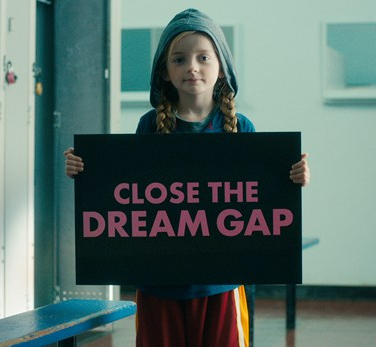
Recently, I read an article on the importance of playtime. Much of the article was centered around the startling statistic that, on average, around 6 years of age is when girls stop thinking that they can be and do anything; perhaps even more upsetting, this is when “they become less likely than boys to see themselves as ‘really, really smart.’”

dreamgap.jpgNeedless to say, this line stopped me in my tracks. I re-read it, hoping I was mistaken. I wondered, how can this be? Referred to among researchers as the “Dream Gap,” this phenomenon is evident in developing girls around the world. The article continued on to explore the ways we can encourage girls to continue to dream and to believe that they are capable of anything. One answer? Play.

Often, playtime is one of the only opportunities for a child to explore concepts, roles, and tasks in an unstructured, open-ended way. Whether building, baking, taking care of a baby doll, pretending to be a doctor, or even computer coding, the highest potential of play can create a sense of wonder and curiosity within a child that, ideally, allows them to envision their future as a firefighter, or scientist, or software developer.

I remember when Ryan was about 10 years old, his dream was to be a behavior specialist. Some of you may already know of my deep belief in the power of dreaming. Each of us has dreams: dreams not just for ourselves, but dreams for our loved ones, our children. Of course, they, too, have dreams of their own.

Together, we can close the Dream Gap – we just may have to play for it!


Posted in Uncategorized | 1 Comment

100th Day!

Today, February 5th, marks our 100th day of school! In many ways, it’s difficult to believe that much time in the school years has already passed. Still, we’ve managed more than a few accomplishments in that short time.

We started the new school year with an inservice by Jim Donovan, M.Ed. on drumming. This is a training program designed to show professionals who work with children with autism and special needs how to facilitate strategies using music and rhythm. These clinically proven techniques were developed and tested at Saint Francis University in Loretto, PA and are designed to meet goals such as increased attention to task, non-verbal expression, socialization and stress reduction. We were so excited about the initial results that we are having him return in March for a Level 2 program.100-days-of-school

First initiated in January of 2018, we have continued to expand our implementation of Ukeru, a safe, comforting crisis management technique recognized as a best practice in restraint reduction. The main components of the Ukeru program include verbal and nonverbal communication, managing and deescalating conflict by converting/diverting aggression, building an environment focused on comfort versus control, and recognizing traumatic experiences of students we serve. We have seen a drastic reduction in our use of restraints in not only these past 100 days but the overall year.

The Arts have always played an important role at the BNI. We are participating in two important events this year. Currently, Shari Matalski, a creative teaching artist with Erie Arts & Culture and the PA Council of the Arts is working with some of our young ladies in a creative dance group during her 20-day residency. Creative dance helps build healthy minds, bodies, relationships and emotions, and thus far our students have really embraced the sessions. On another note, Trisha Yates of the Erie Playhouse is working with our students on the stage adaption of The Rainbow Fish. Last year was our first time to experience the “big stage” and we will be back again in May.

I can guarantee that there will be more exciting developments in the next 80 days; be sure to tune in!

Posted in Uncategorized | Leave a comment

Hidden Challenges: Disparity in Autism Diagnoses

I recently read an article on “How to Help Low-Income Children with Autism.” All of us acknowledge the critical importance of early intervention for a child with special needs. However, this article made the point that, too often, children from low income families do not receive the early intervention services that they so desperately need. Many years ago, the prevailing opinion was that prominent, affluent, Caucasian families were the most likely to have a child with autism.

autism

As a result of methods such as routine screenings and increased awareness, we know today that the prevalence of autism (1 in 59) has little to do with socioeconomic status. However, even with that statistic in mind, less than half of the anticipated number of low-income children receive a formal diagnosis. The implication here is profound: not that low-income children are less likely to have autism; rather, that low-income children are half as likely to be able to receive the diagnosis needed to receive supports.

“It’s so complicated to get an autism diagnosis and treatment in the US,” quotes a pediatrician in Portland, OR. “[With a] process that’s really convoluted and complicated, it’s always the families with the least privilege who don’t make it through.”

autism.jpgOften, we forget that as confusing as this process can be, it is even more challenging for parents who may not speak English nor have any resources to aid them. Consider the many families who live in rural parts of our country; they may need to travel hours to get to the nearest physician or clinician.

Thankfully, community leaders are working hard to bridge this gap, in part by creating a variety of programs designed to meet the particular challenges of their communities.

In Baltimore, a parent-to-parent program has been initiated to work with families of newly diagnosed children, in addition to those who have just begun the process of requesting a screening.

In Southern California, when data showed that minority families visiting regional centers for people with disabilities were receiving fewer services than white families, the state invested $11 million to explore multiple strategies that best reduce the disparity in all of its regional centers.

In the cities of New Haven, Boston, and Philadelphia, more than 80% of families are receiving public insurance. So these cities have paid “navigators,” rather than volunteers, who are culturally matched to families from the point of initial referral to 100 days after diagnosis to ensure that the children receive treatment.

Looking back, Ryan was very fortunate. Uncle Joe was a pediatric neurologist and diagnosed him before he was 2 years old… that was rare 23 years ago. Given my background, I consider myself fortunate to have known, far before the opinion was wide spread, the essential need for Early Intensive Behavioral Intervention, which I believe made a crucial impact in his success. While I am pleased that we have progressed as a community and nation, our work should not end until we see to it that all children with autism receive the treatments/guidance they deserve!

autism 2

Posted in Uncategorized | Leave a comment

US Census… Does it Matter? (Spoiler: Yes!)

Although we have just welcomed the New Year 2019, many of us already have an eye on 2020. That’s because 2020 marks the next time the decennial United States Census will occur. Our US Census is of critical importance for a number of reasons. To name a few: Legislative districts are drawn; the number of seats for the House of Representatives are determined; and federal funding is allocated at the state and local level.

2020Recently, I read an alarming note about the 2010 US Census: Nearly 1 million children younger than age 5 were not counted. While there is (sadly) a historical precedent of undercounting children of color as well as kids in low-income and immigrant families, this seems a staggeringly high figure, particularly when we consider that federal funding for children means money for programs such as Head Start, free school lunches, free/affordable child/day care, public health insurance and even housing. When these numbers are misrepresented, what we are really saying is that millions of dollars can potentially be lost despite how critical most, if not all, of these services are for young children.

I wondered, as I’m sure you do, how these children are not counted. My research indicates a number of possible reasons:

  • Contact: Families who are homeless, highly mobile or living with relatives are harder to reach
  • Response Rates: Families who are living in poverty or are headed by individuals without a high school degree are less likely to respond to a census
  • Immigration Reform: Immigrant families with undocumented members are fearful of deportation and do not respond, although recently US courts have ruled that including a question of citizenship is unlawful.
  • Ethnicity: In the 2010 census, the undercount rate for Latino children was 7.5% and for Black children was 6.3%. In contrast, the rate for children who are not Black or Latino was 2.7%.

So, what can we do?

In order to maximize the ability of the Census Bureau to count all of our children, the administration first needs to appoint a qualified individual to the position of Director, which has been vacant since May 2017. Advocates need to continue to work with state and local officials about the importance of the census and the need for adequate funding. Local and statewide child serving organizations need to be engaged to increase awareness of and participation in the census. “Trusted messengers” in each locale must be identified to get the message out of the importance of the census and why they need to participate. Although the 2020 census will be the first conducted online, paper forms will need to be available in rural and remote areas which do not have access to the internet.

Each of us must make the census a priority between now and 2020. Our children are our future. Let’s make sure that they are counted so that they can get the resources they so desperately need.

census

Posted in Uncategorized | Leave a comment

2018: A Year to Remember

When I look back at 2018, I see much to celebrate. It certainly was a year to remember with regard to the advancements and changes made within the Elizabeth Lee Black School. As I worked on outlining these milestones, I realized just how much we accomplished. I shared with our Board of Directors last night and wanted to share with you as well.

Expanded License

In the past year, we began to see an increase in requests to consider enrollment of children without an Intellectual Disability but with Social/Emotional challenges. Our current license did not allow for this; we are approved to serve children with a diagnosis of autism, cerebral palsy, intellectual disabilities, and muscular dystrophy. Our new licensure will enable us to expand in this direction.

Research Partnerships

In 2018 we have seen both new and continuing research collaborations. We are in the early stages of developing a project with Penn State Behrend and the University of Egypt. Engineering/psychology  professors from Behrend are exploring the use of virtual reality to teach social skills to children on the spectrum and are asking us to assist them.

We also continue our work with Notre Dame to develop apps that promote social skills in children with disabilities, as well as with Penn State, Main Campus to study feeding patterns in children with autism.

Tobii Dynavox

tdAs a worldwide manufacturer of communication devices, we continue our 9-year partnership with TD by field testing some of their devices with our students. This has allowed our children to experience the latest in technology as well as allow us to input in the development of devices and apps. We approached them to determine if there was interest in working with us with our adults. The answer was an overwhelming YES. We have 2 pilot projects in our homes in Pittsburgh and Erie with 3 of our adults. We are also exploring a classroom collaboration; we are so fortunate to be working with Marleah Herman-Umpleby, Clinical Outcomes Manager and Linnea McAfoose, Director of Clinical AAC Content.

BNI: A Teaching Institute

Hundreds of students have received their “hands on” training within our doors, whether it is in special education, psychology, nursing, or medicine, to name a few. We are currently slated for 98 student placements from schools such as Gannon, Clarion, LECOM, Slippery Rock, and Penn State.

Trauma-Informed Care

This year, we expanded upon our understanding of how to define and identify trauma, and the myriad ways it may impact a child. We now know that over half of all children in the US have at least 1 traumatic experience. With this in mind, we have implemented UKERU: a safe, restraint free method to help caregivers manage stressful situations. The focus is comfort and understanding vs control. We have also implemented trauma informed professional development in many inservices to offer staff multiple outlets for support.

Educational Improvement Tax Credit

eitcAs an approved organization, businesses are able to secure tax credits by making donations to either our preschool scholarships or school improvements. In the past 3 years, we have given 160 scholarships to Erie County children whose families meet the income guidelines. Last year, we had an additional $57,000 to use on devices and curriculum that directly benefit our students’ programming.

Renovations

This year we continued our efforts to improve the infrastructure of our school, with new furniture in behaviorally challenged classrooms, renovated restrooms, and a renovated cafeteria.

We have accomplished so much in 2018! I am looking forward to continuing these efforts and exploring new areas for growth and development. Yes, ELBS at the Barber National Institute is a great place to be!

quote


Posted in Uncategorized | Leave a comment

Ed Tech for the Future

I recently read an article called “96 edtech predictions for K-12 in 2019.” Several of these innovations really jumped out to me, in part due to our current new ventures at the Elizabeth Lee Black School.

Increasing Parent engagement is one of our school’s strategic goals. In recent years, we have seen an increase in parent engagement. Interestingly, the article mirrors our own conclusion that using digital platforms for communication has resulted in an overall higher level of family response and/or involvement. Last year, we began an opt-in to receive text messages from our early childhood program and had enormous participation. Since then, we have worked on expanding this to all of our families in the hope that we can continue to improve the relationship between school and home.

imageSEL (Social Emotional Learning) is considered by most education professionals to be the industry’s latest buzzword, as more of us begin to recognize the critical role a child’s emotional state plays in influencing his/her ability to learn and develop. Last year, we spent a great deal of time exploring the idea of trauma; not only by expanding our understanding of what is considered traumatic (for example, living in poverty is a traumatic experience), but also in acknowledging the potentially huge influence that these traumas have in our students’ lives. Sadly, nearly half of our students experience the trauma of living in poverty. In response to this need, our behavior department initiated a “Trauma Informed Care” Professional Development program for all of our school staff, to help us better recognize signs and symptoms of underlying traumas, as well as methodologies we can use to help work through these occurrences.

Similarly, we also implemented a relatively new crisis management program known as UKERU. This technique, developed for children and adults, offers safe and restraint-free techniques for working during a behavioral crisis. As a result, we have seen a significant decrease in our use of restraints and our staff have reported that they feel better trained to meet the needs of our very behaviorally challenged students.

Another recurring theme highlighted the increased focus on “models of learning” rather than “methods of teaching.” Immediately, this brought to mind a favorite quote of mine: If a child cannot learn in the way we teach, then we must teach in a way the child can learn. Children with special needs require us to look beyond the traditional methods of teaching and instead focus how they learn best. This important shift in perspective is at the foundation of our school and is, in large part, the reason behind many of the most innovative technologies and techniques at ELBS.

Of course, the developments made in interactive apps, iPads, virtual reality, robots, and beyond continue to astound me. These technologies have become more engaging and interactive than ever before, bringing with it an excitement – yes, excitement! – to learning. A child who may not be motivated by a paper pencil task will light up at the prospect of completing the work on a device… this has made a world of difference in forward progress.  We also continue our partnership with the engineering departments of a local university as they develop a virtual reality app that will help children with ASD in socialization and communication.

It is truly an exciting time for the education world!

quote


Posted in Uncategorized | 1 Comment

A Christmas to Remember…

As we approach Christmas, I began thinking about years gone by. Ryan’s first Christmas was quite eventful. Erie was in the midst of the Blizzard of ‘93, and we were picking up my mother and driving to Uncle Joe’s house for Christmas dinner. Typically, it takes 45 minutes to get to his home – on this evening, it took one hour just to get to my mother’s home! There was no visibility, but we forged ahead in hopes that the weather would get better. By the time arrived, there were “No Travel” advisories on every TV station. Rather than risk driving off the road with a newborn baby, we turned around and drove home.

Ryan christmasSince that first year, Ryan has experienced every kind of Christmas imaginable. However, there have always been some constants. When Ryan was just 3, I explained to him that, just as Jesus received 3 gifts from the Magi, he would as well.  So over the years he grew up knowing that there would be 3 gifts under the tree Christmas morning. This year his plans are for a golf pass, a ski pass and a water world pass. To be expected from someone who enjoys exercise!

We have been fortunate to spend this special day surrounded by family and friends, and Christmas eve always finds us at St Patrick’s with Aunt Jeanne. For Christmas day last year, we planned to have family over… that was until the Blizzard of 2017 hit Erie, PA with over 30 inches of snow! By noon, when I could not see 38th street from the house, I called my brother to say that it was far too dangerous to make the trip from Northeast to our house.

Ryan was thoroughly disappointed! This year, he has been watching the weather reports to make sure that a snowstorm is not going to happen. He is quite the party planner; he loves the ideas of people coming to his house, choosing what goodies to eat and drink, and most importantly being in charge! He is counting down the days until our get-together.

I am sure that our Christmas will be filled with much joy and happiness…I hope that yours is as well.

Posted in Uncategorized | Leave a comment