Last year, in honor of Down Syndrome month, I asked Barbara and Chris Cummings to share their thoughts with us. It was so moving that I asked them if I might reprint their story. I am pleased to share with the you the Cummings family and their amazing and beautiful daughter, Faith.
 As I reflect on my family and the life we have, it is a moment of complete thankfulness and raw emotion. Many in today’s society would not consider my family and our life as a blessing, but I can tell you without a doubt that the journey I am about to tell you has made each member of our family more compassionate, humble, and, to be honest, better human beings.
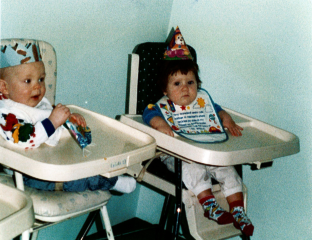
After several years of struggling with infertility, we finally found out that we were pregnant in 2001 and shortly after discovered we were having twins! We glided through the pregnancy until about 32 weeks, when we were sent to Magee Women’s Hospital for an emergency C-Section. This is when we had the opportunity to finally meet our little boy and girl. Oh, did I mention that we were shocked to find out that our little girl had Down Syndrome? I couldn’t breathe when the Doctor told me…and yes, we literally broke down and cried in complete devastation. Specialists began coming in and talking to us, and we just couldn’t come to terms with what just happened in our life. We quickly found out that our daughter, Faith Elizabeth, would need open heart surgery. After a few weeks, we brought our babies home and started to come to grips with our new life.
I went in and out of depression for several months, but God decided it was time to put me to my knees and ask for strength and forgiveness for all the negative emotions and thoughts constantly nagging at me. It was at this time I began to understand that “What was my biggest fear would become my greatest blessing”.
As Faith grew and we became accustomed to all the therapists, doctors, and counselors we became advocates for her. We learned to be joyful in every milestone no matter how long it took or how far behind she was compared to her brother. My love and appreciation for Faith being “Faith” made me realize what life was really about.
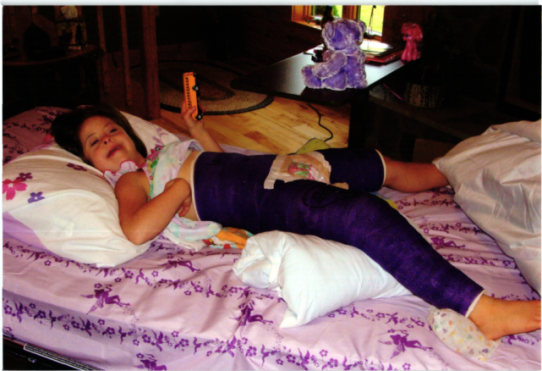 At 10 years old we found out that Faith needed right hip reconstruction surgery and the process was not going to be easy. This surgery would require Faith to be in a cast from her waist down for 3 months. We put a hospital bed in our living room and each challenging day we marked off the calendar. Faith was amazing through the process, and she was a warrior for all she had endured in her short 10 years of life.
When we settled into our routine through the years, a new obstacle was presented to us. In school we began to see behavior issues and struggled for many years to try and figure out what was going on in that little head of hers. In 4th grade our elementary school started an emotional support classroom that Faith loved and did very well in. But as we all know, nothing lasts forever and we had to make a decision on where she would attend Junior High. Our home school did not have the resources to take Faith on, so she went into a Life Skills classroom and it just did not go well. We were at our wits’ end trying to figure out what we were going to do. It was also about this time that Faith was diagnosed on the Autism Spectrum. Tears, sleepless nights, so many prayers, and many meetings later we were introduced to the Elizabeth Lee Black School, and I cannot tell you how this school has changed our life as well as Faith’s. The knowledge and patience cannot be matched. Faith still has her bad days, but she has flourished there. From the bottom of our hearts we cannot thank the Barber Center enough for the mission they have.
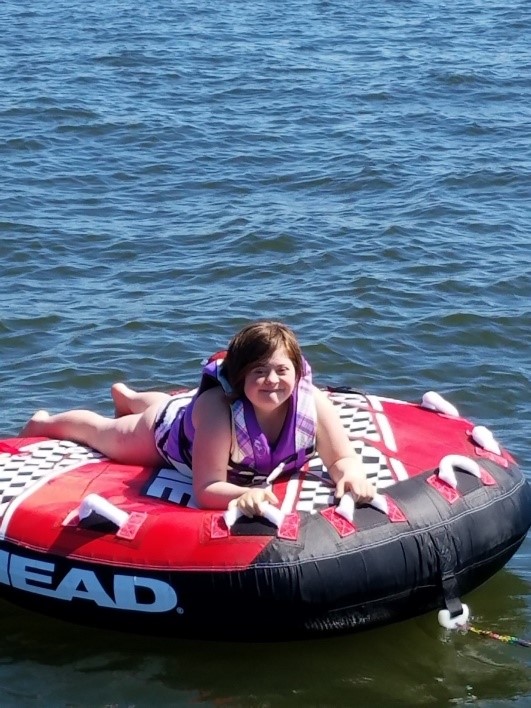 When I look at our dear Faith, I see an individual who: loves without judgement, finds joy in moments we wouldn’t, and teaches patience and the opportunity to always love selflessly. We raised her to do everything her twin brother and younger sister do. She loves to swing, listen to music, go on vacation, play sports, swim, and go tubing on the boat. Her favorite movies are the Home Alone series. We love to shop for cute clothes and shoes. Faith loves getting her hair cut and styled, and she especially likes pedicures. So, yes, she may have some differences but she likes all the same things as us. If I had to offer advice to a family that recently got a diagnosis of a child with Down Syndrome it would be: Do not fear the journey you are about to go on. You are going to fall in love with the life you have been given. Step back, take a deep breath, and let this gift show you the life lessons you never anticipated. I guarantee you will be a better person. Embrace the world of difference as an opportunity to teach your family and others to look beyond the imperfections and see life as a way to love, learn, enjoy, and give back. Thank you Faith Elizabeth Cummings for being the one to teach our family these important attributes.
IN HONOR OF DOWN SYNDROME AWARENESS MONTH
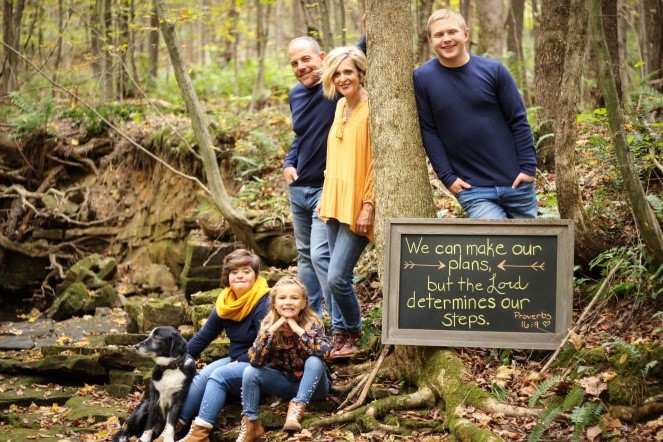
Chris and and Barb Cummings live in Cochranton, PA and are the proud parents of Faith, Jacob, and Josie Cummings. They own and operate Pennsylvania Artificial Limb and Brace Co., Inc. with locations in Erie, Greenville, and Ashtabula, OH. As a family they enjoy to travel and spend time outdoors.









 All About Autism