PNC Grow Up Great is a $500 million initiative through the PNC Foundation to strengthen early childhood education programming for children birth to five years. To celebrate its 20th year, it is providing $10.5 million in grants to create outdoor learning environments in every market. I am very passionate about serving the needs of young children and their families because we know that when children thrive, they are better prepared to take on life’s challenges, develop resilience, and succeed both in and outside the classroom.
When PNC Grow Up Great was in its infancy, Marlene Mosco, the PNC Erie president at the time, contacted me and asked if she could nominate me to serve on the Advisory Board. I was honored to serve, and I have had the distinct privilege of working with countless forward-thinking leaders in creating brighter futures for young children and their families for over 15 years.
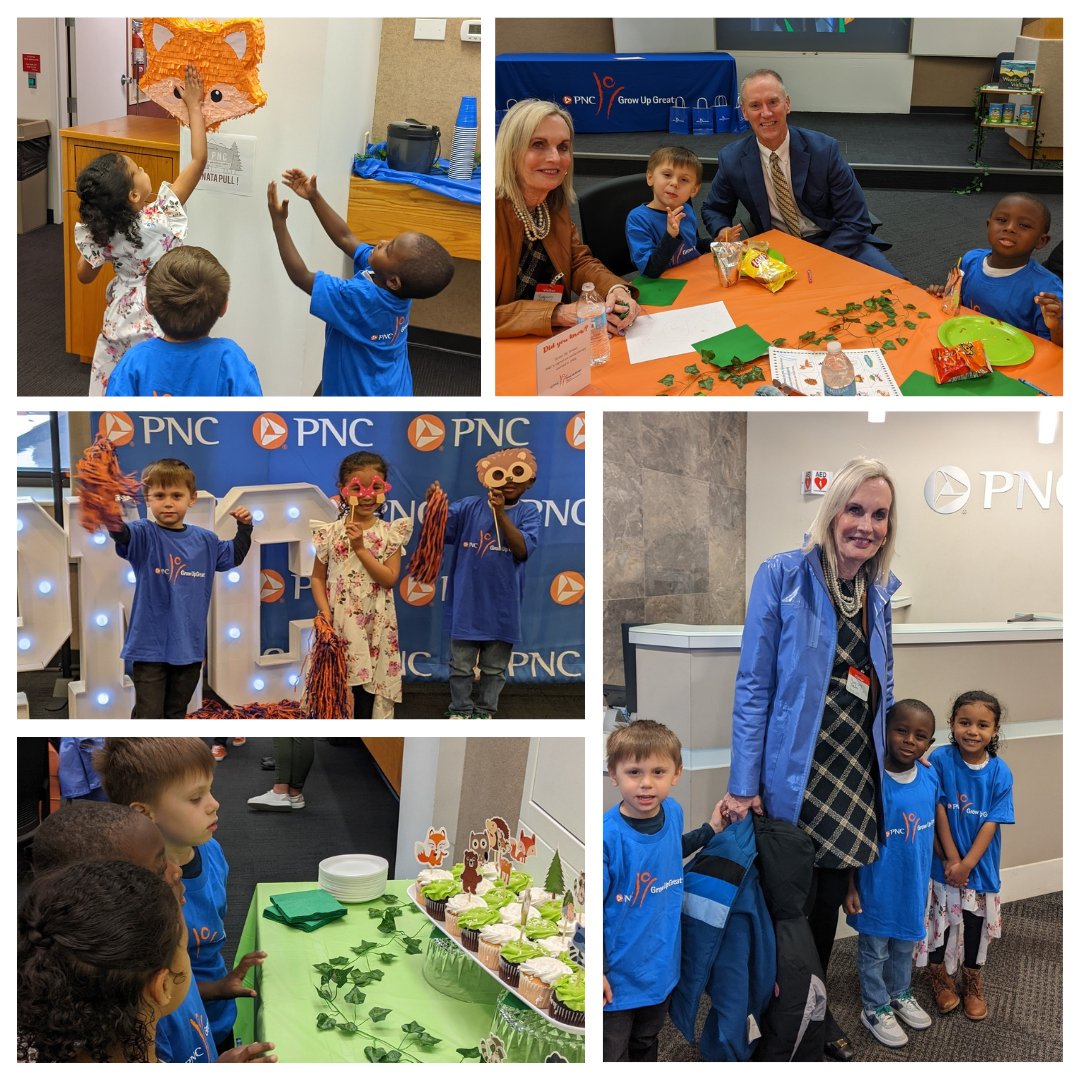
In April, I joined some of our children who attend early childhood education programs at the Elizabeth Lee Black School for a 20th anniversary celebration of PNC Grow Up Great. The children were engaged in fun learning activities, enjoyed a wonderful lunch, and got to meet Jim Stevenson, the Regional President of PNC. I am truly grateful to Jim and his exceptional team who are so dedicated to supporting the advancement of early childhood education in our region and beyond. I’ve included some photos from our event.
Yesterday, I attended a PNC Grow Up Great Advisory Meeting to hear about an update on PNC and to learn about the factors impacting early childhood education as well as the programs and resources that will have the most impact for children, their families, and communities in the coming years.
During the meeting, I was interested to learn:
PNC is establishing a new brand that reflects a full-service bank with an empathy advantage: Brilliantly Boring since 1865.
In 2023, 7% of 3-year-old children were enrolled in programs vs 3% in ’02.
In 2023, 35% of 4-year-old children were enrolled in programs vs 14% in ’02.
Declining birth rates will significantly impact the number of students enrolled in school. This might be a huge addition to being able to serve 3- and 4-year-old in schools.
Childcare continues as a significant issue and challenge for our work force.
I am already looking forward to our next meeting this Fall.
Although we have just completed the 2023-24 school year, we are already planning for the 2024-24 school year. Recruitment is certainly a major focus area. We know that there are significant shortages in the high demand fields of special education certified teachers as well as paraeducators for special education classes. This, combined with the number of students who qualify for special education, continues to present serious challenges to all of us in education.
We know that the reasons for shortages include:
There is a surge in demand for teachers while the supply of qualified teachers is diminishing.
Special education teachers are leaving the profession at a rate 2.5 times higher than general education teachers.
Classroom environments are challenging due to the serious behavioral needs of students
We are in the process of identifying a variety of strategies that will, we hope, help to attract and retain teachers and paraprofessionals. These strategies include:
Continuing to upgrade our salaries and offer sign-on bonus.
Promoting tuition reimbursement through the Dr. Gertrude A. Barber Foundation for qualifying staff at all locations of the Barber National Institute.
Expanding professional development opportunities so that staff feel supported and grow in their roles.
Increasing mentorship programs for new teachers for providing guidance and support.
Creating expanded partnerships with local universities that can help develop a pipeline of future teachers. This would include exploring federally approved apprentice programs.
Offering a mentor program for paraeducators who might be interested in pursuing teacher certification.
We know that we need both short-term and long-term solutions to create a sustainable work force of special education teachers and paraeducators for now and the future. Ultimately, focusing on retention strategies that work will help ensure the success of special education for years to come.
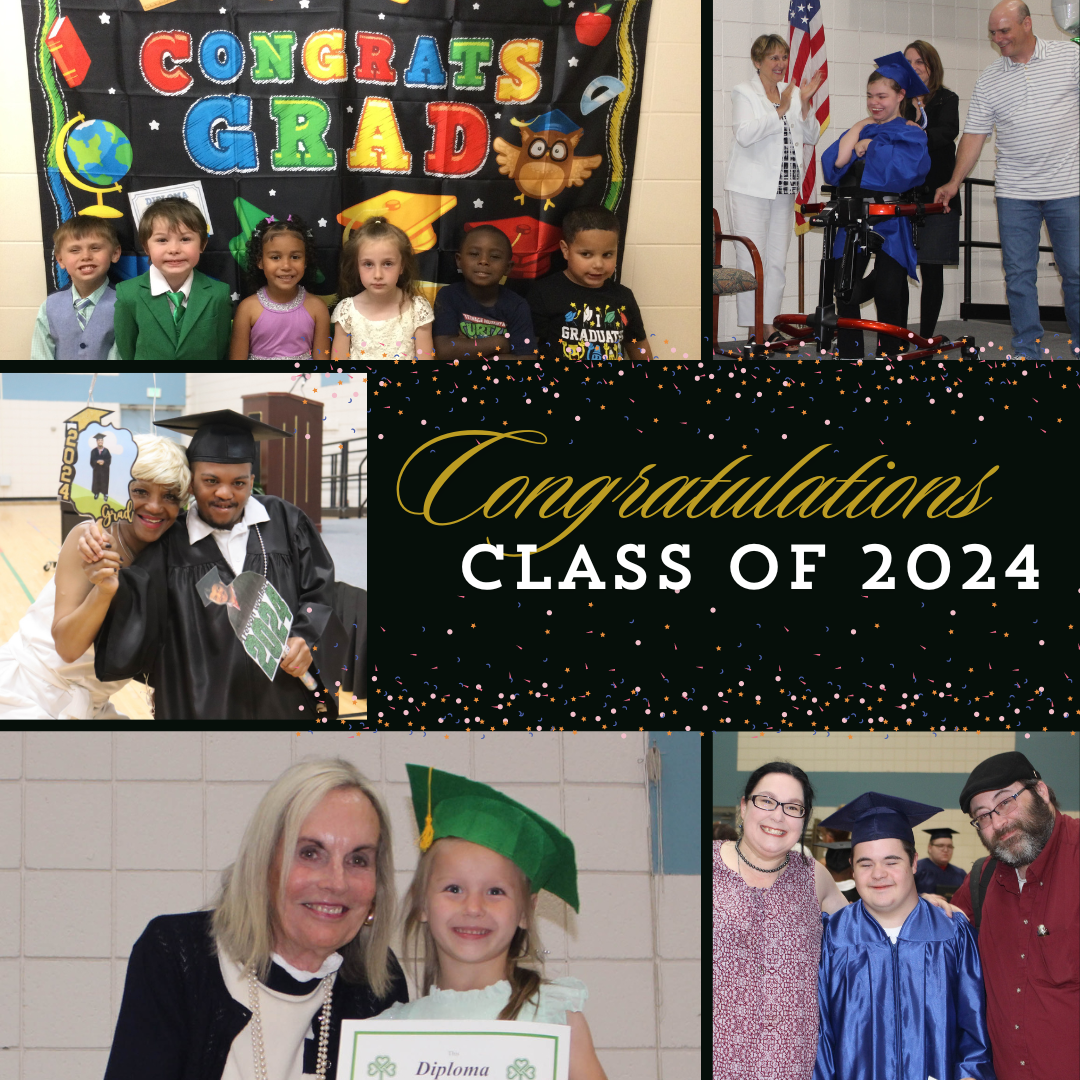
This week has been a celebration of our graduates who have made tremendous strides leading up this this monumental moment. We have two ceremonies, one for our Early Childhood (PreK Counts and Happy Hearts) graduates (33 students) and one for our High School students (9 seniors). Our Early Childhood graduation, held in the afternoon, had a gym packed with parents, siblings, extended families and lots of balloons. The children sang and danced as a Thank You to their families. It was TOO CUTE! We were the first school experience for many of these children and now they are headed for kindergarten. Our High School graduation in the evening is more solemn as the students prepare to leave us for employment and/or various Adult Day programs.
Graduation at the Elizabeth Lee Black School has a great deal of symbolism. It’s a culmination of years of hard work, commitment, creativity, and the belief that anything is possible if there is a will and an honest effort. Our graduates are continuing their journeys beyond the Elizabeth Lee Black School and the Barber National Institute, but they will always have a family here. Many of our high school graduates began as preschool children, and they are leaving here today as adults. This is a major step in the journey of their lives, and their family’s lives one that should be recognized for its significance. It is an act not only of personal commitment, but also of pride. They and their families have worked hard to get to this day.
My challenge to each of our graduates is to continue to strive to achieve your fullest potential. The future is truly in your hands. We are here for you as a resource, today, tomorrow and the years to come.
When Dr. Barber established the Barber National Institute more than 70 years ago, it was to ensure that all children and adults had every opportunity to go to school, get jobs, and become active participants in the community. Each of our graduates and their families have met their goals through hard work, diligence, and dedication. We are proud of what our students have accomplished and are inspired by each of them.
The Barber National Institute had the distinct pleasure of welcoming Dr. Valerie Arkoosh, Pennsylvania’s Secretary of Human Services, along with other elected officials across the Commonwealth, yesterday for a day of productive conversations surrounding the future of services for adults with Intellectual Disabilities and Autism and their families.
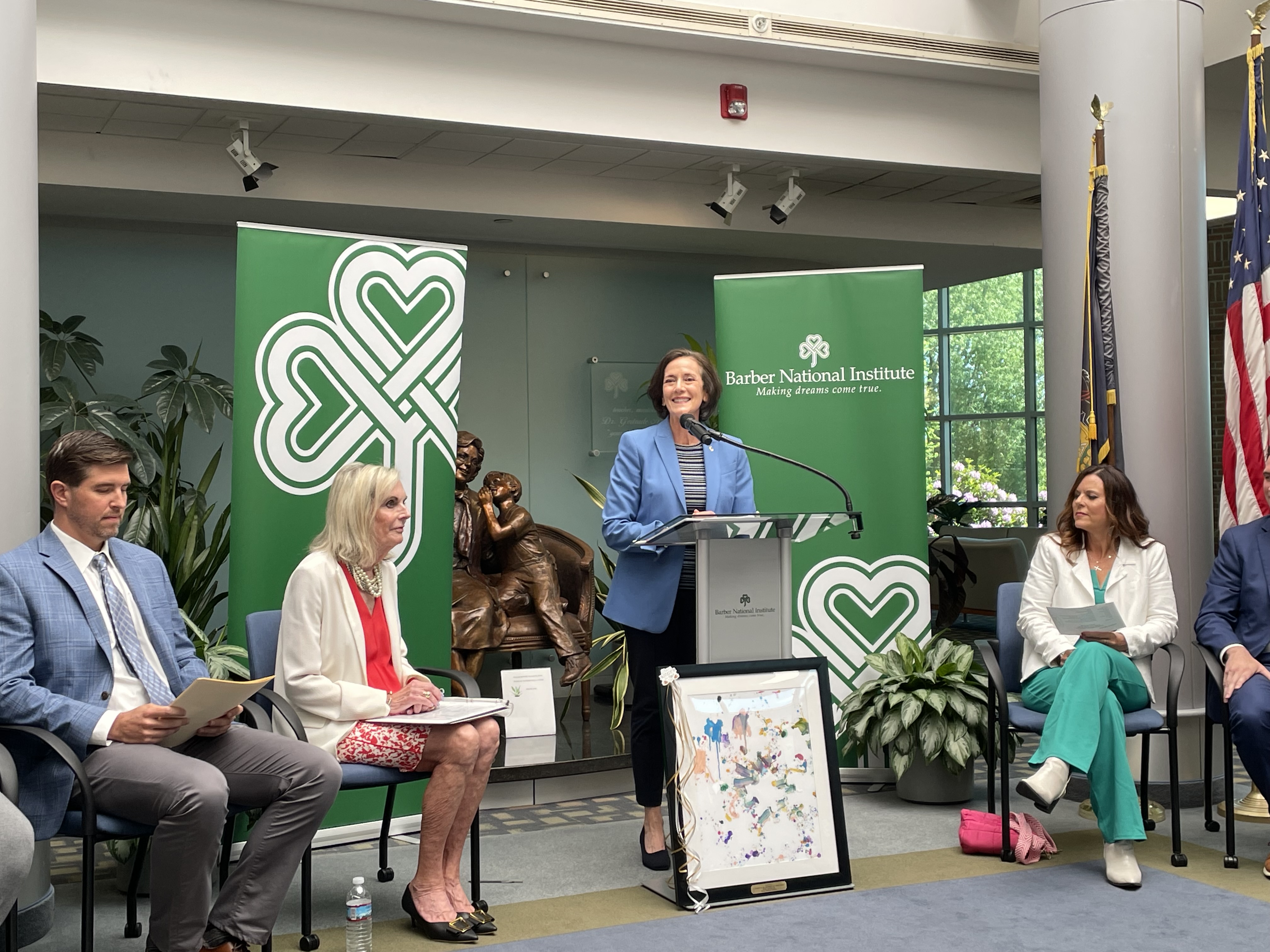
Secretary Arkoosh is seen speaking during a press conference at the Barber National Institute on Thursday, May 30, 2024.
There are currently 4,500 people across Pennsylvania waiting for services like those provided by the Barber National Institute. Our Adult Day and Residential services, for example, ensure that adults with Intellectual Disabilities and Autism can live healthy and fulfilling lives while taking part in a wide range of activities in their communities. Unfortunately, there are far too many individuals waiting for critical services and not enough direct support professionals (DSPs) necessary to provide these services.
“Achieving an everyday life with dignity is a goal for so many of our neighbors, friends, and loved ones in ID/A communities, but when they must wait for services, we are falling short in helping them meet this goal. Every Pennsylvanian with Intellectual Disabilities and Autism should receive the supports they need when they need them,” said Secretary Arkoosh during a press conference during yesterday’s visit.
In response to an increased need for skilled, compassionate, and committed DSPs, Governor Shapiro’s budget is proposing $483,000,000 in increased funding. This would allow service providers like the Barber National Institute and many others across Pennsylvania to increase pay for DSPs.
At the Barber National Institute, DSPs play a significant role in helping our adults reach their full potential. Through their work, they can interact with others and gain a sense of independence. DSPs are the frontline workers who are both caregivers and advocates for people with a wide range of abilities and needs. Mornings, evenings, weekends, and holidays you will find them in our group homes. Yesterday’s visit by the Secretary was a true reflection of the support and admiration our community offers DSPs in response to the far-reaching impact of their work.
Karen Groshek, the mother of a 26-year-old son with autism, expressed the importance of services for adults with Intellectual Disabilities and Autism and their families. “It is very difficult because these programs are essential for parents to continue on with their life and work and for the individuals to be happy and meeting their needs and enriched,” said Karen.
It is incredibly important to create a strong vision for the future of the services available to adults with intellectual disabilities and their families. While we face some significant challenges, there is much promise in Governor Shapiro’s budget that would allow service providers to recruit and retain DSPs. It’s the key to mobilizing the change so many people across Pennsylvania are waiting to see.
Governor Shapiro’s proposed budget must still be passed by the state house and senate. If the proposed budget is approved, DSPs could see a salary increase as early as this summer. That would be a big win for everyone.
The Today Show had Anthony Shriver, the founder of Best Buddies, on to discuss Eunie’s Buddies, a pioneering initiative within the Best Buddies Family Support. Watch the Today Show segment.
Some of you may remember that Dr. Gertrude Barber worked with Eunice Kennedy Shriver, the founder of the Special Olympics. Eunie’s Buddies provide support and resources to families raising children with intellectual and developmental disabilities (IDD). Here is how it works:
Mentee Support: Parents who are expecting, have recently welcomed a baby, or are raising a child up to five years old with a recent IDD diagnosis can receive support. They are paired with experienced parents of children with similar diagnoses to form a mentor-mentee relationship.
Mentorship: Experienced parents or caregivers of children with IDD become mentors, offering guidance, emotional support, and resources. They share their knowledge and experience to help new parents navigate the challenges and joys of raising a child with IDD.
Resources: The program provides a wealth of resources, including service recommendations, support groups, local activity suggestions, general information, and need-based financial aid.
Community and Connection: Eunie’s Buddies emphasize the importance of community and connection, offering a space for parents and caregivers to find encouragement and genuine friendship.
This program reflects the legacy of Eunice Kennedy Shriver, who tirelessly advocated for positive change in the lives of individuals with IDD. It aims to empower families and ensure that children with IDD can lead fulfilled lives with education and gainful employment opportunities.
We had a remarkably similar program in Erie a few years ago, Parent to Parent. I am thinking that the time might be right to revive it. If you are reading the blog, are in Erie, and might consider being a mentor or a mentee please get back to me. We could begin a pilot group if there is interest.
I had the honor of speaking at the Project SEARCH graduation held on the campus of AHN St. Vincent Hospital this week.
Local sponsors of Project SEARCH include AHN St. Vincent Hospital, the Erie School District, the Office of Vocational Rehabilitation, Erie County Department of Human Services and Barber National Institute.
Project SEARCH began over 25 years ago at Children’s Hospital in Cincinatti. It was designed to help students with disabilities in their final year of school transition to work. Students attend the program for a full school year at the host business (AHN St Vincent) where they become familiar with the culture of the organization, the various job opportunities available and work as a contributing team member. Students receive hands on training through worksite rotations, supportive job coaching and individualized career exploration. Through this training, they can build their communication, problem-solving, technology and team-building skills which will help them secure employment upon graduation.
Project SEARCH is a win for employers too. They can achieve a diverse and inclusive work culture where people of different backgrounds, perspectives, and ideas are given the opportunity to learn and grow within their career path. Much has been written about the many, many benefits of employing persons with disabilities. We do know that organizations whose workforce reflects the diversity within their community are resilient, innovative, and adaptable.
When Dr. Barber established the Barber Center over 70 years ago, it was with the goal that all people would become active participants in their community and be treated as valued contributors. It was a dream at that time. Today, Project SEARCH makes that dream a reality.
The Elizabeth Lee Black School is so fortunate to have two amazing nurses, Keri Moore and Kayla Litz.
Both Keri and Kayla offer a wealth of knowledge and experience that ensures our students stay healthy, safe, and thriving throughout their educational experience. They also provide the highest quality care and compassion for each student and his or her unique needs.
I have asked them about what makes their role at the Elizabeth Lee Black School so rewarding and the impact of the nursing field.
Keri Moore
Nursing is a very rewarding career for anyone who truly cares about people and wants to make a difference in their lives. One aspect of nursing that I feel sets it apart from the rest is the wide variety of specialties and settings that you can work in. As you grow in your career it is easy to get into a different specialty as your life experience changes your interests and shapes who you are as a person and as a nurse. I am most proud of the difference I have been able to make in so many individuals’ lives.
The most exciting part of being a nurse at the Elizabeth Lee Black School is that every single day brings something different. No two days are the same and you never know what the day will bring!
Kayla Litz
My favorite part of working at the Elizabeth Lee Black School is the interaction with the students. The diversity in them and getting to know each student on deeper levels to not only fulfill their needs but to also show them how important and valued they are. September marks one year working at the Barber National Institute.
It is an incredibly rewarding career if you find a location that drives you, makes you happy and allows you to find your purpose.
As we start the month of May, we also begin National Speech-Language-Hearing Month. We have an exceptional team of speech-language pathologists (SLPs) at the Elizabeth Lee Black School who ensure a diverse group of students have access to communication that is right for them. This may include using augmented and alternative communication (AAC), which includes all forms of communication other than oral speech to express thoughts, needs, and ideas.
Our SLPs are highly skilled at implementing AAC such as eye gaze technology, switches, or communication devices equipped with buttons representing a wide range of vocabulary. The work that our SLPS do each day allows our students to experience increased language opportunities, benefit from better communication with staff and peers, and helps them feel engaged and included in so many activities both in and outside the classroom.
I’ve asked our four incredible SLPs about the impact of their work and the value of speech-language pathology.
From left, Stephanie Jordan, Carly White, Amy Moczulski, and Colleen Klenz
Stephanie Jordan
The most exciting part of working at ELBS is that no two students are the same, so I am always learning something new!
The field of speech-language pathology is constantly growing and changing so there are always opportunities to learn new skills and work with different populations.
I’m proud that I’ve been able to give many of my students a voice by finding a communication method that works best for them and helping them successfully use it to communicate with those around them.
This is my 7th school year working at ELBS. I have enjoyed gaining experience with a wide range of communication systems and watching how technology has evolved over the years to help my students communicate!
Carly White
At the Elizabeth Lee Black School, we have students of various ages and abilities so there is a large variety of communication skills we work on. I love being able to work with such a wide range of students who all have different skills, needs, and personalities. There is never a boring day at the Elizabeth Lee Black School!
Speech-Language Pathologists can work in many different settings (schools, clinics, hospitals, nursing homes, etc.). My advice is to get as much real-world experience as possible during your undergrad and graduate school programming. This experience will help you when you are nearing graduation to know which setting you are most interested in. Another great thing about being an SLP is that you are constantly learning and growing in this field so if you are someone who loves to continue to grow your education and knowledge, then being an SLP is a great fit!
It is amazing to see a student/client find their voice and to be able to know that you were a part of helping them achieve that. There is nothing better than hearing stories from parents, teachers, or other staff members about how one of their students used a new word/sign/way to communicate appropriately.
I received both my bachelor’s degree and master’s degree from Edinboro University. While at Edinboro, I was able to do off-site placements in both Pittsburgh (Pathfinder School) and Columbus (OhioHealth Rehabilitation Hospital). My placement at Pathfinder School is what led me to finding my passion of working in a special education school and ultimately working at BNI. I started at ELBS in 2016 and have loved it ever since!
Amy Moczulski
The thing I find most exciting about working at the Elizabeth Lee Black School is the students. My days are rarely dull, and I love the challenge of working with such a diverse population of students with complex communication needs. Seeing my students make progress, no matter how great or small, and knowing that I played a small role in that is so rewarding.
I would let anyone pursuing the field of speech-language pathology know that it is one of the most fulfilling careers for so many reasons. SLPs have so many options when it comes to choosing which population to work with and in which setting. SLPs can work with individuals across the life span and in a variety of settings including hospitals, schools, skilled nursing facilities, private practice, in-home therapy, and now virtually. Regardless of which career path a speech-language pathologist chooses, the result is the same. You are providing therapy to individuals to improve their communication to reach their fullest potential.
I have been working in special education for twenty-five years, specifically as a speech-language pathologist for fifteen years. I have had the opportunity to collaborate with many amazing people across the years including parents, colleagues across many disciplines, undergraduate and graduate students just beginning their career as SLPs, etc. I would like to think that I have effectively shared my experience and knowledge through these connections that I have been so fortunate to develop.
I have celebrated multiple graduations starting with my bachelor’s degree in Elementary and Special Education from Lock Haven University. I later returned to school to pursue my post-bachelorette degree in Speech and Hearing Sciences at the University of Washington and my master’s degree in Speech-Language Pathology from Western Washington University. I completed an internship at the Barber National Institute in Spring of 2009, and I never left! This is my 15th school year at the Elizabeth Lee Black School.
Colleen Klenz
I find it most exciting that no two workdays or students are the same! Every student at the Elizabeth Lee Black School is so unique – from the way they communicate to their personalities. Figuring out how best I can serve my students while promoting increased communication throughout their school day makes my job very rewarding!
A career in speech-language pathology is so rewarding! Because our scope of practice is so broad, SLPs can work in multiple different settings (e.g., schools, hospitals, nursing homes, outpatient clinics, etc.) and with individuals of all ages ranging from infants to geriatrics. Many people aren’t aware that we not only work with individuals with speech & language needs, but can also treat those with swallowing, hearing, voice, and cognitive disorders.
Just being able to be a piece of each of my student’s success stories, big or small, has been such a rewarding experience. Whether they were simply able to request their favorite snack in the classroom or even have a conversation with their family at home – I’m glad I could be a small part of it!
I received both my bachelor’s and master’s degrees at Edinboro University. I’ve been an SLP at ELBS since October 2022 (1.5 years). Prior to joining the ELBS team, I worked as an SLP in a skilled nursing facility for 5 years.
We at the Elizabeth Lee Black School and the Barber National Institute strongly believe that Art plays a crucial role in shaping learning experiences for children with special needs. Some of the ways in which the arts positively impact our students include:
Building Fine Motor and Problem-Solving Skills:
Engaging in artistic activities, such as drawing, painting, or sculpting, helps develop fine motor skills. These skills are essential for tasks like writing, buttoning clothes, or using utensils.
Problem-solving abilities are also enhanced through creative expression. Art encourages children to think critically, experiment, and find solutions.
Enhancing Communication and Expression:
For children who struggle with verbal communication, art provides an alternative means of expression. Through visual art, music, or dance, they can convey emotions, thoughts, and ideas.
Art allows students to communicate without relying solely on words, fostering a deeper understanding of their experiences.
Promoting Self-Esteem and Motivation to Succeed:
Success in artistic projects boosts self-esteem. When children create something beautiful or meaningful, they feel a sense of accomplishment.
Art also motivates students to participate actively in their learning. It provides a positive outlet for self-expression and encourages them to explore their creativity.
By incorporating art, teachers create dynamic projects that inspire curiosity, critical thinking, and collaboration.
We have had an awesome year bringing the arts to our students. We participated in the Artist in Residence program and had artist Jessie Simmons work with our students over several months. Their projects were amazing. See some of the pictures below to see how creative our children are! Accomplished pianist Simone Dinnerstein joined us for a concert and left the children enthralled. Our students participated in the annual Barber National Institute Art Show and the WQLN Art exhibit. One of our students won an award! This Friday, the Erie Philharmonic will offer us an Instrumental Petting Zoo. Individual stations featuring violins, cellos, and percussion instruments will allow our students to hear various instruments and play!
Clockwise from top left, Pianist Simone Dinnerstein, student artwork completed during a recent Artist in Residency, Artist Jessie Simmons, musicians offering students engagement and enrichment.
For this week’s blog, I have invited Cecelia Hollands, the Director of Clinical Programming for Barber Behavioral Health (BBH), to discuss the ways BBH is helping shape the future of care and resources available to children with autism and their families.
Cecelia is a licensed professional counselor who has worked in mental health in the Erie area for over ten years in various roles, including as a psychiatric rehabilitation specialist, mobile therapist, and outpatient therapist. In addition to her work at the Barber National Institute, Cecelia also serves on the Board of the White Pine Center for Healing.
I want to thank Cecelia for offering her perspectives and wealth of expertise on this topic.
Every April marks the celebration of World Autism Month, the “kickoff” of which occurs on April 2nd, World Autism Awareness Day. This recognition is important, as, despite the rising prevalence of autism spectrum disorders in children (due in part due improvement in screening tools and de-stigmatization of autism in minority groups), there still exist a great number of misconceptions around what is means to have autism. For example, people may assume that people who have an autism diagnosis are unable to form meaningful social relationships, that they lack empathy, or that their diagnosis was caused by poor parenting or is solely due to environmental factors. In fact, though some individuals with autism may experience difficulty with social interaction, they certainly can and do have close social relationships, but may simply express their affection and empathy differently. Furthermore, while the cause of autism has not yet been determined, what researchers are sure of is that the development of autism is not related to parenting style, and that there is a strong genetic component to its development. These myths can be both limiting and harmful to individuals with autism and their families. This year, the theme of World Autism Awareness Day was “Empowering Autistic Voices.” In keeping with this theme, Barber Behavioral Health (BBH) has strived to create opportunities to allow the strengths and abilities of those with autism (and their families) to shine.
In her April 3rd blog post, Dr. Maureen Barber-Carey discussed the importance of early identification of children on the autism spectrum, as the earlier a child is identified, the sooner intervention can begin. For this reason, BBH currently offers and is working to expand psychological testing for autism through the administration of the Autism Diagnostic Observation Schedule, or ADOS, one of the few standardized diagnostic tests for autism spectrum disorder. Our goal is to help children as well as their parents/caregivers to receive formal supports as soon as possible through early diagnosis and screening.
Additionally, every summer, BBH holds a six-week summer camp, called Camp Connections, for children and adolescents with autism, the focus of which is providing opportunities for social connection both within the camp setting and in the community. Campers learn about and practice interpersonal skills, managing emotions, and making good decisions. Each week, campers have an opportunity to practice these skills within a community setting via a field trip to places like the zoo, parks and playgrounds, and local dining establishments. Our camp season culminates in a camper talent show, where campers can showcase their talents to an audience of their friends and family. To be able to provide as much support to campers and their families as possible, Camp Connections also offers before and after care and is free of charge for Erie County residents.
One of the more recent additions to BBH’s service offerings is our Parent Autism Support Group. This group, which meets on the second Tuesday of each month at our main campus location, is for parents/caregivers of children with autism. This group allows parents to come together to provide resources, support, and hope to one another as they share both the challenges and the beauty of raising a child (or children) with autism. We are thrilled to be able to offer this type of support to parents/caregivers, who, in addition to facing the daily stressors of parenting, may find themselves having to navigate the complex and often confusing world of early intervention, behavior services, and supports coordination.
Barber Behavioral Health is committed to providing ongoing, meaningful opportunities for those with autism and their families. If you are a parent/caregiver raising a child with autism and you have questions about any of the services or supports mentioned here, please reach out to our Care Coordinator, Anne Trucilla, at 814-823-5366.