This Saturday, Get Moving!

This Saturday is the 19th annual Family Health & Fitness Day, a national health and fitness event for families. Always held on the last Saturday in September, this day is a national holiday dedicated to promote family involvement in physical activity and healthy living.fam
Family Health & Fitness Day was conceived, in part, as a response to the U.S. Surgeon General’s Report on Physical Activity and Health. This landmark report made it clear that health benefits can be obtained from moderate physical activity on a regular basis. In addition, the Surgeon General’s Report stated that the majority of Americans, and especially children from 12 to 21, are not exercising nearly enough.

The obesity rate for children with disabilities in the United States is 38% higher than for children without disabilities. Unfortunately, multiple barriers may stand in the way of fitness for children with disabilities. Many parents are apprehensive to encourage their children to become involved because of the range of obstacles they may encounter. However, children with disabilities want to have friends, enjoy activities, have a break from parents, and be included like everyone else.

Though the exact amount of exercise will vary depending on your child’s abilities, it is recommended that most children get 60 minutes of activity a day. By engaging your child in an active lifestyle you help him or her to burn calories to promote a healthy weight, improve sleep patterns and self-esteem, and decrease repetitive behaviors that may be caused by stress.kids

Exercise is a daily routine for Ryan and me. It’s not new; we began when he was seven with running around the block. I knew he would never be able to play on a team, so I introduced activities that he could do on his own early on. Today, he is so programmed to exercise before going to work that he wakes me up at 5:30 to say, “It’s time to go to LECOM!” And if I’m not feeling well, he is genuinely disappointed that he can’t go. Once at the gym, he heads to a treadmill and runs for an hour, paying no attention to what I’m doing. It’s a great break for him, and me.

Here are some fun ideas that I’ve tried to get active this weekend:

  • Compete in an Obstacle Course in Your Backyard
  • Go Apple Picking or Walk Through a Pumpkin Patch
  • Organize an Outdoor Scavenger Hunt
  • Bike, Hike, or Jog on Presque Isle Trails – it’s beautiful in the fall!

What are some of your favorite activities to do to promote family health and fitness? I would love to hear from you!

Posted in Uncategorized | Leave a comment

Have You Thanked Your Direct Support Professional?

National Direct Support Professional Recognition Week, September 13th – 19th, 2015, is a great opportunity for organizations and communities to honor the direct support workforce and the tremendous difference they make each day in the lives of millions of Americans with disabilities.

dspYou’re probably thinking: “What is the role of a direct support professional?” since this job title is relatively new. 20 years ago, a person might have been called “Aide” or “Paraprofessional.” Today, they are most commonly referred to as “Direct Support Professional.” Regardless of their title, the job description is typically the same:


A direct support professional is a person who assists an individual with a disability to lead a self-directed life and contribute to the community, assists with activities of daily living if needed, and encourages attitudes and behaviors that enhance community inclusion. (Source)

At the Barber National Institute, Direct Support Professionals are an integral part of our team. They support our fundamental belief that learning is a lifelong process, and that all individuals should be provided the opportunity to reach their greatest potential.

To honor our DSPs, we created banners for the day programs, sent cookie trays to each of the programs and entered each staff member into drawings for gift cards.

People who need support are more likely to fulfill their life dreams if they have well-trained, experienced, and motivated people at their side in long-term, stable, compatible support relationships. These are the people who we hire as Direct Support Professionals. They are truly “Making Dreams Come True!”

Resource: National Alliance for Direct Support Professionals: https://www.nadsp.org/

Posted in Uncategorized | Leave a comment

Founder’s Day!

Let the festivities begin! Yesterday, we celebrated Founder’s Day, held each year on the birthday of Dr. Gertrude Barber. When this day comes around, I always like to look back and reflect on her accomplishments, which in turn allowed us to become the Barber National Institute.

The year was 1952, and Gertrude Barber was a psychologist with the Erie School District. It was her responsibility to tell parents of children with disabilities that they could not attend school. At the time, the two options were to remain at home or go to an institution, typically far away from their families. She, along with many parents, wanted something better for their children. Thus began the search for donated space and volunteer teachers to create the first classroom.

First Group Home

Erie’s first group home.

There was no funding in the early years. The program was supported by ice cream socials, card parties, and raffles. Dr. Barber used to say that all of their money could fit a cigar box – and it did!

It wasn’t until the mid-60s that state funding finally became available through the MH/MR Procedures Act, as well as the Department of Education. Fortunately, our programs were already in place and could be immediately funded. We were many years ahead of others in the field.

The 70s was a decade of huge growth for us. We were now an Approved Private School, serving children whose school districts could not offer an adequate education.

Dr Barber Phila

Dr. Barber discusses operations in Philadelphia.

Additionally, we established several community group homes and satellite programs in Girard and Corry. We had a groundbreaking ceremony for our new therapeutic swimming pool and our physical and occupational therapy facilities.

In the 80s, we established an adult rehab, employment, and training center, added more classrooms to our school, and initiated an Inclusive Day Care program and a Child Development Center. At times, it seemed as if our facilities could not grow fast enough to meet the needs of community. By the time the 90s rolled around, we were ready to expand across the state and opened residential services for adults in Philadelphia. Not too long after, we opened the same services in Pittsburgh.

project 2000

Groundbreaking ceremony from Project 2000.

Project 2000, Dr. Barber’s ultimate quest, was our first major capital campaign since 1966. Our goal was that this funding could provide a new school and training center. $7 million later… Dr. Barber announced the Project’s success and broke ground! A few weeks later, Dr. Barber passed away as she traveled to Florida for her first vacation in many years. Most of you know the rest of the story, but I wanted to share the stories of our history, so you can celebrate Founder’s Day along with us!

Posted in Uncategorized | 2 Comments

Monthly Research Updates

Although it may not always seem to be the case, scientists and researchers are constantly uncovering more information related to autism, offering insights into the origins, possible causes and even at times potential cures. I come across dozens of articles on a weekly basis, some of which seem more important than others.

Below are five stories that caught my eye this month, including a study just published by the WSJ today. I hope you find them as intriguing as I did!

~ Maureen


researchResearch Suggests Toddlers Who Have Poor Motor Skills May Be Bad in Math


While kids are introduced to math in their early years, it can be challenging for the teachers of small children to gauge children’s mathematical levels. The researchers hope to address this gap by establishing a correlation between mathematical skills and motor function. According to the study, there were big differences in mathematical skill levels between the children with the strongest and poorest motor skills. Children with good motor skills were more mathematically advanced in all areas studied.

Read the full article here.

Mindfulness Training for Parents and Their Children With ADHD Increases the Children’s Compliance

Children with ADHD are often non-compliant with parental instructions. This study shows that providing mindfulness training to parents, without a focus on reducing problem behaviors, can enhance positive interactions with their children and increase their satisfaction with parenting.

Read the full article here.

Low Doses of Anti-Anxiety Drugs May Alleviate Autism-Like Symptoms

A long-standing theory posits that autism may arise from an imbalance of excitatory and inhibitory signals in the brain. The research team collected mounting evidence over the past five years, which suggests that benzodiazepines — a class of drugs prescribed for anxiety — may help restore this balance in some instances. In a study with mice, a very small dose of one of these drugs boosts inhibitory brain signals and alleviates autism-like symptoms.

Read the full article and watch a webinar from the leading researcher here.

ADHD Symptoms Can Delay Autism Diagnosis for Years

A new study finds that the symptoms of attention deficit hyperactivity disorder (ADHD) can significantly delay the recognition of autism in children. Because early intervention is so important with autism, the researchers urge doctors and others who screen for such disorders to carefully evaluate autism in children with ADHD.

Read the full article here.

Gluten-Free Diet Has No Benefit for Children with Autism, Study Finds

The new work, conducted by researchers at the University of Rochester Medical Center, examines the gluten-free, casein-free diet. Popular as an alternative treatment for autism, the diet doesn’t appear to improve behaviors or symptoms of the condition, according to a small but rigorously conducted study published this month in the Journal of Autism and Developmental Disorders. Many experts in the field say perhaps the highest-quality evidence to date that eliminating proteins found in wheat and dairy doesn’t improve autism symptoms.

Read the full article here.

Tune in next month for an update on autism research!

Posted in Uncategorized | Leave a comment

Good Manners, Please!

September is National Children’s Good Manners Month. Teaching manners is so much more than teaching a child when to use “Please” and “Thank you.” It’s a way to teach kindness, courtesy, thoughtfulness, and respect.

Manners not only change with time, they also vary from culture to culture. One example comes to mind regarding teachers. As recent as the 50s and early 60s, teachers were expected to be “Old Maids,” women who never married. Once married, they were expected to quit working. How times have changed! manners

Because of these differences, it’s even more important as a teacher to acknowledge and respect the various cultures and customs that may be present in our classrooms and school. At ELBS, we have children who have emigrated from Eastern Europe, Asia, Middle East, and Central America. A large number of our children are from the country Nepal. As such, our staff receives training to help them prepare for a diverse classroom.

Of course, teaching manners doesn’t just happen at school. One of the best places to begin teaching your child good manners is at the dinner table. You can teach your child to put the napkin in their lap, keep elbows off the table, and chew with his or her mouth closed. These are all behaviors that you can model for him or her. You can also use phrases like “Please pass the corn” and “Thank you” when you receive it.

Another fun way to discuss manners is to make a game out of it. Make two piles of “flashcards,” one pile of “good” manners such as “Say please” or “Cover nose when sneezing” and another pile of “bad” manners, such as “Grabbed a toy from someone” or “Didn’t cover nose when sneezing.” Go through the cards with your child or student and have them identify which are good and which are bad.

Ryan and I did all of the above, and I am proud of the manners he displays today. We talk daily about being “kind and merciful” to others. Ryan knows that by being polite, he is being kind and merciful.

Scholastic Books has some great books that reinforce good manners. Check out the link below to look at some of the titles.

http://www.scholastic.com/parents/resources/book-list/seasonal-themes/september-national-childrens-good-manners-month

The National Education Association also has a ton of great resources for the classroom and at home:

http://www.nea.org/tools/lessons/learning-and-practicing-good-manners.html

Any other practices that have worked well for your family? Please share!

Posted in Uncategorized | Leave a comment

Power of Literacy

literacy dayOne of the fundamental building blocks in education is reading. So perhaps it’s no surprise that the “Back to School month” September carries holidays like National Library Card Month and International Literacy Day (September 8th).

There are many theories surrounding how best to teach reading. One of the most prevalent practices is “Learning to Read and Reading to Learn.” The fundamental premise of this philosophy is as follows:

“Learning to Read” happens in the early grades (K–3) and consists primarily of decoding and memorizing basic sight words. “Reading to Learn” begins in fourth grade and consists mostly of reading for information.

Today, research suggests that for all children “learning to read and reading to learn” should be happening simultaneously and continuously, from preschool through middle school — and perhaps beyond. In fact, teaching comprehension has now emerged as a critical piece of learning to read.

My experiences with Ryan would certainly suggest that this is true. By 3rd grade, Ryan was an excellent reader; teachers frequently remarked about his advanced reading level. My concerns centered on comprehension. I really didn’t think he understood what he was reading. Perhaps if there had been more efforts to include comprehension along with fluency, he would not have struggled as much with this component as he aged.

Because of the importance of reading skills, International Literacy Day is celebrated across the world on September 8th. First started nearly 50 years ago, this day highlights that reading is not only a basic human right, it can be an empowerment tool as well. As Frederick Douglass said, “Once you learn to read, you will be forever free.”

PEANUTS_WEB_PSA_336x280Strong, engaged readers become knowledgeable, strategic, motivated, and socially interactive persons. Thankfully, because of public libraries across our country, literacy no longer needs to be something that only the privileged and educated can access. During this month, the American Library Association and libraries across the country join together to remind parents and children that signing up for a library card is the first step towards academic achievement and lifelong learning.

After all, “A book is a gift you can open again and again.” (Garrison Keillor)

Resources:

http://www.ala.org/conferencesevents/celebrationweeks/card

http://internationalliteracyday.org/

Posted in Uncategorized | 1 Comment

Childhood Obesity

Every September, National Childhood Obesity Awareness Month, gives elected officials, educators, physicians, and you the opportunity to take a stand and fight childhood obesity. In the Erie Times News recently, there was an editorial that reported that more than half of the Erie County school children are either overweight or obese.

Although obesity rates have soared among all age groups in the United States, obesity is a particularly grave concern for children. With more than 23 million children and teenagers in the U.S. obese or overweight, childhood obesity is a national epidemic.

Childhood obesity puts nearly one third of America’s children at early risk for Type 2 diabetes, high blood pressure, heart disease and even stroke – conditions usually associated with adulthood.

I wasn’t quite sure how obesity is defined so I looked on the CDC’s website, and learned:

“Body mass index (BMI) is a measure used to determine childhood overweight and obesity. Overweight is defined as a BMI at or above the 85th percentile and below the 95th percentile for children and teens of the same age and sex. Obesity is defined as a BMI at or above the 95th percentile for children and teens of the same age and sex.

For example, a 10-year-old boy of average height (56 inches) who weighs 102 pounds would have a BMI of 22.9 kg/m2. This would place the boy in the 95th percentile for BMI, and he would be considered as obese.”

Children with disabilities stand a greater risk of being overweight due to potential physical and behavioral challenges they might face that prohibit them from exercise, and joining a team or a gym. Medications are another complicating factor, as some medicines cause weight gain. When Ryan began Risperdal many years ago, the physician cautioned me to monitor closely his weight, as 75% of children on this medication experience significant weight gain. Fortunately, he was one of the lucky ones and did not experience this side effect.

Of course, there are many things parents can do to help their children get fit and stay fit. Below is a list of the CDC’s best resources, as well as a Toolkit from the National Childhood Obesity Awareness Month website. I encourage you to check them out and consider what might work for your child.

CDC Resources: http://www.cdc.gov/obesity/resources/strategies-guidelines.html

NCOAM Toolkit: http://www.healthierkidsbrighterfutures.org/about/

Posted in Uncategorized | Leave a comment

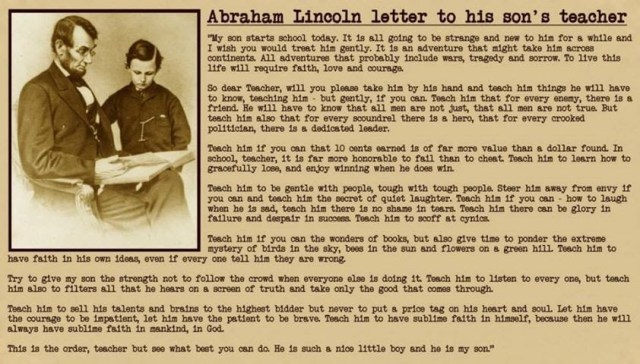
“A Letter to My Son’s Teacher”

On Sunday, in St. Patrick’s bulletin, Fr. Kriegel posted a letter that is widely believed to have been written by Abraham Lincoln to his son’s teacher. 150 years later, it still rings true. As many of us prepare for a new school year, I felt it was great advice to share.

~ Maureen


lincoln

Posted in Uncategorized | 2 Comments

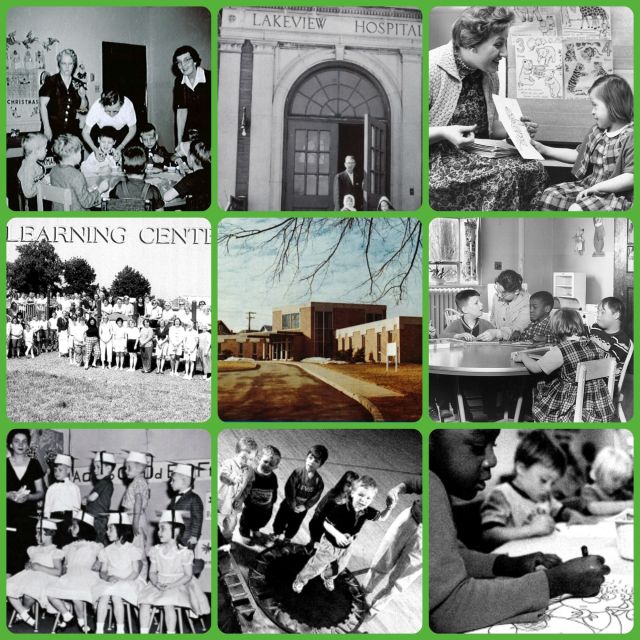
#throwbackthursday – Elizabeth Lee Black School!

As we get ready to welcome students back this Monday, I can’t help but reflect on so many of the years gone by. With our first classroom at Lakeview Hospital in the early 50s, to our original school building in the 70s, we have had so many wonderful memories and achievements within these walls! I am looking forward to creating many more this year.

Old school collage tbt

Posted in Uncategorized | 2 Comments

Back to School Tips for Parents

Over the past three years, I’ve written a number of blogs on tips to prepare your child for going back to school (You can read them here, here, and here). Today I thought I would focus on how you as a parent can prepare for this momentous day, and help make the year successful. back to school

  • Establish a file for the new school year.

As most of the material you’ll be receiving from school will be paper, it is helpful to create a space to organize daily notes, progress reports, report cards, IEPs, and the multitude of paperwork that you receive throughout the year. I had a file drawer that was “Ryan’s” and in it I kept separate folders for each of these types of information by school year. This is a sure way to easily access a file or report whenever needed. I recently went through these files at home in an effort to declutter. I still had notes from kindergarten!

  • Decide how you wish to communicate with the teacher(s).

Email, paper, phone calls, and meetings are all important and require documentation. I always spoke with the teacher at the beginning of the year to find out what system worked best for him or her. For most of Ryan’s school career, I met weekly with his classroom team. I found this to be extremely helpful to allow for consistency between home and school.

  • Establish a before and after school routine.

Waking up, getting dressed, eating breakfast, waiting for the bus… these are all things that need to occur seamlessly each morning. Similarly, there are a number of activities that need to occur each night. Bus drop off, homework, exercise, dinner, bedtime routine… you will know what activities are on your list, but by establishing a set routine you will make your life less stressful.

  • Positive attitude is key.

Perhaps the previous year may have been challenging for both you and your child, but it’s essential to remember that each year is a new year, and that each person involved in your child’s education deserves a chance to demonstrate their commitment. The beginning of the year is also a wonderful time to express your gratitude to your child’s school and his or her teachers. This will surely set a positive tone to the new school year.

Any other tried and true “back to school” tips that have been successful in your home? I would love to hear about them! Please share your thoughts below!

Posted in Uncategorized | 2 Comments