Celebrate Early Childhood Week: A Joyful Journey of Learning and Growth!

Early Childhood Week, also known as the Week of the Young Child (WOYC), is an annual celebration sponsored by the National Association for the Education of Young Children (NAEYC). This year, it will be observed from April 5 to April 11. The event underscores the significance of early childhood education and honors young children, their educators, families, and communities.

Research highlights the profound long-term effects of early childhood education on a child’s development. Studies indicate that high-quality early education is linked to positive outcomes such as lower rates of criminal justice involvement, higher likelihood of completing high school and pursuing further education, fewer chronic diseases, and improved overall health. Furthermore, early childhood education fosters cognitive development, social skills, and learning abilities, which directly impact children’s readiness to succeed in formal schooling and beyond.

The COVID-19 pandemic severely impacted America’s childcare community. Many childcare programs faced financial challenges due to tuition losses and low enrollment, compounded by the rising costs of new safety measures. By March 2021, nearly 16,000 childcare programs had closed, and a significant portion of the early learning workforce had lost their jobs or left the field. Additionally, the pandemic led to chronic absences, student depression, and a shift in parental perspectives on the role of education. Many children missed opportunities to develop and practice social and emotional skills during this time.

During Early Childhood Week, our children and staff in the Early Childhood Programs will engage in various enjoyable activities:

  • Music Monday: Students will create instruments and participate in a parade. Dress in purple!
  • Tasty Tuesday: Explore taste buds with a treat by following a recipe and cooking.
  • Work Together Wednesday: When children build together, they experience teamwork and develop their social and early literacy skills.
  • Artsy Thursday: Children will explore different mediums and create a masterpiece.
  • Family Friday: A Garden Party for families.

We look forward to celebrating this special week!

Posted in Uncategorized | Leave a comment

Bridging Gaps: Understanding Autism and Providing Support 

As we celebrate World Autism Day on April 2, let’s take a moment to review some essential facts about autism spectrum disorder (ASD). 

What is ASD? Autism spectrum disorder (ASD) is a developmental disability that typically appears before the age of 3 and lasts throughout a person’s lifetime. It affects brain development in areas such as social interaction, communication skills, and cognitive function. Early identification, treatment, and support are crucial, as they can significantly improve outcomes for children with autism. 

Key Facts about ASD: 

  • Prevalence: ASD affects 1 in 36 children, with boys being nearly five times more likely to be diagnosed than girls. 
  • Diagnosis: Girls are often underdiagnosed and misdiagnosed with other conditions. 
  • Growth: ASD is one of the fastest-growing developmental disorders in the United States. 
  • Detection: There is currently no medical detection blood test or cure for autism spectrum disorder. 
  • Causes: The causes of autism are not fully understood, but research suggests a combination of genetic and environmental factors. 
  • Diversity: Autism spectrum disorder affects all nationalities, creeds, religions, and races. 
  • Risk Factors: Family history, genetic mutations, parental age, pregnancy and birth complications, and disruptions in early brain development are all associated with a higher risk of ASD. 
  • Communication: Many individuals with autism have difficulties with communication, ranging from significant challenges with spoken language to challenges with social communication. 

The Barber National Institute’s Involvement with ASD Programs: In 1993, my brother, Dr. Joe Barber, a local pediatrician and pediatric neurologist, and I noticed an increasing number of children with ASD. We met with Dr. Gertrude Barber at her home to discuss this phenomenon and the need for additional training to provide the necessary interventions. Although we were skilled in providing education and services for children with intellectual disabilities, these children needed something more. Dr. Barber agreed to support the funding for training, which began our journey of sending staff to conferences across the country and bringing in experts for hands-on training. It’s hard to believe that was 30 years ago! The training has never stopped as we continue our goal of providing the very best services to children and adults with ASD. 

In my next blog, I will discuss some of the services we offer for children and adults with ASD. 

Posted in Uncategorized | Leave a comment

Fitness First: Transforming Lives through Exercise  

The Elizabeth Lee Black School is proud to offer a comprehensive education that extends beyond the classroom. Our students not only expand their academic knowledge but also enhance their real-world skills. We place strong emphasis on students’ health and well-being, investing in a wide range of exercise equipment and technology that allows students to engage in physical activity at their own pace. By introducing the many health benefits of exercise early on, we ensure that our students can adopt a healthy lifestyle that includes physical activity throughout their lives. 

Brent Manti, our school’s physical education teacher, says “I think what keeps students engaged is the sense of accomplishment. Progression through exercise is something that can not only be seen but also felt. Students can feel this sense of accomplishment and achievement by being challenged in the fitness room and progressing through those challenges. Goal setting is a major part of our fitness curriculum. Most of the students want to challenge themselves to see how far they can go.”  

“I have seen many students make physical improvements in increasing their fitness levels, but I have also seen students improve in their abilities to use different fitness equipment. Our goal for all our students is to be as independent as possible. Many of our students don’t have the knowledge or skills set to use a lot of fitness equipment, but after many sessions of guidance and training, they are able to work towards fitness goals on a mostly independent basis,” says Manti.  An additional win is that after learning how to use the equipment in the school fitness center, they can go to the Y or gym with a parent and use the equipment independently.  

There are several reasons why fitness remains so important, including:  

* Physical Health: Regular exercise helps maintain a healthy weight, reduces the risk of chronic diseases like heart disease, diabetes, and hypertension, and improves overall physical health. 

* Mental Well-being: Fitness activities release endorphins, which are natural mood lifters. Exercise can reduce stress, anxiety, and depression, and improve cognitive function and sleep quality. 

* Academic Performance: Physical activity has been linked to better concentration, memory, and classroom behavior, which can enhance academic performance. 

* Social Skills: Participating in fitness activities can improve teamwork, communication, and leadership skills, fostering a sense of community and belonging. 

* Lifelong Habits: Developing a fitness routine early in life encourages healthy habits that can last a lifetime, promoting long-term well-being. 

* Self-esteem: Achieving fitness goals can boost self-confidence and self-esteem, empowering individuals to tackle other challenges in life. 

On average, about 50 students visit the fitness room each week. We’re thrilled to inspire students to embrace exercise as a fun and effective way to relieve stress, connect with others, boost self-esteem, and develop healthy, lifelong habits. 

Posted in Uncategorized | Leave a comment

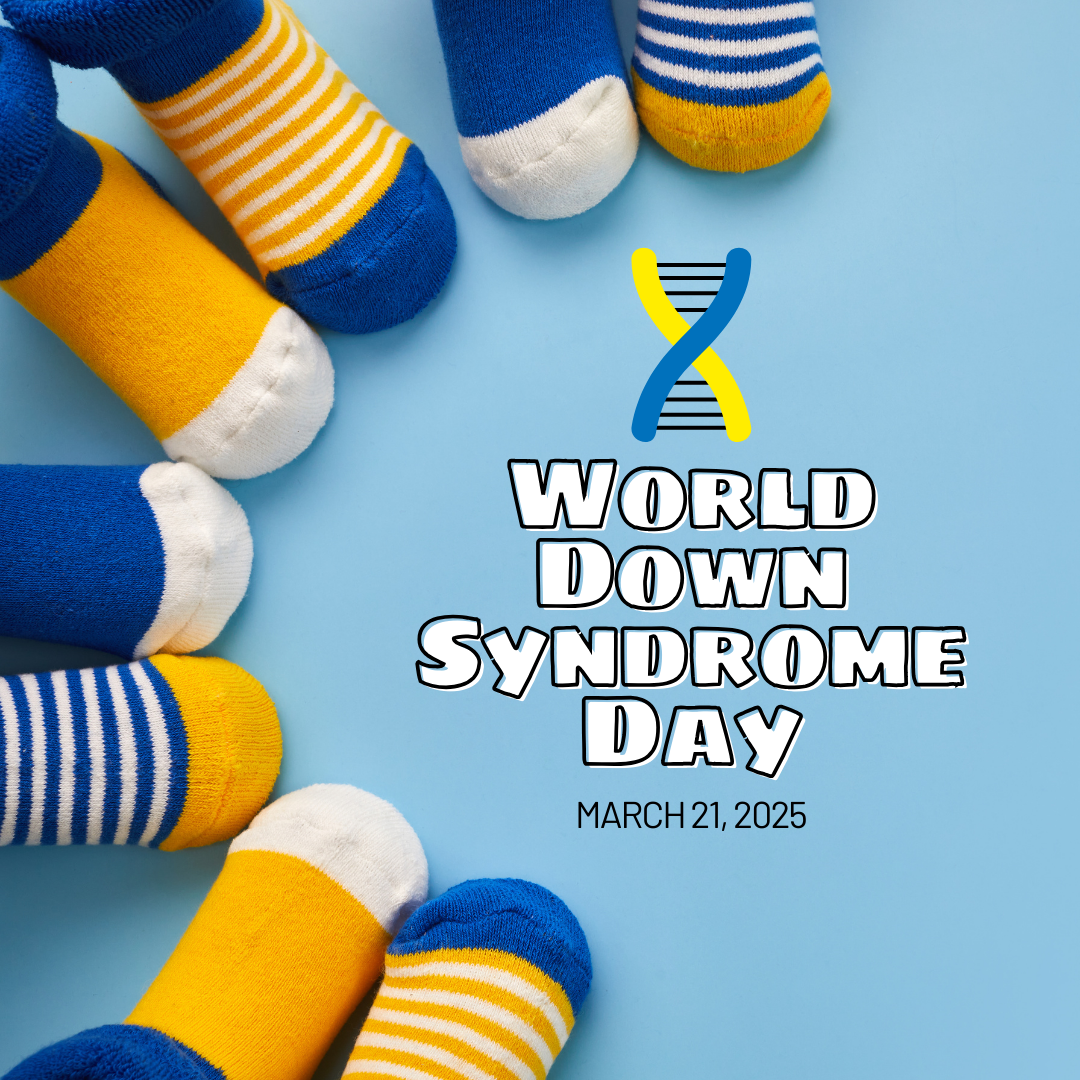
Step Up for Down Syndrome: Celebrate with Colorful Socks

World Down Syndrome Day (WDSD) is observed annually on March 21st to raise awareness about Down syndrome, promote inclusion, and advocate for the rights of individuals with the condition. The date, 3/21, symbolizes the uniqueness of Down syndrome, as it represents the three copies of chromosome 21 that people with Down syndrome have instead of the usual two. 

Down syndrome was first described in 1866 by British physician John Langdon Down. However, it was not until 1959 that French pediatrician Jérôme Lejeune discovered that individuals with Down syndrome have an extra chromosome 21. People with Down syndrome are at an increased risk for certain health conditions, including: 

  • Congenital heart disease: Nearly half of babies born with Down syndrome have this condition. 
  • Hearing loss: Due to structural differences in the ear or frequent ear infections. 
  • Vision problems: Conditions such as cataracts, near-sightedness, and far-sightedness. 
  • Infections: Due to a compromised immune system. 
  • Blood disorders
  • Hypotonia: Poor muscle tone. 

In the first half of the twentieth century, parents were often advised to institutionalize children with disabilities, including Down syndrome. Today, individuals with Down syndrome live independently in the community, reside with their families, or live in group homes. 

World Down Syndrome Day provides an opportunity to celebrate the lives, achievements, and contributions of people with Down syndrome, while also emphasizing the importance of equality and respect in society. One fun way to celebrate this day is by wearing mismatched, colorful socks. The pairs of chromosomes resemble socks and can signify acceptance of individuals with Down syndrome. So, pull out your colorful socks, wear one of each pair, and join us in celebrating World Down Syndrome Day! 

Posted in Uncategorized | Leave a comment

The Shamrock: An Enduring Symbol of Faith, Hope, Love, and Community

As we celebrated Saint Patrick’s Day yesterday, I wanted to focus on the legacy of the shamrock. More specifically, I wanted to share some history about the Barber National Institute shamrock. 

We all know that the shamrock is the familiar emblem of Irish culture. Often, I have been asked, “Do you have a shamrock for your emblem because the Barber Family is Irish?” While we do come from an Irish heritage, the shamrock truly has a meaning that extends beyond just our lineage.  

I recall sitting with Dr. Barber as she explained her concept of the shamrock to artist Frank Fecko. Each of the three leaves has significance: faith, hope, and love.  

Through faith, hope, and love, we can reimagine the opportunities available to people with disabilities and their families. We can build bridges and break down barriers. We can help create a brighter future for those who want to be seen, heard, and respected for their valuable contributions.  

Dr. Barber’s dream for better lives for children and adults with disabilities could have remained a dream, but in fact became a reality because of the continued support of our staff, the Erie Community, and an ever-expanding group of stakeholders. This is where the shamrock’s stem comes in. It represents our community of supporters, our children and adults, families, staff, and friends. Frank used Dr. Barber’s guidance to design our shamrock, an emblem we have used every day since! 

Today, the shamrock endures as our promise to future generations that the Barber National Institute will continue our commitment to serving children and adults with disabilities and their families. It’s comforting to think that we will continue to see this “lucky” green symbol for decades to come! 

Posted in Uncategorized | Leave a comment

Conquer the Final Challenge: Last Chance to Beat the Barber Beast on the Bay! 

Eleven years ago, I vividly remember sitting in John Barber’s office, discussing the possibility of a new fundraiser: a 10-mile race on Presque Isle and an adaptive course for persons with disabilities. After the first year on the peninsula, we were able to move our adaptive course and the finish line to Waldameer Park & Water World, thanks to the generosity of the late Paul Nelson and his family. A unique element was the Waldameer wave pool, where runners and adaptive participants joined together for the final obstacle. 

Fast forward eleven years, and over 13,000 men and women from more than 25 states have participated in the 10-mile Beast, while 1,000 men and women have run the adaptive course. Four thousand volunteers have built and manned obstacles, water stations, booths, worked as safety aides, and done everything else to ensure the success of each participant. 

This will be Ryan’s 9th Beast.  He ran the adaptive course for two years and then said “That’s too easy.  I want to Beat the Beast! “And he has for the past 8 years.  Drs. Kate and Brian Stark have run with him for the past few years. Yes, they are smiling after the 10 miles and 30 obstacles! 

The final Beast on the Bay 10-mile course will be held on September 6, 2025. We plan to continue the adaptive course and will begin planning for 2026 now. No more should’ve, could’ve, would’ve. This will be your last chance to Beat the Beast! Register today at https://www.barberbeast.org/

Posted in Uncategorized | Leave a comment

Read Across America Week: Embracing the Power of Literacy from an Early Age 

Reading to children offers countless benefits that extend far beyond literacy. It enriches their language skills by introducing them to new words and expressions, and it supports their cognitive development, as even the simple act of holding a book stimulates brain growth. Moreover, reading together strengthens the bond between parents and children, providing a precious opportunity to connect and unwind during a busy day. 

Books open up a world of knowledge, helping children learn about various subjects and the world around them, making it easier for them to grasp new concepts once they start school. Additionally, reading fosters empathy and emotional intelligence.

Through stories, children learn to navigate challenging feelings and understand different perspectives. Parents can use reading time to discuss emotions and coping strategies, such as asking, “Have you ever felt as angry as the girl in this book? What would you do if you did?” 

Even a few minutes of reading together each day allows parents and children to slow down and connect. The sensory experience of sitting close and hearing a parent’s voice further engages children, helping them build empathy and emotional resilience. 

I remember that the first book I read to Ryan after he was born was “How much do I love you.”  We read it so frequently that I had to scotch tape the pages. We continued reading as he grew older, and it was the highlight of my day.  Of course, by the time he was 3 years old, he was reading his Bob books to me!  Ryan loves reading to the children in Happy hearts and I do think that it is the high spot of his week! 

I’m so thankful to the 85+ volunteers who visited the Elizabeth Lee Black School this week to help celebrate Read Across America. Community members, from newscasters and legislators to our own employees and parents of students we serve, gave their time and talents to showcase their love of reading.  

Reading is a lifelong gift that creates opportunities in nearly every aspect of a person’s development. Cultivating a love for reading from an early age is crucial for ensuring that children are set up for success as they grow older. It opens doors to knowledge, imagination, and emotional growth, laying a strong foundation for a bright future. Never stop reading!  

Posted in Uncategorized | Leave a comment

A True Trailblazer: The Lasting Impact of Ada Lawrence  

When I think of Ada Lawrence, one word comes to mind: Trailblazer. On September 3, 1946, she shattered barriers as the first Black person, and a woman, to be hired as a full-time teacher by the Erie School District. While many have heard of Ada and the profound difference she made, I consider myself incredibly blessed to have had her as a mentor. 

Photo: Ada Lawrence Source: Erie Times-News

Ada’s journey began at Strong Vincent High School, and she went on to earn her bachelor’s degree in elementary education from Cheyney State Teachers College, followed by a master’s degree from Gannon University. For 36 tireless years, she poured her heart and soul into teaching, with a remarkable ability to uplift and empower students, especially those with intellectual disabilities. In 1952, Dr. Barber saw her unwavering dedication and invited her to be one of the first teachers in a newly created classroom for children who were previously sent to distant institutions. Ada’s passion and commitment led to her serving on the Board of Directors for the Barber National Institute. 

As a new teacher in the Erie School District, Ada was my guiding light. She helped me understand the immense responsibility and profound reward of working in special education. Her support during challenging times and her celebration of my achievements were invaluable. Ada extended this same love and attention to the many families she served, empowering them with the resources they needed to navigate life’s challenges. Her impact on countless students, both in and out of the classroom, is immeasurable. She taught me that with perseverance, no struggle was too great. She gave me the reassurance I needed to feel confident in myself and work toward a bright future where all students could excel. I cherish the time I had working alongside Ada.  

Ada’s involvement in the Erie community was vast and heartfelt. She was one of the original incorporators of the Bayfront NATO’s Martin Luther King Jr. Memorial Center and served with the Erie Chapter of the NAACP, the Harry T. Burleigh Society, and several other boards and committees. Through her work in education, Ada fought tirelessly for civil rights and social justice, leaving an indelible mark on the community. 

Ada Lawrence passed away in 2014 at the age of 93, but her legacy lives on in the hearts of all who were touched by her remarkable work. I am deeply grateful to have been one of those fortunate enough to experience her wisdom, kindness, and unwavering dedication. 

Posted in Uncategorized | Leave a comment

Balancing Act: The Federal Department of Education’s Influence and Limits 

There has been so much discussion in the news about the Department of Education, what it does and should it be abolished. There are many false statements circulating, so I thought I would devote this week’s blog to the Department.  

What it does:  

Funding and Grants: The Department of Education administers federal funding, such as Title I funds for schools with high numbers of low-income students, and provides grants for special education, research, and teacher training. 

Special Education: The department oversees the implementation of the Individuals with Disabilities Education Act (IDEA), ensuring that children with disabilities receive a free appropriate public education. This includes providing special education services, supporting early intervention for infants and toddlers, and awarding grants to states and institutions that deliver these services.  Until the passage of the IDEA in the 1970’s, states determined whether they could serve a child with a disability.  Many states chose not to serve these children until it became a law.   

Higher Education Support: The Department of Education administers programs like Pell Grants and the federal student loan program to support college students. Pell Grants are awarded based on family income, while the federal student loan program offers more favorable loan terms than private loans. 

Data Collection and Reporting: The National Center for Education Statistics, a department within the Department of Education, gathers and reports data on K-12 educational institutions to help schools and researchers analyze enrollment, finances, and performance metrics.  I discussed the latest report in last week’s blog.

What it does not do: 

Education is primarily a local and state responsibility rather than a federal one. Most public-school funding comes from state and local governments, with the ED’s budget making up only 21% of total education spending in the country 

The Department of Education does not directly control or manage schools. Its role is more about providing support and resources rather than direct oversight. 

While the Federal Department of Education exerts significant influence through funding, civil rights enforcement, and research, its authority is balanced by the autonomy of state and local education systems. Understanding these dynamics is crucial for appreciating the Department’s impact on special education and the broader educational landscape in the U.S. 

Posted in Uncategorized | Leave a comment

The Nation’s Report Card 2024: Unveiling the Pandemic’s Lingering Impact on Student Achievement

The nation’s report card for 2024 has been published.  There were historic drops in student progress in 2022, which many believed were the result of the pandemic. Therefore, we are very interested to learn what 2024 looks like for United States students. 

Key Concerns: 

  • U.S. students have not recovered from the pandemic’s impact on education. National scores are below pre-pandemic levels (2019) in all tested grades and subjects. 
  • Higher-performing students drove most of the progress in 2024, widening the gap between higher- and lower-performing students. On a 500-point scale, the lowest-performing students score about 100 points below the highest-performing students. 

Reading in 2024: 

  • Reading scores are down nationally in both 4th and 8th grades. No state saw reading gains compared to 2022. 
  • In 2013, 32% of 4th graders were Below Basic; in 2024, 40% are Below Basic. 
  • A third (33%) of 8th graders are not reading at the NAEP Basic level, meaning they struggle with basic literary elements. 

Math in 2024: 

  • 4th-grade math scores are up nationally by 2 points, driven by middle- and higher-performing students. Scores for lower-performing students were flat. In 2013, 17% of 4th graders were Below Basic; in 2024, 24% are Below Basic. 
  • 8th-grade math scores are flat nationally, masking gains by higher-performing students and stagnation among lower performers. 

Subgroup Patterns: 

  • In 8th grade, Hispanic students saw significant declines compared to 2022, with a 5-point drop in reading and a 3-point drop in math. 
  • In 4th-grade math, Black, Hispanic, and White students saw average score gains driven by higher-performing students, while lower performers’ scores remained flat. 

Surpassing Pre-Pandemic Scores: 

  • Only Louisiana surpassed its 2019 4th-grade reading score, and only Alabama surpassed its 2019 4th-grade math score. Louisiana’s success may be linked in part to the mandated literacy training for teachers. 

Peggy Carr, commissioner of the National Center for Educational Statistics, states: “We are not seeing the progress needed to regain the ground lost during the pandemic. Signs of recovery are mostly in math and driven by high-performing students, while low-performing students are struggling, especially in reading. This is not just a pandemic story; our nation faces complex challenges in reading.” 

These statistics demand close monitoring as we consider funding for education. What can we do to reverse this trend? 

Posted in Uncategorized | Leave a comment