Encouraging A Lifelong Love for Reading

Are you reading to a child this week? Read Across America Week, celebrated from March 2 to 6, is dedicated to promoting reading and educating people about its benefits, especially among children and young adults. We began the Read Across America celebration in 1998 when The National Education Association launched Read Across America as a year-round program. We also celebrate Dr. Seuss’ birthday. It is amazing to think that he authored over 60 popular children’s books, selling more than 600 million copies.  

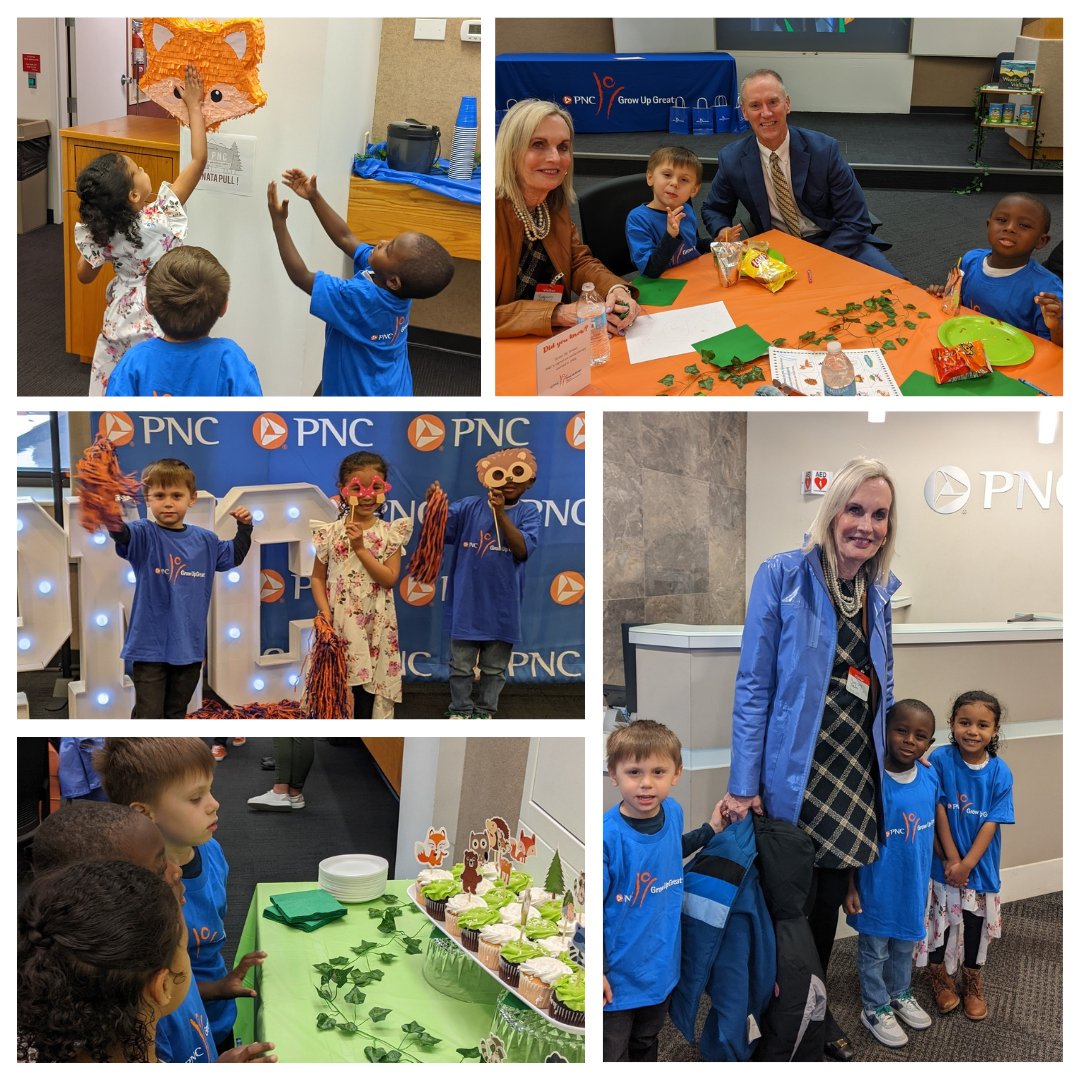
I started reading to Ryan as a newborn…and we still read together today. Looking back, we had many favorites: Good Night Moon, I Love You as Much and then he started reading The Bob books when he was three. Today he reads to the preschool children in Happy Hearts two days a week. He will tell you that this is his favorite activity!  

Reading is crucial for children’s development and well-being. There are many reasons but some of the most important include: 

Reading enhances brain function, stimulates imagination, and improves memory. It exposes children to new ideas, vocabulary, and concepts. 

Regular reading helps children develop language skills. They learn new words, sentence structures, and communication patterns. 

Proficient readers perform better in school. Reading comprehension is essential for understanding textbooks, instructions, and assignments. 

Books introduce children to diverse characters and situations. This fosters empathy, compassion, and a broader worldview. 

Shared reading time with parents or caregivers strengthens relationships and provides comfort. 

So, I encourage you to pick up a book, read to a child and open the child to a whole new world! If you would like to read at the Barber National Institute next year for Read Across America, just send me an email. 

Posted in Uncategorized | Leave a comment

Forward Bound: Helping Students Step toward Success  

Many factors play into whether a student is successful in school. It is difficult if not impossible for a student who misses school to be successful as  teaching and learning continues  daily.   So, we are experiencing a national problem: chronic absenteeism. Chronic absenteeism occurs  when a student misses a significant number of school days for any reason. The term significant is subject to interpretation, but chronic absenteeism is usually defined as missing at least 10 percent of the days in a year. Unfortunately,  in 2022, two out of three schools nationwide had high chronic absenteeism.  

While chronic absenteeism can and does occur at every grade level, it is most prevalent in high school. One thing is clear: chronic absenteeism jeopardizes both the short-term and long-term success of students academically and socially-emotionally. When students miss school, they lose valuable opportunities to reach critical milestones and develop future-ready skills.  

Some alarming statistics released by the U.S. Department of Education shed light on the fact that not all groups experience chronic absenteeism the same. For example, chronic absenteeism is 15% less likely among English learners than non-English learners. Also, American Indian and Pacific Islander students are over 50 percent more likely to miss three or more of school compared to their white peers. Black students are 40 percent more likely to miss school than white students, and Hispanic students are 17 percent more likely to miss school.  

Combating absenteeism often starts by identifying the root cause of absenteeism. Research has shown that children impacted by poverty are more likely to experience many challenges, including limited transportation, lack of safety, and poor health, which impacts their ability to be present in the classroom.  A strong foundation at home is often linked with an increased probability that students will succeed in school and develop adaptability into adulthood. There is not one solution but all of us as educators must face this issue head on and decrease absenteeism.  

Another area of research is virtual tutoring. Tutoring has been a service offered for many years in most schools. The new area that we are also learning about is virtual tutoring.  Virtual tutoring, especially high dosage tutoring places an emphasis on instruction for at least 20 minutes a day, four times a week. When done properly, virtual tutoring is as effective as in-person tutoring. The key is to ensure that both virtual tutoring and in-person tutoring remains rigorous and frequent, which should allow the student the maximum benefit.  

Posted in Uncategorized | Leave a comment

Understanding the Increased Need for Special Education

There is an increased number of students enrolled in special education programs. I thought about the reasons behind this trend.  Some data from the 21-22 school year found that 7.3 million students, or 14.7 % of all public-school students, are receiving special education which is at an all-time high since the passage of the Education for all Handicapped Children Act in 1977. At that time 8% of the overall student population were receiving special education.  Under the Individuals with Disabilities Education Act (IDEA), which has been the name for the nation’s special education law since 1990, each of those students must have an Individualized Education Plan.  So, the obvious question is Why the increase? 

As I think back to the 70’s, we are much better now at diagnosing many conditions.  Autism was not known until the 1990s and was not an eligible category until 1990.  

1:36 children are currently identified on the spectrum so that you no doubt know a child with ASD. Today it accounts for 12% of all students on IEP’s.  

Another important consideration is that special education today does not carry the stigma that it did in the 1970’s.   Recall that in the 50’s and 60’s parents were told to institutionalize their child and there were no opportunities for schooling.   Today, the reduced stigma and increasing awareness has motivated many parents to seek help for their child if he/she has a learning disability or speech and language impairment. Learning disabilities account for 1/3 of all students with IEP’s or 2.3 million students. 

Another factor certainly is the emphasis on academics in the general education curriculum.  As we think about the pressure of assessment and of achievement on the various statewide tests, we see students struggling to perform. Yet, the intensive instruction that they might need cannot be found in the regular education classroom whether it is due to the number or diversity of students.

Does More students equal more funding? 

No. there are disparities in funding for the Individuals with Disabilities Education Act (IDEA) among states. An analysis highlighted that while Congress promised “full funding” for IDEA (40 percent of excess costs for students with disabilities), the federal contribution in 2020 was just 13.2 percent.  

Moreover, the current funding formula has been found to generate substantial differences among states in the amount of federal funding available per child. For instance, in Fiscal Year 2020, Wyoming received about $2,826 for each child receiving special education, while Nevada received $1,384 per child according to Bookings, a leading institution for independent research on current issues impacting the world.  

States with larger shares of children eligible for special education receive, on average, fewer dollars per child than states with fewer such children. There are some obvious disparities that require attention.  

This is our call to action to our legislators is to increase funding for special education.  

Posted in Uncategorized | Leave a comment

Considering the Impact of Social Media and AI on Youth

I often share the significant research in the past year in the field of autism, but I decided today to focus on Education studies this past year. 2023 saw the U.S. surgeon general issue warnings about the dangers of the use of social media for developing brains.  There has been much discussion on a national level on how social media should be regulated.  Findings suggest that more frequent use of social media is linked to higher rates of mental distress, self-harming behaviors, and suicide among teenagers.  

So, what should we do?   The study suggest that families should engage in developmentally appropriate discussion about how to limit social media.  ChatGPT caused a huge furor when it was released as all of us thought about how it could be used to expand students’ learning and solve some of the cumbersome tasks in teaching.  So far, the analyses have yet to determine the most effective uses of ChatGPT. 

Interestingly, while the ChatGPT bot provides highly accurate information in areas like economics and critical thinking prompts, it was not able to do so in math and software testing.  The tool also provides out-of-date or incorrect information on various subjects as well as not provide the proper sources for its information.  Another area that has seen headlines is the move to decrease the school week to four days from five.  Currently 900 districts in the nation have implemented this schedule.  

Some of these districts are lengthening the school day to make up for the lost hours. However, this study found that teachers and students were exhausted by this longer day and that it did not “make up” for the lost full days.  Another study, which looked at the schools which provided the most instructional hours, found that over the span of twelve years the students actually received an additional two years of instruction. 

In a future blog post, I will look at the value of tutoring, chronic absenteeism, and family engagement. 

More to come….  

Posted in Uncategorized | Leave a comment

Celebrating Black History & Recognizing the Need for Continued Change  

I recently received a newsletter from Dr. Chris Gray, Founding President of Erie County Community College of Pennsylvania. I was eager to read President Gray’s blog post centered on the importance of honoring Black History Month.  

In the blog, President Gray says, “Black History Month is vital to modern American society because it pays homage to the past while also serving as a catalyst for ongoing conversations about racial equality and justice as we all step forward into the future.”  Read President Gray’s full blog post.

I wholeheartedly agree with President Gray’s statement and firmly believe that it is critically important to recognize the exceptional contributions of so many Black Americans throughout history and understand where changes are still needed to ensure diversity, equity, and inclusion in every aspect of society, from education to employment and housing and everywhere in between.  

We as a nation have witnessed both the challenges and triumphs of Black Americans, and we have a unique opportunity to look ourselves in the mirror and ask what we can do better to increase awareness of injustices and promote the much-needed progress needed to level the playing field. This goal extends far beyond just the month of February. It’s a continuous objective that we are all called to work toward collectively and as individuals.  

If history has taught us anything, it has reminded us that we have so many Black Americans among us who are visionaries, trailblazers, and change makers. History has also shown us the incredible resilience and perseverance of Black Americans. At the same time, we must face the reality that Black Americans face struggles we can’t ignore.  

In my first year of teaching in the Erie Public Schools, I met Ada Lawrence, a special educator and one of the first Black teachers and special education teachers in the Erie School District. She had been hired by my aunt, Dr. Gertrude Barber when she was Director of Special Education and Assistant Superintendent. Miss Lawrence and I were based at Wayne School. She was a great mentor! She spent her entire career teaching special education students in the Erie School District. She also was appointed to the Barber Center Board and served many years in that role. She was a trailblazer…as was Dr. Barber. 

Working together to make sure success is available to everyone is not only a request we should be making of ourselves, but also a commitment that will drive the changes we wish to see in the world.  

Posted in Uncategorized | Leave a comment

Helping Military Families Impacted by Autism

Did you know that 1.3 million men and women are on active duty serving in our military? There are 1.5 active-duty family members with 61% of them being children. If 1:36 children are being diagnosed with Autism, that tells us that there are thousands of children with a diagnosis of autism whose parent(s) are in the military.

Finding the appropriate resources for a child with autism can be daunting for any family, but military families face unique challenges. For example, deployment is not uncommon among military families. When a family member in the military is deployed, a military spouse may feel overwhelmed by the prospect of caring for a child with autism alone. Additional support and services are often needed to ensure both the child and parent receive the care they need. Children with autism may have issues with separation when a parent in the military is deployed.

Certainly, military families make great sacrifices to ensure our freedom and way of life. Helping military families impacted by autism starts with developing a greater awareness of their needs and developing a process by which they can be connected to the resources, professionals, treatment options, and coping strategies necessary to thrive.

I recently read about some excellent resources for these families, which is provided by the Organization for Autism Research.

Access the full resource guide using this link.

Posted in Uncategorized | Leave a comment

Celebrating Exceptional Education During School Choice Week

National School Choice Week 2024 begins on Sunday, January 21, and ends on Saturday, January 27. 

This will be the fourteenth annual celebration of National School Choice Week. The first celebration of National School Choice Week was in January 2011. 

Why do we celebrate School Choice Week? 

The goal of National School Choice Week is to raise awareness about the K-12 education options available to families in communities across the country. During the Week at the Elizabeth Lee Black School, we spotlight the many benefits of an education at our school for preschool and school aged students.  We choose to highlight the achievements and accomplishments of our students. 

The Week is held in January, as for many families this is the time when parents  start the process of selecting a school. If you are interested in understanding the educational options available in each type of school state-by-state, you will find them at  schoolchoiceweek.com/mystate

The educational landscape is ever evolving for children with special needs and typical children. The event hopefully offers responses to parents’ questions, helping them navigate and discover the most suitable school options for their children. 

We celebrate School Choice week at the Elizabeth Lee Black School by wearing our school color, green.  The children and staff were “decked” out in this color on Monday.  Let’s celebrate our school!

Posted in Uncategorized | Leave a comment

Understanding Kindergarteners’ School Readiness Post Pandemic 

We have been discussing the negative impact of COVID on school aged students. A group that is often not discussed are children who were not yet three years of age, and who should have been entering preschool between 2019 and 2021. One might think that these children were so young. How could they experience the impact of COVID? However, we are now seeing that they certainly did. Some of these children would have attended preschool. Instead, they were at home with very limited opportunities for social interaction with their peers or adults who were not family members. Their parents or caregivers were losing their jobs, routines changed daily. Some of these children lost loved ones. All of the above factors certainly lead to stress for the child and his/her family. 

New data suggests kindergarteners tested in 2023 had scores that placed them two percentage points less likely to begin school at grade level than peers tested in 2019. Math and reading levels are in decline among kindergarteners, which is concerning educators and researchers alike.  

Beyond academic decline, we’re seeing an increase in behaviors among young students entering school. More students are requiring one-on-one attention to help mitigate behavioral challenges and help keep these students engaged and able to learn as effectively as possible.  

What have we experienced at the Elizabeth Lee School? First and foremost, many children come to us at five or six years of age and have never been to school.  Yet, preschool is a critical stage in a child’s development, where they are introduced to a structured environment that fosters social and emotional growth. It provides children with a platform to learn how to interact with others. It is an environment where children learn to share, take turns, and cooperate with others. These skills are crucial for building positive relationships and are fundamental in developing social skills. 

Preschool also teaches children how to solve problems and make decisions. Children learn how to think critically, analyze situations, and make sound decisions. This skill is essential in developing emotional intelligence, where children learn how to understand themselves and others better. Emotional intelligence helps them navigate social situations and make meaningful connections with others. 

Furthermore, preschool helps children build confidence and self-esteem. Through play and exploration, they learn to trust their abilities and develop a sense of pride in their accomplishments. This helps to build resilience, which is a crucial aspect of emotional development 

These are the challenges all of us are facing as we move forward in our attempts to provide a high-quality education for our young children. 

Posted in Uncategorized | Leave a comment

The Universal Language of Gratitude

Did you know that January is National Thank You month? What better way to start the month than with a thank you! It was started in 1977 by author Marsha Friedman as a way to promote the power of saying thank you. However, this is not something that “just began.” Actually, the ancient cultures around the world had traditions and rituals expressing gratitude and thanksgiving often in relation to successful harvests or blessings from the gods. The tradition carried on in the 1600’s with the Pilgrim’s First Thanksgiving in 1621. By 1863, President Lincoln proclaimed Thanksgiving a national holiday to be celebrated on the final Thursday of November.

So, what do we know today? 

Expressing gratitude is linked with many mental and physical benefits. Studies have shown that feeling thankful can improve sleep, mood and immunity. Gratitude can decrease depression, anxiety, difficulties with chronic pain and risk of disease. 

What’s the right amount of gratitude? 

Simply put, gratitude should be practiced daily. Try starting your day by thinking of someone you’re grateful for as soon as you wake up. It could be a teacher who recognizes your child’s gifts, an employee that is especially kind to his peers.  Later, thank that person with a text, note or kind word when you see the person. I am “old fashioned” and would say a written note can have the most powerful impact.  

Did you know that behavior changes biology? 

Positive gestures benefit you by releasing oxytocin, a hormone that helps connect people. 

You’ll also benefit the person on the other end of the gesture. After all, who doesn’t like to be thanked for their efforts or just for being who they are? Sharing kindness can make you healthier and happier. 

Why not track your gratitude?

Ryan and I have done a gratitude journal in the past. I decided that it’s time to dust it off the shelf and begin again. We have the most time during dinner, so that is when we will begin. I will keep you posted as to how he embraces this concept and if it has any positive impact on his behavior. We have so much to be thankful for! 

Posted in Uncategorized | Leave a comment

Remembering the Life and Impact of Donald Triplett, “Case 1” in the Study of Autism 

The New York Times recently published a list of notable deaths in 2023, covering a wide spectrum of figures from the world of literature, politics, popular culture, technology, sports, medicine, and the list goes on. As I read the biographies of these men and women, I came to one name that stood out for me, Donald Triplett, the first person diagnosed with autism in 1943. 

Donald was born in 1933 and from the young age of two, he engaged in behaviors that today we associate with autism. He was singing Christmas carols before 2, enjoyed memorizing numbers, reciting them and then quickly moved on to multiplication faster than a calculator. There were no programs at that time for children who were “different”, so at the recommendation of his doctors, he was sent to a nearby institution. It would be 40 years before the Individuals with Disabilities Education Act (IDEA) was passed. However, Donald’s parents, who were only permitted monthly visits, soon saw that he was no longer the spirited child that they knew and brought him back home. His parents became his strongest advocates, and sought treatment with Dr. Kanner, the world-renowned psychiatrist at Johns Hopkins Hospital. It was he who diagnosed him with autism. Donald’s mother strongly encouraged the local public schools to allow him to attend and he completed high school. Later, Donald graduated from college and worked in his family’s bank for decades. He developed two full time hobbies, golfing and world travel. Donald was a happy man. People liked Donald and as he approached old age, in his little community he was beloved. His Mother wrote, “Donald had turned out much better than we hoped for.” That sounds so familiar! 

Donald’s story is one that more and more people today are experiencing. 1 in 36 children are diagnosed with autism today. His story is one of hope, support, and an unwavering commitment from the community, which gave Donald the compassion and support he needed to live a life of authenticity and acceptance. We’re still learning so much about autism. As I always say, “If you know a person with autism, you know a person with autism.” Throughout his 89 years, Donald showed us that people with autism have gifts to share with the world and that we must learn to embrace people with autism and all they have to offer.  

Donald Triplett passed away on June 15, 2023, and leaves a legacy behind that will last for years to come. May his story be an inspiration to us as we continue to learn more about autism and help support those impacted by it. It certainly inspires me today as I see numerous parallels between Ryan’s life and Donald’s.  

For further information on Donald Triplett, read “In a different key, the story of Autism” by John Donvan and Caren Zucker. 

Posted in Uncategorized | Leave a comment