
In May, we celebrate National Speech-Language-Hearing Month.
At the Elizabeth Lee Black School, our exceptional speech-language pathologists (SLPs) ensure students have access to the communication tools that best meet their needs, including augmentative and alternative communication (AAC). AAC encompasses all forms of communication, except for oral speech, that are used to express wants, needs, thoughts, feelings, and ideas. Many of our students have complex communication needs and require alternate ways to communicate. The use of AAC allows individuals the opportunity to become more independent and efficient communicators with those around them.
We generally classify AAC devices into three categories: Low-tech, Mid-Tech, and Hi-Tech.
Examples of AAC:
- Low-tech
- Picture Exchange Communication System (PECS)
- Core communication boards
- Activity-based communication boards
- Mid-tech
- Big Mack
- Step-by-Step
- Go Talk
- High-tech
- iPad with communication software
- eye gaze technology
Benefits of AAC
- Increased Language Opportunities: AAC encourages social interaction and language development by providing students with more ways to communicate with classroom staff, peers, and family.
- Improved Communication: Students can better express themselves and feel included in all classroom and social activities.
- Empowerment and Independence: Access to AAC builds confidence and allows students to communicate their needs and ideas more effectively.
We are so fortunate to have SLPs who are highly experienced and trained so that they can bring AAC to our students.
Check out the photos below to see AAC in action!

Diego uses a dedicated voice output communication device to talk about brushing teeth during a speech session during Dental Health Month.
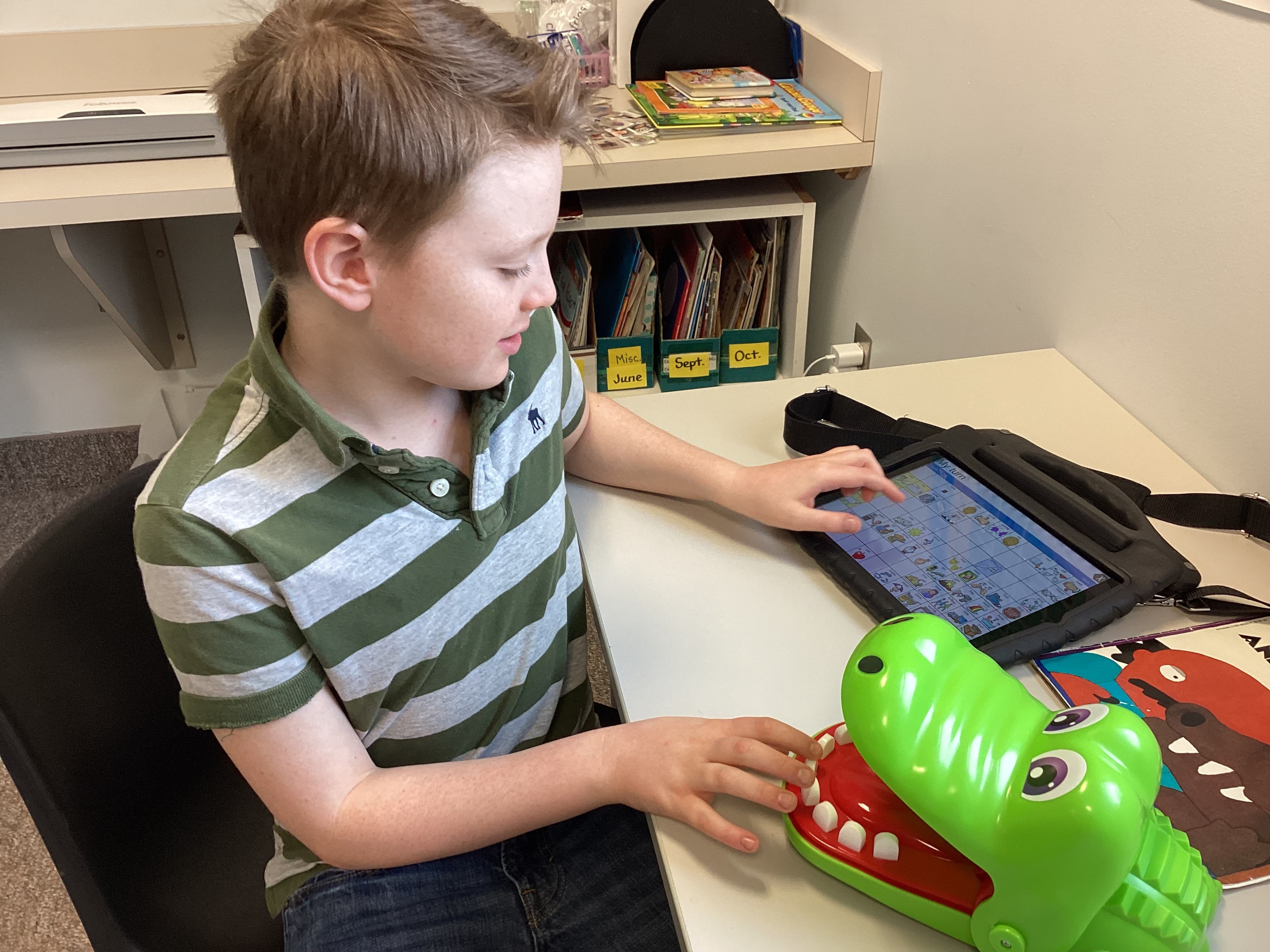
Robby uses his communication device during a social activity to request his turn during Crocodile Dentist game

These students are using three very different types of AAC (Big Mack, Twin Talk, and Eye-gaze) to participate in a classroom activity

Speech Language Pathologist Colleen and student Ryder are using a Tobii Dynavox eye gaze device to comment during a story


 All About Autism