
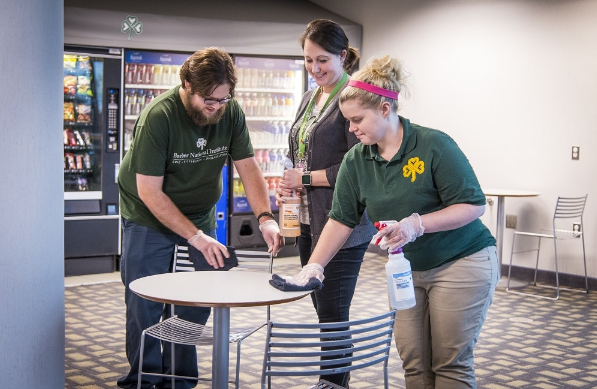
This past Monday, we celebrated Labor Day, which honors the achievements and important contributions of American workers. Work offers the opportunity of financial stability, skill development, fulfillment in our personal and professional lives, socialization, and the chance to learn and grow. It’s my firm belief that everyone who has the potential to work should receive the resources, coaching, and support needed to successfully maintain employment.
Workplaces across the country are seeing the value of creating more inclusive workplaces. Employers who adopt inclusive hiring and employment strategies are more likely to experience enhanced innovation, improved employee engagement, and a welcoming culture where diverse skillsets, perspectives, and experiences are celebrated.
The Supported Employment Program at the Barber National Institute provides a range of services to help ensure an appropriate match for both adults seeking employment and prospective employers. The program serves individuals with intellectual disabilities, autism, deafness or hearing impairment, mental health diagnosis, and visual impairment.
Adults enrolled in the Supported Employment Program first receive a community-based work assessment to determine their skills, job readiness, and appropriate job matches. Training and assistance in all phases of the job search, including creating a resume, applying to jobs, and preparing for the interview process, are provided. Once a good match is found and specific job responsibilities have been identified, a highly trained and professional employment specialist, also known as a job coach, works with each individual to provide on-site guidance, support, and real-time feedback related to the work being done to ensure the best possible outcomes.
Support services are also provided to employers as well. For example, employment specialists pre-screen candidates to ensure a good fit for the employer’s needs, saving time and resources during the hiring process. Additionally, employers receive expert advice on managing and integrating employees with disabilities, promoting an inclusive and product workplace culture. Services are provided at no cost to the employer, offering financial benefits and encouraging workforce diversity without barriers.
I’m happy to share that 250 adults have been successfully placed within a wide range of positions thanks to the proven effectiveness of the Supported Employment Program. Family-owned businesses and large corporations alike have benefited from this service.
The Barber National Institute also offers Small Group Employment (SGE) to persons with a variety of intellectual disabilities, autism, mental health challenges, and visual or hearing impairments. Training and work opportunities are provided to individuals who wish to transition from school or unemployment into an integrated, competitive workforce.
The program offers a variety of work experiences and specialized training in landscaping, food service, janitorial work, and machine operation. These and other opportunities give participants the experience needed to gain employment.
I ask each of you how you can promote inclusion through the organizations you represent and in your daily lives. Please think about the important role you have in finding ways to create channels for greater inclusivity wherever possible.
Inclusivity doesn’t happen overnight. It takes time and effort from the whole community. It’s a long-term commitment that has tremendous benefits for everyone involved.
As Ruth Bader Ginsburg said, “We will all profit from a more diverse, inclusive society, understanding, accommodating, even celebrating our differences while pulling together for the common good.”


 All About Autism